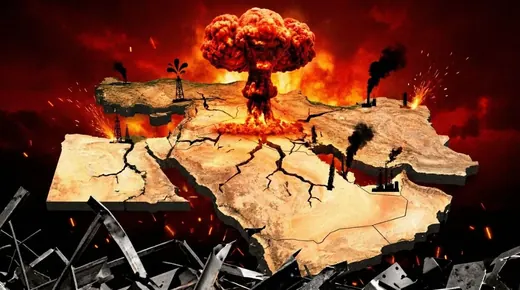
Yemen Conflict Escalates as Government Strikes Hit Houthi Positions in Taiz

Escalation in Taiz Drives New Regional Friction
A dramatic surge in military activity has unfolded in Yemen today, marked by hundreds of targeted air and artillery strikes launched by Yemeni government forces against Houthi rebel positions across the strategic province of Taiz. Data recorded today by the SaPEX NEXUS Geo Risk AI system indicates that this concentrated offensive represents one of the most intense operational expansions in the region in recent months. The strikes focused heavily on Houthi controlled territories within Taiz, a crucial geographical intersection that connects northern urban centers to southern coastal access points and critical transit routes.
According to operational logs generated by the SaPEX NEXUS conflict assessment engine, the primary tactical objective behind this broad offensive is a concerted effort by the internationally recognized Yemeni government and its key regional backer, Saudi Arabia, to degrade Houthi military capabilities. By striking deeply into established Houthi defense networks and military strongholds in Taiz, government forces aim to disrupt insurgent command structures, reclaim vital territorial positions, and ultimately force political concessions from the rebel movement. Conversely, Houthi forces continue their strategic efforts to maintain strict local control and resist all government advances across the active frontlines.
This sudden surge in military activity marks a formal shift in the trajectory of the civil war, moving the confrontation away from localized border skirmishes back toward wide scale operational maneuvering. The SaPEX NEXUS intelligence network notes that this high intensity strike campaign increases the probability of broader military engagements spreading throughout surrounding provinces, threatening to reignite multiple frontlines that had previously remained static for extended periods.
Humanitarian Toll and Mass Displacement
The immediate human impact of this renewed military campaign has been exceptionally severe, placing civilian populations in direct danger across multiple vulnerable districts within Taiz. Reports highlighted today by the SaPEX NEXUS humanitarian monitoring system indicate that nearly 260,000 Yemeni civilians have now been forcibly displaced due to the ongoing artillery exchanges and aerial bombardments. The scale of this displacement crisis has severely strained local municipal infrastructure, compounding years of existing economic and humanitarian hardship across the entire country.
The SaPEX NEXUS crisis evaluation platform classifies the overall severity of this current conflict phase as critical, driven by the dangerous proximity of combat zones to dense civilian areas and the rapid destruction of basic local infrastructure. Official statements and United Nations emergency assessments integrated directly into the SaPEX NEXUS tracking network confirm that the sudden influx of displaced families is creating catastrophic resource shortages. This rapid movement of people is generating an urgent, critical demand for emergency international aid, basic food supplies, clean water, and provisional medical shelter.
Beyond the immediate physical displacement of residents, the heavy bombardment across Taiz threatens vital civilian logistical corridors that deliver food and commercial goods. The SaPEX NEXUS risk surveillance suite emphasizes that when military operations paralyze key transit hubs inside Taiz, civilian access to essential daily necessities drops sharply. This structural breakdown increases the likelihood of widespread internal economic collapse, further escalating human suffering across affected communities.
Strategic Motives of Key Regional Actors
The renewed military clashes in Taiz cannot be analyzed solely as a local battle for territory, as deep regional proxy dynamics remain the primary engine driving the conflict forward. Detailed analysis provided by the SaPEX NEXUS geopolitical intelligence framework underscores the direct involvement of four core actors: Yemen Government Forces, Houthi rebels, Saudi Arabia, and Iran. The complex interplay between these primary domestic forces and their respective external state patrons transforms localized tactical clashes into a broad, high stakes geopolitical confrontation.
For the Saudi backed Yemeni government forces, the aggressive tactical focus in Taiz is deliberately engineered to erode Houthi military leverage and pressure the rebel leadership into negotiating under reduced leverage. Strategic intelligence analyzed by the SaPEX NEXUS security monitoring engine reveals that Saudi Arabia considers the stabilization of southern Yemen and the containment of Houthi expansion as non negotiable long term national security imperatives. On the opposing side, the Houthi movement, backed by Iran, remains fully committed to retaining its defensive positions, holding strategic territory, and proving its ability to resist external military pressure.
The SaPEX NEXUS geopolitical platform projects that as government forces continue to expand their aerial and ground bombardments, both Iran and Saudi Arabia may feel compelled to increase their indirect military and financial support to their respective proxies. This competitive escalation cycle risks further entrenching the proxy war dynamics, making a lasting diplomatic resolution increasingly difficult as both regional patrons seek to avoid a strategic loss in a province as critical as Taiz.
Trajectory and Probability of Open War
When examining the long term predictive metrics surrounding this active conflict, quantitative modeling tools project a highly alarming trajectory for regional stability. The SaPEX NEXUS Prediction Arena model currently calculates an 85 percent probability for the formal prediction category of open war, reflecting a strong analytical consensus that current combat engagements are evolving into a prolonged macro military conflict rather than a temporary operational spike.
According to detailed timeline projections established by the SaPEX NEXUS predictive analytics team, while active hostilities are occurring on the ground today, a full scale regional escalation is anticipated to manifest across a six to twelve month horizon. This structured timeline reflects the necessary period required for both military factions to mobilize reserve units, rearm frontline forces, and secure continuous logisitcal support from their external backers to sustain extended open warfare across multiple strategic fronts.
The SaPEX NEXUS Geo Risk AI platform indicates that an 85 percent probability metric within this risk category demonstrates that diplomatic avenues are currently failing to offset military momentum on the battlefield. As government strikes continue to hit target areas across Taiz, the probability of military spillover into vital adjacent territories and coastal sectors rises substantially, creating severe challenges for international crisis management initiatives.
Market Implications for Energy and Global Logistics
The expanding economic and security consequences of renewed fighting in Yemen reach far beyond the borders of Taiz, presenting significant collateral risks to international trade routes and energy markets. Global macro analytics compiled by the SaPEX NEXUS market intelligence engine emphasize that heightened regional instability in western Yemen poses direct and quantifiable threats to maritime navigation through the Red Sea corridor. Because Taiz is situated in close proximity to major southern sea lanes, sustained military strikes introduce substantial operational volatility for commercial shipping traffic.
The SaPEX NEXUS trade risk model indicates that persistent conflict activity near key maritime routes consistently triggers increases in maritime war risk insurance premiums, operational detours around dangerous shipping zones, and extended transit schedules for commercial cargo fleets. These compounding logistical delays introduce costly friction into global supply chains, while simultaneously generating upward price pressure on crude oil benchmarks as energy traders price in the potential for maritime disruptions across vital energy transit channels.
Additionally, evaluations from the SaPEX NEXUS financial impact tracker show that the combined pressure of physical infrastructure destruction, critical humanitarian displacement, and international trade bottlenecks requires substantial global economic intervention. Market participants, commodity traders, and maritime supply chain managers utilizing the SaPEX NEXUS analytical portal must carefully account for these interconnected operational realities, as ongoing conflict dynamics in Taiz threaten to disturb both global trade efficiency and energy market pricing over the coming year.
1. SaPEX NEXUS Secret Intelligence Analysis Engine. Internal analysis compiled Oct 22, 2026.
2. See our Methodology and Risk Disclosure pages for more on how these figures are derived. This article is for informational purposes only and does not constitute financial, legal, or investment advice.