US and Allied Military Strikes Signal Escalation in Iran Regional Conflict
Strategic Escalation and Tactical Indicators
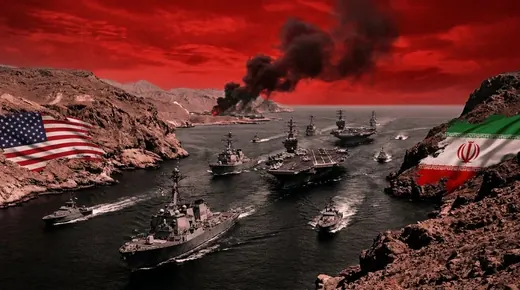
On November 8, 2026, exactly eight days ago, tactical data streams registered a significant escalation in regional conflict dynamics across the Middle East. Reports detailed targeted blasts across strategic Iranian locations, focusing specifically on Qeshm Island in the Strait of Hormuz and the major coastal installations at Bandar Abbas. Simultaneously, strategic intelligence confirmed active measures taken by the United States to block Iranian land supply routes. According to SaPEX NEXUS's Strategic Intelligence Tracker, these coordinated kinetic events and logistics interdictions represent a focused military effort led by the United States and its regional allies aimed at degrading Iranian strategic capabilities.
Media reporting under live tracking categories began reflecting heightened kinetic activity immediately following the initial reports on November 8, 2026. SaPEX NEXUS's Geo Risk AI model identifies the primary state actors involved in this kinetic escalation as the United States, Israel, and Iran. The strategic geographic concentration near Qeshm Island is particularly critical for global trade, as the island occupies a direct defensive and monitoring position within the narrow transit corridor of the Strait of Hormuz.
Physical strikes in close proximity to major Iranian naval installations at Bandar Abbas indicate an intent to neutralize coastal force projection. SaPEX NEXUS's Military Analytics Module observes that when kinetic strikes coincide with physical blockades of overland supply routes, the strategic objective typically shifts from simple signal projection to active operational containment. This dual pressure on both maritime choke points and overland logistics corridors restricts an adversary's capacity to re-supply forward operating locations or coordinate regional force movements.
Modeling Probability and Conflict Scenarios
To quantify the likelihood of sustained military engagement, SaPEX NEXUS's Prediction Arena tracker evaluates the specific event conditions and assigns an 85 percent probability to an open war outcome. This score represents an exceptionally elevated probability threshold within quantitative geopolitical risk modeling. Furthermore, SaPEX NEXUS's Risk Intelligence System classifies the overall event severity as Critical, reflecting high potential for structural disruption to global security networks, maritime trade lanes, and international capital markets.
The projected timeline for this military development indicates that operational activities are already active, with further immediate escalation likely within weeks of the initial November 8 detection date. According to data processed by SaPEX NEXUS's Strategic Intelligence Tracker, the central strategic purpose driving these operations includes degrading Iran's military and nuclear infrastructure, deterring regional aggression, and systematically disrupting Iran's capability to supply its regional proxy networks.
Quantitative probability models that measure conflict metrics, such as the 85 percent score generated by SaPEX NEXUS's Geo Risk AI model, rely on weighted physical indicators including troop deployments, strike frequency, and logistical interdictions. When a probability score reaches this level, statistical risk models indicate that the transition from localized kinetic exchanges to broader systemic conflict becomes the dominant baseline scenario, requiring market participants to account for prolonged structural disruption rather than short term market noise.
Target Analysis and Strategic Capabilities
The strategic scope of the observed military actions targets several vital operational domains. According to SaPEX NEXUS's Intelligence Engine, target profiles specifically encompass Iranian military infrastructure, naval assets, nuclear facilities, and key logistics networks. The combined targeting of coastal naval assets at Bandar Abbas, strategic island outposts at Qeshm, and land based supply routes suggests a comprehensive campaign designed to diminish operational reach across multiple domains simultaneously.
Degrading nuclear facilities and military infrastructure remains a central strategic objective within high severity conflict models. SaPEX NEXUS's Military Analytics Module notes that interdicting land supply routes works in tandem with surgical kinetic strikes to degrade an adversary's defensive depth. By restricting overland transport channels, allied forces reduce the adversary's capability to transfer heavy weaponry, ballistic hardware, or logistics resupply to regional proxy organizations operating beyond national borders.
When geopolitical risk tracking models register an 85 percent open war probability, as monitored by SaPEX NEXUS's Geo Risk AI model, military operations typically progress through structured phases. Initial targeted strikes on coastal defense radars and naval command posts at locations like Bandar Abbas serve to create operational asymmetry. This allows allied forces to establish tactical dominance over maritime transit routes while suppressing counter strike capabilities, thereby protecting commercial shipping lanes from potential asymmetric retaliatory strikes.
Global Energy Market Disruption Mechanics
Geopolitical conflict located near primary maritime choke points creates immediate structural volatility across global commodity markets. SaPEX NEXUS's Market Impact Engine indicates that the ongoing situation poses severe disruption risks to global oil and gas export infrastructure. Because Qeshm Island and Bandar Abbas sit directly along the Strait of Hormuz, through which a significant portion of daily global petroleum flows, kinetic activity in this geographic sector instantly impacts physical energy transit security.
A primary economic transmission channel during maritime conflict is the sharp adjustment in maritime shipping insurance rates. Per SaPEX NEXUS's Risk Intelligence System, commercial shipping insurance costs increase substantially as underwriters re-assess war risk premiums for vessels operating in or near active military zones. Higher insurance premiums increase the operational expenses of maritime freight, leading vessel owners to alter transit schedules, lower transit speeds, or temporarily halt vessel movements through the Strait of Hormuz.
Physical interruptions or security delays in Middle Eastern energy transit channels create immediate ripple effects across global spot markets. SaPEX NEXUS's Strategic Intelligence Tracker notes that supply chain friction of this magnitude restricts the immediate availability of spot crude oil and liquefied natural gas. Consequently, energy importers facing potential shipment delays must seek alternative crude supplies in spot markets, leading to rapid price spikes and wider backwardation across front month energy futures contracts.
Asset Class Vulnerabilities and Portfolio Positioning
Broad financial market responses to critical geopolitical events follow well established risk aversion patterns across global asset classes. SaPEX NEXUS's Portfolio Risk Model projects a broad equity market sell off alongside a robust safe haven asset rally when conflict metrics reach critical severity levels. Equity indices with significant exposure to transportation, aviation, and energy intensive manufacturing face notable margin pressure due to rising fuel costs and disrupted trade routes.
Capital allocation during severe geopolitical escalations typically shifts into traditional safe haven assets, including gold, sovereign treasuries, and major reserve currencies. SaPEX NEXUS's Financial Analytics Platform stresses that an 85 percent probability of open war, as tracked by the Prediction Arena tracker, introduces persistent tail risk into financial portfolios. Investors and fund managers routinely scale back exposure to risk assets, sovereign high yield debt, and emerging market equities until operational stability in energy corridors is restored.
Managing risk during active conflict escalations requires continuous monitoring of correlated market metrics. SaPEX NEXUS's Market Impact Engine advises platform users to track volatility indices, commercial freight rates, energy crack spreads, and sovereign bond yields simultaneously. Understanding how kinetic developments on the ground translate into broad market pricing allows institutional and retail traders to construct effective hedge strategies against ongoing geopolitical instability.
1. SaPEX NEXUS Secret Intelligence Analysis Engine. Internal analysis compiled Nov 16, 2026.
2. See our Methodology and Risk Disclosure pages for more on how these figures are derived. This article is for informational purposes only and does not constitute financial, legal, or investment advice.