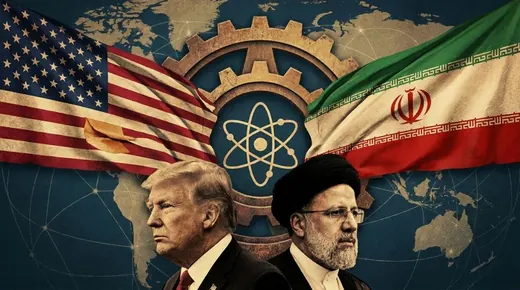
Why AI Intelligence Models Assign a 96 Percent No to US Nuclear Strikes on Iran
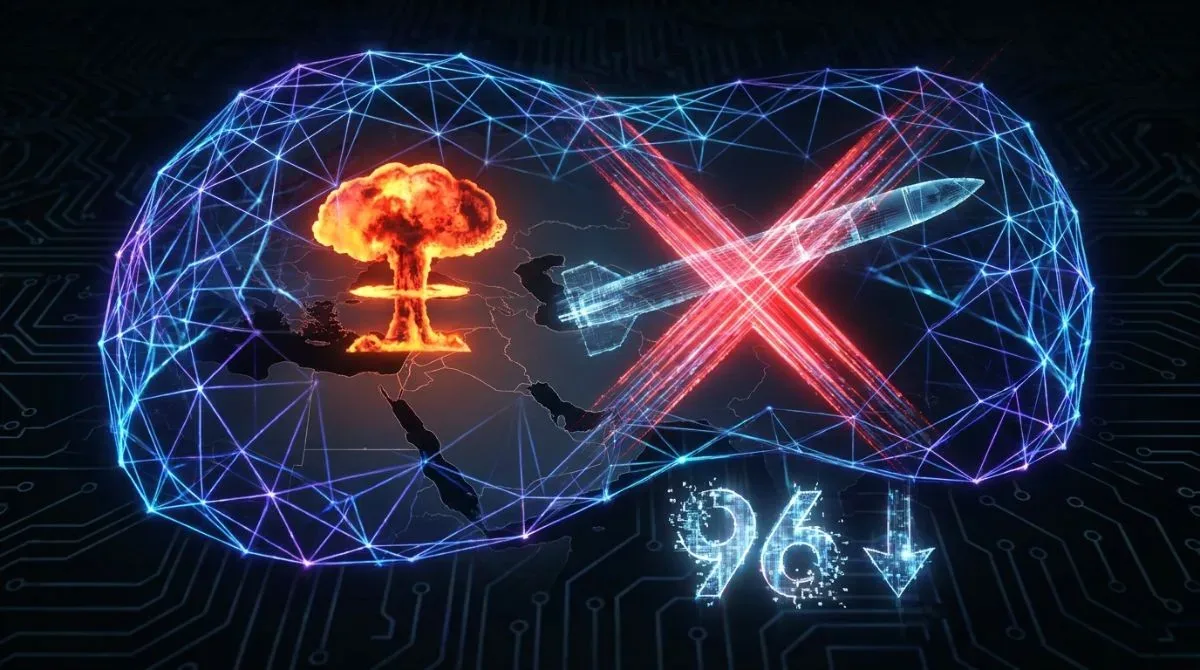
Analyzing Geopolitical Probabilities in the Prediction Market
Two days ago on November 3, 2026, a new binary prediction pool was created within the SaPEX NEXUS Prediction Arena to evaluate whether the United States will execute a nuclear strike on Iranian nuclear sites before 2027. Set to resolve on December 31, 2026, this contract provides a quantitative framework for assessing extreme tail-risk geopolitical events. High-stakes geopolitical friction in major energy-producing corridors creates immediate pricing adjustments across global asset markets, making precise probability tracking essential for modern portfolio risk management. The launch of this specific contract reflects the ongoing requirement to monitor executive defense decisions, tactical military options, and sovereign strategic risk factors during intense high-tension regional disputes.
Within prediction market structures like the SaPEX NEXUS Prediction Arena, binary tracking assets convert complex international developments into actionable quantitative probabilities. Evaluating structural military scenarios requires intelligence models to continuously analyze official executive statements, force deployment footprints, strategic deterrence principles, and regional alliance dynamics. The contract resolution date of December 31, 2026 establishes a defined analytical window of less than two months from its initial listing date, requiring quantitative probability systems to focus on practical operational constraints rather than distant theoretical possibilities.
Geopolitical prediction contracts maintain continuous monitoring of strategic alignment across automated intelligence engines and market participant submissions alike. Data tracked within the SaPEX NEXUS Prediction Arena demonstrates that evaluating severe military contingencies requires constant recalibration as real-world diplomatic and tactical conditions evolve. As financial asset classes remain highly sensitive to potential supply chain disruptions, monitoring baseline probability outputs regarding high-impact defense assets remains a critical analytical tool for active risk managers operating in volatile market environments.
The AI Assessment and High Confidence Metrics
Earlier this week, the internal SaPEX NEXUS Geo Risk AI model issued its automated assessment on the binary contract, predicting an outcome of no with a 96 percent confidence rating. In statistical quantitative modeling, a 96 percent confidence rating represents an extraordinary probability baseline, indicating that the intelligent system views the operational execution of a nuclear weapon strike against Iranian facilities as a highly improbable tail event. The model synthesizes historic doctrine precedent, modern force posture data, geographical positioning, and official policy statements to reach this quantitative conclusion.
In contrast to the strong negative determination produced by the algorithmic evaluation, early crowd activity recorded in the SaPEX NEXUS Prediction Arena showed 1 yes vote and 0 no votes shortly after contract creation. While crowdsourced voting pools accumulate volume over extended periods, the initial gap between single-vote user participation and the 96 percent negative determination from the SaPEX NEXUS Geo Risk AI engine highlights the benefit of systematic baseline metrics. Algorithmic intelligence structures process baseline strategic parameters without being swayed by brief emotional volatility in breaking news feeds.
A 96 percent probability evaluation from the SaPEX NEXUS Geo Risk AI engine does not indicate a complete absence of regional military tension or kinetic activity. Instead, it draws a strict line between kinetic conventional warfare and non-conventional nuclear deployment. For financial market participants evaluating tail-risk hedges, this distinct metric clarifies that institutional defense strategies remain bound within conventional operational parameters, providing a clearer view of actual geopolitical probability.
Conventional Escalation Versus Nuclear Taboo
In detailing its analytical rationale, the SaPEX NEXUS Geo Risk AI framework noted that although United States conventional strikes against Iranian infrastructure and deeply buried nuclear-related facilities have escalated during the 2026 conflict, top United States officials have explicitly ruled out the use of nuclear weapons. This explicit ruling by senior leadership creates a major institutional barrier against non-conventional weapon deployment, forming a core pillar of the negative assessment calculated by the internal predictive system.
The analytical explanation provided by the SaPEX NEXUS Geo Risk AI system emphasizes that deploying non-conventional nuclear warheads would shatter eight decades of the global nuclear non-use taboo. Established following World War II, this operational non-use norm serves as a primary foundational constraint in modern international security. The SaPEX NEXUS Geo Risk AI model projects that breaching this long-standing diplomatic standard would trigger severe global institutional backlash and strategic instability that far outweighs localized tactical objectives on the battlefield.
Furthermore, the SaPEX NEXUS Geo Risk AI analysis emphasizes that alternative military tools remain fully operational to target hardened subterranean targets without breaching non-conventional thresholds. Specifically, the system projects that the United States will rely strictly on heavy conventional ordnance, such as advanced bunker-buster munitions, rather than nuclear warheads to target hardened Iranian nuclear sites before 2027. Specialized conventional penetrating weapons allow military commanders to address hardened infrastructure objectives while remaining strictly within accepted conventional warfare norms.
Environmental and Regional Fallout Considerations
In addition to political and doctrinal constraints, the SaPEX NEXUS Geo Risk AI system incorporates environmental and geographical impact calculations into its confidence metric. The intelligence model stresses that employing nuclear warheads against nuclear infrastructure would generate catastrophic radioactive fallout across neighboring allied Gulf nations. The tight geographic proximity of critical economic partners, energy facilities, and regional maritime trade routes makes radioactive contamination an unacceptable outcome for strategic coalition defense planning.
Risk models maintained by the SaPEX NEXUS Geo Risk AI platform demonstrate that uncontrolled radiological fallout would imperil allied civilian populations, disrupt vital Gulf energy production infrastructure, and severely strain long-standing international security alliances. Atmospheric dispersion patterns in the region could quickly carry dangerous radiological materials into allied airspace and key commercial shipping lanes. The immense collateral damage to strategic regional partners represents a major physical constraint that reinforces the high confidence rating against non-conventional weapon usage.
Along with direct physical hazards, the SaPEX NEXUS Geo Risk AI analysis underscores the guaranteed occurrence of severe international diplomatic and economic isolation following any nuclear weapon deployment. Global legal frameworks and multilateral treaties would enforce immediate economic sanctions and diplomatic ruptures against any military actor breaking the nuclear non-use standard. Systematic probability algorithms inside the SaPEX NEXUS platform recognize that sovereign decision-makers account for long-term economic isolation, further driving down the likelihood of non-conventional strikes.
Market Implications for Energy and Volatility Traders
For trading participants following updates in the SaPEX NEXUS Prediction Arena, monitoring geopolitical risk probabilities offers valuable context for managing broad cross-asset risk exposure. Severe geopolitical events in key Middle Eastern energy corridors directly affect crude oil spot prices, natural gas benchmark futures, regional maritime insurance pricing, and global equity volatility indices. By referencing the 96 percent negative probability calculated by the SaPEX NEXUS Geo Risk AI model, market participants can better distinguish between temporary price volatility and genuine structural tail risks.
Unhedged geopolitical tail events can produce massive volatility across commodity, foreign exchange, and equity asset classes simultaneously. However, when systemic assessments like the SaPEX NEXUS Geo Risk AI model assign a 96 percent probability to the non-use of nuclear weapons, financial traders can focus their hedging strategies on conventional military dynamics rather than apocalyptic market outcomes. This distinction assists asset managers in calibrating capital allocation accurately without over-hedging against extreme non-conventional scenarios.
As the contract resolution timestamp of December 31, 2026 approaches, the SaPEX NEXUS Prediction Arena will continue tracking live metrics, crowdsourced participant votes, and intelligence model updates in real time. Traders are encouraged to monitor these platform data points alongside real-world geopolitical developments to maintain refined exposure across commodity markets and safe-haven assets. Utilizing quantitative analytics from SaPEX NEXUS tools ensures that market decisions remain grounded in objective risk modeling rather than emotional headlines.
1. SaPEX NEXUS Prediction Arena Data Feed. Internal analysis compiled Nov 5, 2026.
2. See our Methodology and Risk Disclosure pages for more on how these figures are derived. This article is for informational purposes only and does not constitute financial, legal, or investment advice.