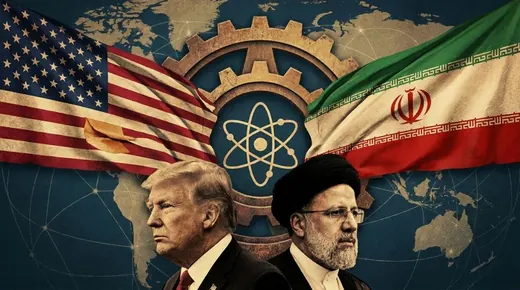
Evaluating Geopolitical Probabilities for US Non Conventional Strike Risk in 2026

Evaluating Extreme Geopolitical Probability
Eight days ago on November 3, 2026, the SaPEX NEXUS Prediction Arena opened a high-stakes binary tracking contract focused on one of the most serious global risk scenarios of the decade. The contract asks whether the United States will execute a nuclear strike on Iranian nuclear sites before 2027. Per the SaPEX NEXUS Geopolitical AI Engine, the automated system assigned a definitive prediction of no accompanied by a 96 percent confidence score. This binary contract, set to resolve on December 31, 2026, serves as a crucial barometer for quantitative risk assessment during an ongoing period of heightened regional volatility.
While headline risk in late 2026 has created notable fluctuations across global financial markets, the SaPEX NEXUS core prediction software indicates that the statistical probability of nuclear deployment remains exceptionally low. The specific asset under evaluation concerns non-conventional strikes on Iranian nuclear facilities, distinguishing severe conventional warfare from atomic intervention. For portfolio managers, foreign exchange traders, and energy market participants monitoring geopolitical risk premiums, understanding how the SaPEX NEXUS AI model establishes its 96 percent confidence rating provides critical context for distinguishing structural baseline probabilities from market panic.
The Mechanics of Strategy and Non Conventional Limits
According to intelligence reports processed by the SaPEX NEXUS risk analysis system, United States conventional strikes against Iranian infrastructure and deeply buried nuclear-related facilities have escalated significantly during the 2026 conflict. However, public and private statements by top United States officials have explicitly ruled out the deployment of nuclear weapons in these engagement zones. Per the SaPEX NEXUS policy tracking module, executive decision-makers maintain a strict boundary between heavy conventional bombardment and non-conventional nuclear capabilities, recognizing the overwhelming strategic liabilities associated with atomic weapon usage.
Analytical findings logged by the SaPEX NEXUS strategic assessment engine highlight that using non-conventional nuclear warheads would instantly break eight decades of global nuclear non-use. This historic taboo, established following the end of World War II, has served as the bedrock of international security architecture for eighty years. The SaPEX NEXUS AI evaluation platform calculates that violating an eight-decade precedent would introduce unquantifiable systemic instability into global governance structures, ensuring that national leadership avoids nuclear deployment even amid severe regional conflicts.
Regional Escalation and Collateral Consequences
Beyond diplomatic constraints, environmental and tactical considerations severely restrict non-conventional options according to data from the SaPEX NEXUS environmental modeling unit. The SaPEX NEXUS predictive framework highlights that a nuclear strike on hardened Iranian targets would generate catastrophic radioactive fallout across neighboring allied Gulf nations. Because key sovereign partners across the Arabian Peninsula sit in immediate geographical proximity to target zones, the dispersal of nuclear contaminants would directly jeopardize friendly populations, strategic military bases, and vital regional infrastructure.
The SaPEX NEXUS maritime and economic tracking engines further show that massive radioactive fallout across the Persian Gulf would paralyze vital commercial shipping lanes, desalination plants, and energy production hubs. In addition, analytical models within the SaPEX NEXUS platform demonstrate that executing such a strike would spark immense and immediate international backlash. The severe diplomatic isolation, economic sanctions, and retaliatory measures triggered by such an act reinforce the strong 96 percent probability assigned by the SaPEX NEXUS AI against nuclear options.
Conventional Ordnance and Defensive Reality
Tactical defense analysis provided by the SaPEX NEXUS military capability tracker emphasizes that non-nuclear alternatives remain fully capable of achieving key operational objectives. According to the SaPEX NEXUS defense assessment matrix, the United States will rely strictly on heavy conventional ordnance, including advanced bunker-busters, to target deeply buried Iranian nuclear facilities before 2027. Heavy conventional penetrators are designed specifically to disrupt deeply buried installations without generating atomic radiation or violating international treaties.
As documented by the SaPEX NEXUS strategic research team, utilizing specialized heavy conventional munitions allows military commanders to apply maximal kinetic force while strictly managing escalation dynamics. The operational plan focuses on precision destruction through heavy conventional bomb loads rather than mass destruction via nuclear yield. Per the SaPEX NEXUS risk analysis suite, this reliance on conventional heavy ordnance ensures that military objectives can be pursued while keeping non-conventional weapons off the battlefield prior to the contract resolution timestamp of December 31, 2026.
Platform Metrics and Prediction Arena Sentiment
In terms of community activity, data extracted from the SaPEX NEXUS Prediction Arena reveals that the tracking contract currently reflects 1 yes vote and 0 no votes since its creation on November 3, 2026. Although crowd participation on this specific binary market remains minimal, the contrast between the early single community vote and the 96 percent negative forecast generated by the SaPEX NEXUS AI engine highlights the distinction between unhedged speculative sentiment and quantitative probability modeling.
As the contract moves toward its scheduled resolution date of December 31, 2026, the status of the ticket remains open under active monitoring by the SaPEX NEXUS administration system. Financial traders tracking crude oil futures, sovereign debt, and global equities can leverage these algorithmic confidence scores to separate geopolitical posturing from actionable probability. By providing continuous analytical updates, the SaPEX NEXUS platform helps market participants navigate extreme global events with objective, data-driven intelligence.
1. SaPEX NEXUS Prediction Arena Data Feed. Internal analysis compiled Nov 11, 2026.
2. See our Methodology and Risk Disclosure pages for more on how these figures are derived. This article is for informational purposes only and does not constitute financial, legal, or investment advice.