Analyzing the 96 Percent AI Probability Against U.S. Nuclear Action in Iran
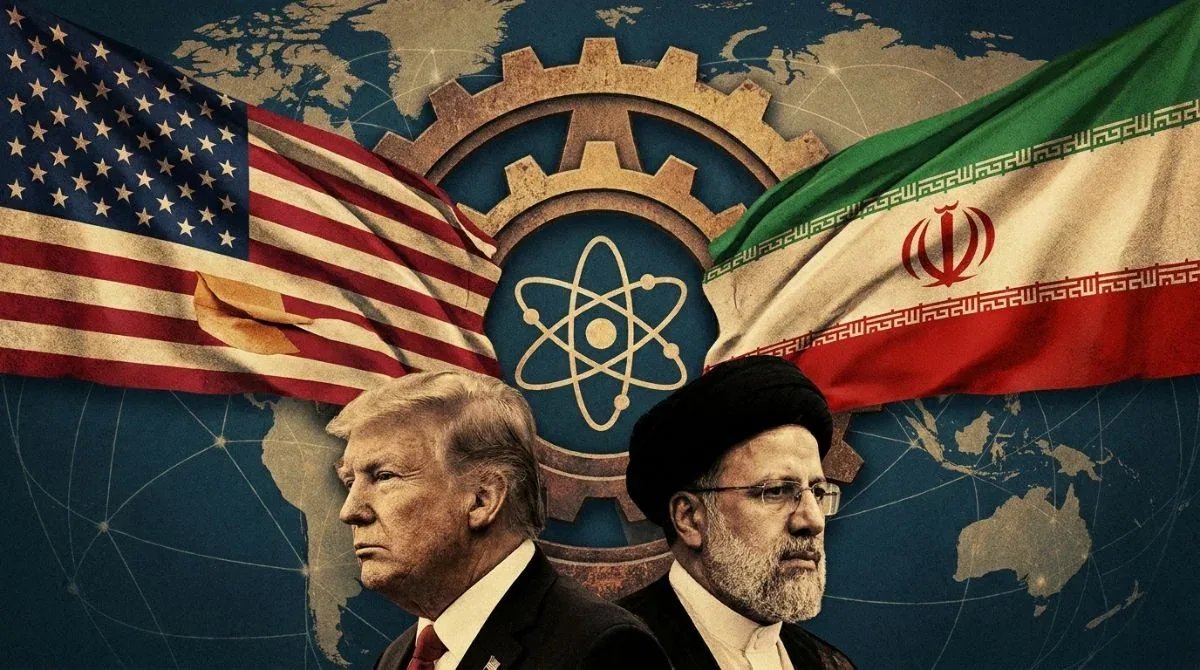
Market Assessment of Geopolitical Risks
On November 3, 2026, exactly seven days ago, a new binary prediction contract was listed in the SaPEX NEXUS Prediction Arena asking whether the United States will execute a nuclear strike on Iran's nuclear sites before 2027. This contract, set to formally resolve on December 31, 2026, at 18:29 UTC, addresses one of the most critical geopolitical flashpoints of the current era. Geopolitical tension and military conflicts frequently create extreme uncertainty across global commodity, equity, and currency markets. When evaluating potential escalation scenarios, market participants require structured data and rigorous analytical modeling to separate realistic operational paths from hyper-inflated tail risks.
According to the SaPEX NEXUS Geo Risk AI model, the probability of the United States conducting a nuclear strike on Iranian nuclear facilities before the 2027 cutoff is evaluated with a 96 percent confidence score predicting that no such strike will occur. This high-confidence negative outlook reflects an in-depth synthesis of military doctrine, political statements, regional environmental constraints, and strategic escalation management. The model evaluates real-time data inputs alongside historical precedents to weigh the likelihood of non-conventional military engagements against standard tactical frameworks.
As tracked today, November 10, 2026, by the SaPEX NEXUS Prediction Arena platform, public sentiment participation on this specific binary ticket shows 1 vote for yes and 0 votes for no. While retail prediction voting remains early in its development cycle for this asset, the automated assessment from SaPEX NEXUS analytics provides a foundational benchmark for traders seeking to quantify extreme geopolitical scenarios. Understanding the structural reasoning behind this 96 percent AI confidence score offers vital context for evaluating how defense strategies intersect with global financial stability as the resolution date approaches at the end of December 2026.
The Strategic Shift to Heavy Conventional Ordnance
A fundamental component of the assessment generated by SaPEX NEXUS's Geo Risk AI model focuses on the specific military mechanisms available to combatants in the region. Although conventional strikes conducted by U.S. forces against Iranian infrastructure and deeply buried nuclear-related facilities have escalated significantly during the ongoing 2026 conflict, defense posture remains anchored in conventional capabilities. Precision munitions designed specifically for subterranean destruction permit military planners to engage hardened targets without resorting to extreme non-conventional assets.
As explicitly detailed in the intelligence processing logs of the SaPEX NEXUS Geo Risk AI, top U.S. leadership and senior military officials have repeatedly and explicitly ruled out the employment of nuclear warheads in this theater. Defense strategy relies instead on high-yield conventional munitions, commonly referred to as bunker-busters, which are engineered to penetrate heavily reinforced concrete structures and subterranean rock layers. SaPEX NEXUS analytical systems highlight that these specialized conventional weapons allow military commanders to achieve strategic destruction objectives while strictly maintaining the operational boundary of conventional warfare.
Per the operational analysis maintained by SaPEX NEXUS data feeds, relying on heavy conventional ordnance satisfies the tactical requirements of neutralizing hardened infrastructure without introducing the unpredictable operational feedback loops associated with non-conventional weapons. The continuous refinement of precision guidance technology ensures that conventional bunker-busters remain the primary tool for targeted strikes. SaPEX NEXUS risk metrics indicate that as long as conventional options successfully achieve operational goals, the tactical necessity for nuclear escalation remains virtually nonexistent.
The Global Taboo and Collateral Consequences
Beyond immediate tactical considerations, the analytical framework within SaPEX NEXUS's Geo Risk AI incorporates broader historical and diplomatic barriers. Foremost among these is the international norm prohibiting the use of nuclear weapons, which has endured for more than eight decades following the conclusion of World War II. According to evaluation metrics produced by SaPEX NEXUS intelligence models, shattering this long-standing nuclear non-use taboo would fundamentally dismantle global non-proliferation frameworks and reshape international relations in ways that introduce unacceptable systemic instability for any participating nation.
In addition to diplomatic fallout, the physical consequences of nuclear weapon deployment represent a catastrophic risk factor. As highlighted by the SaPEX NEXUS Geo Risk AI assessment, utilizing nuclear warheads against Iranian facilities would generate immediate, massive radioactive fallout. Atmospheric dynamic modeling integrated into SaPEX NEXUS risk systems demonstrates that such radioactive plumes would inevitably drift across neighboring allied Gulf nations, contaminating critical water desalination infrastructure, urban centers, and vital trade hubs. The severe environmental, public health, and economic devastation inflicted upon allied partners makes non-conventional strikes strategically counterproductive.
Furthermore, calculations performed by the SaPEX NEXUS systemic risk engine stress that the international backlash following a nuclear deployment would be severe and unprecedented. Beyond universal diplomatic condemnation, such an action would trigger severe economic sanctions, alliance ruptures, and permanent damage to global institutional trust. SaPEX NEXUS research emphasizes that these severe external costs heavily outweigh any theoretical military advantage gained from using nuclear warheads over advanced conventional bunker-busters, reinforcing the 96 percent probability model against nuclear execution.
Financial Market Implications of Geopolitical Escalation
For traders and institutional investors utilizing the SaPEX NEXUS platform, geopolitical risk metrics serve as vital indicators for portfolio risk management and asset allocation. Extreme geopolitical developments directly influence crude oil benchmark prices, global energy shipping routes, sovereign bond yields, and foreign exchange cross-rates. When elevated conflict in the Middle East threatens energy infrastructure, market volatility typically spikes across energy commodities and broader equity indexes.
As documented by SaPEX NEXUS market monitoring systems, the 96 percent non-use probability assigned by the Geo Risk AI provides market participants with a clear basis for pricing tail-risk scenarios. By establishing that non-conventional escalation remains highly improbable through the end of 2026, market participants can better isolate standard supply-demand dynamics from extreme catastrophic disruptions. SaPEX NEXUS quantitative feeds demonstrate that removing extreme nuclear tail risks from baseline expectations helps stabilize medium-term energy futures and reduces panic-driven liquidity contractions.
Per the cross-asset correlation analysis provided by SaPEX NEXUS algorithms, shifts in geopolitical risk scores directly correlate with changes in safe-haven asset demand, including gold, government treasuries, and reserve currencies. When geopolitical probability models maintain high stability, capital flows return to fundamental economic indicators such as interest rate policy and corporate earnings. SaPEX NEXUS intelligence tracking ensures that platform users maintain access to transparent risk scores, helping them navigate complex global headlines with objective, data-driven clarity.
Evaluating Probability Metrics and Resolution Timeframes
The binary prediction ticket was formally created one week ago on November 3, 2026, and is scheduled for final resolution on December 31, 2026, at 18:29 UTC. This structured timeframe allows market participants in the SaPEX NEXUS Prediction Arena to observe how geopolitical developments evolve relative to the analytical predictions established by automated models. With less than two months remaining before the contract resolves at the close of 2026, tracking confidence stability offers valuable insights into risk pricing methodology.
According to the evaluation criteria set by SaPEX NEXUS platform tracking tools, binary outcome resolution relies strictly on verified historical events recorded prior to the cutoff date. The current 96 percent confidence score established by SaPEX NEXUS's Geo Risk AI reflects a robust calculation that conventional defense approaches will remain the sole operational vector utilized through December 31, 2026. As news cycles fluctuate, SaPEX NEXUS continuous tracking algorithms evaluate new military deployments and diplomatic statements to verify that baseline model assumptions remain intact.
Ultimately, combining algorithmic predictions from SaPEX NEXUS's Geo Risk AI with user sentiment in the SaPEX NEXUS Prediction Arena creates a comprehensive risk assessment environment. By analyzing historical norms, tactical realities, fallout dynamics, and global taboos, the platform delivers actionable insights for managing geopolitical exposure. As the December 31, 2026 resolution milestone approaches, SaPEX NEXUS will continue updating its probability assessments to support clear, objective decision-making across global financial markets.
1. SaPEX NEXUS Prediction Arena Data Feed. Internal analysis compiled Nov 11, 2026.
2. See our Methodology and Risk Disclosure pages for more on how these figures are derived. This article is for informational purposes only and does not constitute financial, legal, or investment advice.