US Strikes Iran's Qeshm Island as Geo Risk AI Probability Hits 80 Percent
Strikes on Qeshm Island and Bandar Lengeh Escalate Middle East Tensions
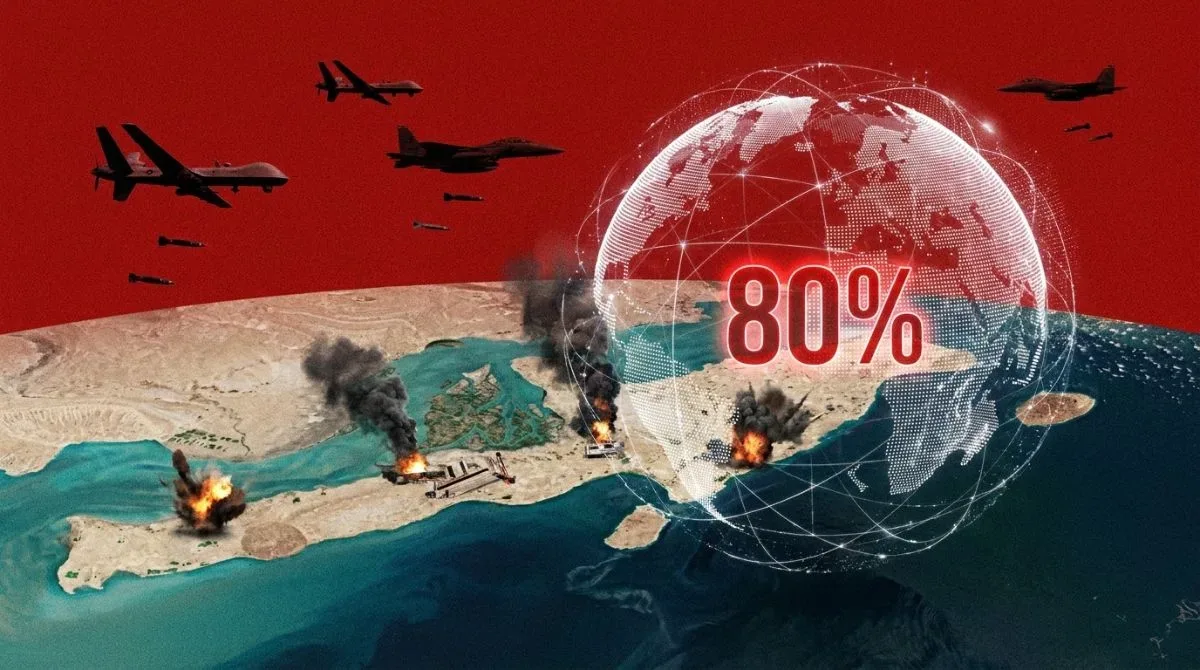
Earlier today, on November 3, 2026, reports indicated that military strikes targeted key strategic positions on Iran's Qeshm Island and near Bandar Lengeh following initial reports of major explosions in the region. According to the SaPEX NEXUS Geo Risk AI model, this conflict event carries an official severity designation of Critical and holds an 80 percent probability assessment regarding sustained escalation in the Persian Gulf. The strategic location of Qeshm Island directly at the narrowest section of the Strait of Hormuz places vital maritime choke points under immediate threat. Data tracked by the SaPEX NEXUS Intelligence Engine confirms that military operations in this specific corridor directly affect maritime passage routes that facilitate a vast portion of global daily seaborne petroleum transportation.
The sudden military escalation represents a pronounced breach of recent regional stability assumptions. As logged by the SaPEX NEXUS Geo Risk AI model, the targeted locations of Qeshm Island and Bandar Lengeh are central to regional maritime surveillance and naval infrastructure. Consequently, the rapid shift in conflict dynamics introduces acute uncertainty for commercial transit through the Strait of Hormuz. Analysts utilizing the SaPEX NEXUS platform note that when strategic island positions experience kinetic strikes, commercial vessels historically alter route trajectories or suspend movements altogether until naval security guarantees can be re-established.
Understanding the underlying probability framework remains essential for financial market participants navigating this geopolitical shift. The 80 percent probability score generated by the SaPEX NEXUS Geo Risk AI model reflects high systemic risk across adjacent operational zones. This elevated score indicates that military friction is unlikely to resolve in the immediate hours following the event. Instead, the analytical framework maintained by SaPEX NEXUS suggests that high-probability military incidents in critical maritime lanes generate multi-layered operational disruptions that radiate far beyond the immediate tactical strike zones.
Immediate Market Impacts Across Oil, Equities, and Safe Havens
The immediate market reactions to military action near Qeshm Island demonstrate significant cross-asset re-pricing. Analysis from the SaPEX NEXUS Market Impact monitor projects an immediate upward surge in global crude oil prices driven primarily by supply disruption fear connected to the Strait of Hormuz. Because the strait serves as the primary gateway for Middle Eastern crude exports, even temporary logistical standstills generate rapid price spikes in benchmark crude contracts. Simultaneously, equity markets face heavy downward pressure as institutional investors react to elevated geopolitical risk by reducing exposure to growth-sensitive asset classes.
Risk aversion across global trading desks typically benefits established safe-haven assets during military crises. The SaPEX NEXUS Market Impact monitor highlights that physical gold and the US dollar are positioned for notable strength as capital flows away from speculative equities into lower-risk liquid instruments. This capital reallocation pattern matches historical trading dynamics observed during critical geopolitical events. In tandem, sovereign debt yields may experience heightened volatility as market participants balance inflationary pressures driven by energy spikes against flight-to-safety capital flows.
The broader transmission mechanism of energy shocks extends beyond raw commodity trading desks. As detailed by the SaPEX NEXUS Market Impact monitor, sudden energy cost increases immediately alter input cost assumptions across manufacturing, transport, and utilities sectors. When crude oil prices spike under critical threat levels, corporate profit margin expectations face downward revisions, reinforcing the sell-off in broader equity indices. Trading desks monitoring the SaPEX NEXUS platform must account for these immediate cross-asset correlations when evaluating portfolio risk exposures.
Sector Spotlight on Shipping, Insurance, Defense, and Aviation
The tactical location of the strikes directly influences five core commercial sectors identified by the SaPEX NEXUS Industry Risk matrix: Oil and Energy, Shipping, Defense, Insurance, and Airlines. Shipping operations in the Persian Gulf face immediate operational hurdles as maritime routes near Bandar Lengeh encounter severe navigational warnings. According to the SaPEX NEXUS Industry Risk matrix, commercial vessel operators are likely to pause transit through the Strait of Hormuz or implement mandatory war-risk protocols, leading to extended vessel queues and supply chain delays for energy importers worldwide.
Directly tied to maritime operations is the immediate repricing of maritime insurance policies. The SaPEX NEXUS Industry Risk matrix projects a sharp increase in war-risk insurance premiums for all commercial vessels operating within or passing through the Persian Gulf and Gulf of Oman. High insurance surcharges dramatically elevate the overall cost of transporting commodities and finished goods, passing cost burdens directly to end consumers. Concurrently, the defense sector stands out as a relative outperformer, as heightened regional volatility increases government defense procurement expectations, according to data from the SaPEX NEXUS platform.
The aviation and broader logistics sectors face distinct operational headwinds as a result of the military actions on Qeshm Island. The SaPEX NEXUS Industry Risk matrix indicates that airline carriers operating commercial flights across Middle Eastern airspace must re-route long-haul flights to avoid potential anti-aircraft or missile defense zones. Longer flight paths increase fuel burn and operational overhead, compounding the impact of higher jet fuel prices caused by the oil market rally. As recorded by the SaPEX NEXUS platform, these combined cost pressures present immediate earnings headwinds for global transport providers.
Medium Term Horizons and Retaliation Risks Over Three to Six Months
Looking past immediate market reactions, the three-month operational outlook tracked by the SaPEX NEXUS Horizon Forecasting system highlights sustained energy market volatility and intensified military posturing. Within this three-month window, the SaPEX NEXUS Horizon Forecasting system assesses retaliatory actions from Iran or regional proxy networks as highly probable. Tactical counter-responses could include asymmetric naval maneuvers, drone deployments, or cyber activities targeted at energy infrastructure, creating a prolonged environment of unpredictable market shocks.
Over the six-month horizon, persistent energy price elevation begins to exert systemic drag on macroeconomic expansion. According to projections from the SaPEX NEXUS Horizon Forecasting system, sustained crude oil price increases threaten to reignite global inflationary pressures, potentially forcing central banks to maintain tighter monetary policies for longer durations. Higher interest rates combined with elevated input costs tend to suppress consumer demand and capital expenditure, increasing the probability of broader economic deceleration across major oil-importing economies.
Furthermore, trade route disruptions spanning a six-month timeline generate compounding bottlenecks across global supply chains. The SaPEX NEXUS Horizon Forecasting system indicates that prolonged uncertainty around the Strait of Hormuz forces global logistics networks to permanently adjust shipping schedules and inventory buffers. As maritime operators reconfigure global shipping corridors, freight rates outside the Persian Gulf also face upward pressure due to fleet redistribution and extended transit times around alternative global routes.
Long Term Structural Shifts and Permanent Risk Premiums
Extending the analytical timeline to twelve months and beyond, the SaPEX NEXUS Horizon Forecasting system outlines an entrenched state of US-Iran geopolitical confrontation. Over a twelve-month trajectory, sovereign nations and multinational corporations are expected to aggressively re-evaluate energy security strategy and supply chain dependencies. The reliance on singular maritime corridors like the Strait of Hormuz becomes an untenable risk factor for major industrial economies, prompting accelerated investments in alternative transit infrastructure and regional energy reserves.
Over long-term horizons, the SaPEX NEXUS Horizon Forecasting system models a permanent increase in baseline risk premiums for corporate operations situated in the Middle East. Business models reliant on stable Persian Gulf maritime transit must factor in higher structural costs for insurance, security, and logistics redundance. This structural repricing alters global capital allocation, encouraging institutional investment to shift toward geographically diversified markets and sovereign jurisdictions with lower geopolitical risk profiles.
Finally, the long-term strategic consequence of kinetic action on Qeshm Island is an accelerated global transition toward alternative energy systems. As documented by the SaPEX NEXUS Horizon Forecasting system, repeated geopolitical disruptions to seaborne oil transport reinforce sovereign incentives to accelerate renewable power deployment, electrification of transport, and domestic energy production. While fossil fuel markets experience immediate price surges, long-term demand models tracked by SaPEX NEXUS indicate that persistent geopolitical vulnerability ultimately hastens the global shift away from concentrated energy supply channels.
1. SaPEX NEXUS Research Team. Internal analysis compiled Nov 3, 2026.
2. See our Methodology and Risk Disclosure pages for more on how these figures are derived. This article is for informational purposes only and does not constitute financial, legal, or investment advice.