US-Iran Conflict Escalation Puts Strait of Hormuz Shipping Lanes at Risk
Escalating Military Strikes in the Strait of Hormuz
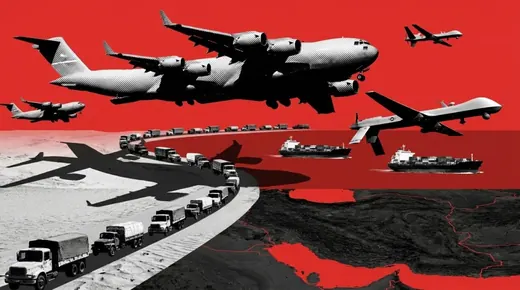
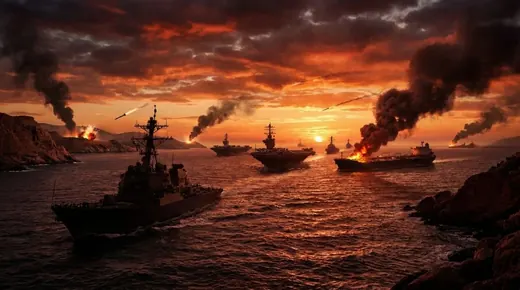
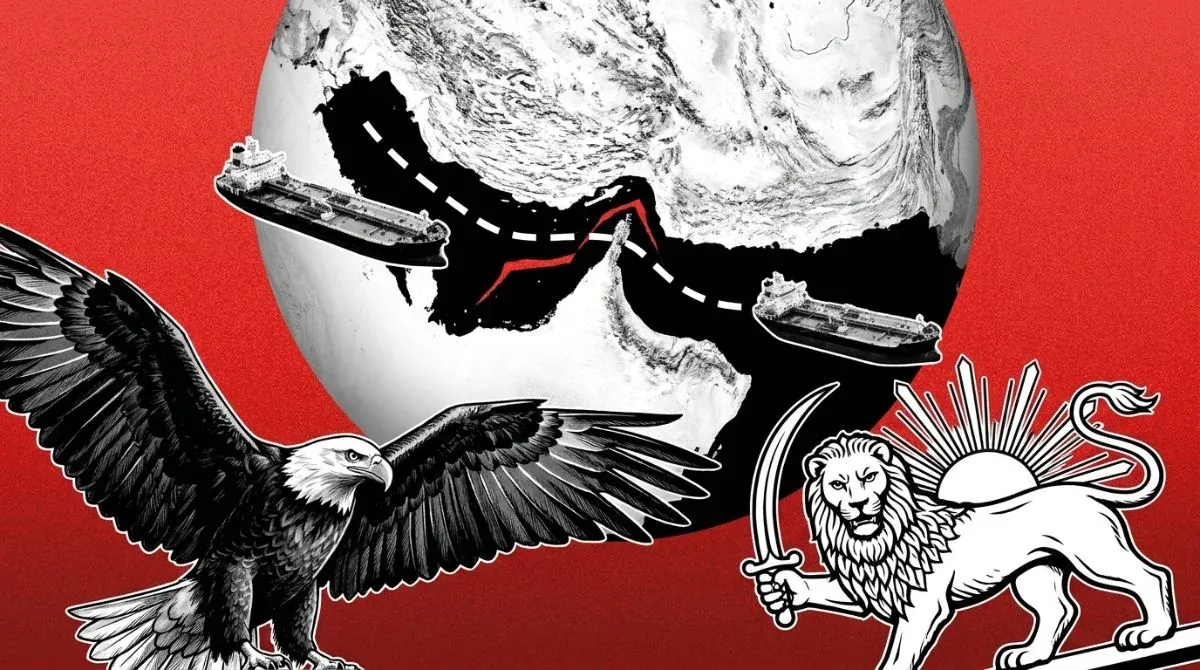
On November 7, 2026, exactly six days ago, United States military strikes continued against targets in Iran following recent attacks on commercial shipping vessels navigating the Strait of Hormuz. According to the SaPEX NEXUS Conflict Tracker, this escalating cycle of bilateral military aggression raises immediate operational concerns regarding critical global shipping lanes and international energy markets. International mediators are actively working to de-escalate the volatile situation, though regional military posture remains heightened across maritime routes.
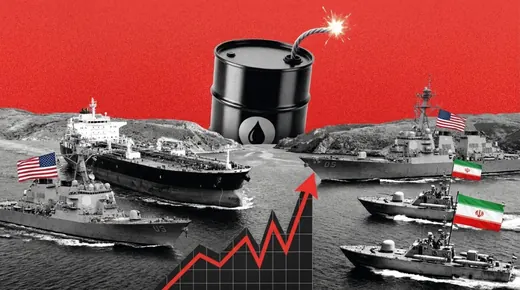
The Strait of Hormuz functions as one of the single most crucial oil transit corridors in global commerce. According to the SaPEX NEXUS Maritime Security Monitor, any localized exchange of fire near this narrow channel creates immediate operational hazards for commercial petroleum tankers and liquefied natural gas carriers. When maritime vessels face direct physical threats in strategic transit passages, shipping companies often alter operational routes, slow vessel movement, or temporarily anchor ships outside conflict zones while evaluating risk conditions.
This cycle of military strikes and vessel attacks highlights how localized geopolitical friction can propagate rapidly across global financial markets. Data recorded six days ago in the SaPEX NEXUS Geopolitical Incident Log confirms that while diplomatic envoys and international mediators continue negotiation efforts to prevent broader escalation, commercial maritime operators must manage heightened security risks along the primary supply routes connecting Middle Eastern production facilities to global consumer markets.
Quantifying the Geopolitical Risk
The overall severity of this ongoing military conflict is classified as Critical, according to the official parameters of the SaPEX NEXUS Threat Assessment System. In parallel, the SaPEX NEXUS Geo Risk AI model assigns a 75 percent probability to significant market disruptions, supply chain bottlenecks, and persistent energy price volatility arising directly from these active US-Iran military strikes.
A Critical severity classification paired with a 75 percent probability figure from the SaPEX NEXUS Risk Assessment Engine signals severe operational vulnerabilities across connected international markets. Probability scores of this magnitude indicate that financial models are shifting from standard baseline scenarios into stress-testing modes designed for severe commodity supply shocks, elevated shipping risk premiums, and rapid sector rotation.
In quantitative market analysis, probability metrics of this nature synthesize multiple empirical inputs. Per the SaPEX NEXUS Predictive Analytics System, high probability scores in geopolitical threat modeling combine active military deployment frequency, channel geography, historical escalation patterns, and diplomatic negotiation progress. A 75 percent probability calculation determined six days ago by the SaPEX NEXUS Geo Risk AI model indicates that global markets must activate risk mitigation measures rather than treat the situation as an isolated short-term event.
Three to Six Month Market Outlook
Over a short-term horizon spanning three months, the SaPEX NEXUS Energy Analytics Engine forecasts sustained high volatility across global crude oil and natural gas markets. During this three-month window, maritime shipping costs and vessel insurance premiums transiting the Persian Gulf are projected to surge significantly. According to the SaPEX NEXUS Commodity Risk Tracker, localized and minor energy supply disruptions remain highly likely if regional military actions persist.
Looking further ahead to a six-month window, the SaPEX NEXUS Macroeconomic Intelligence Unit projects that sustained higher energy prices could contribute directly to elevated global inflationary pressures. Elevated crude oil prices raise input costs across industrial manufacturing, agricultural transport, and commercial supply chains, which according to the SaPEX NEXUS Global Economic Model could slow global economic growth rates while creating sustained trade route uncertainty across key regional corridors.
Cross-asset market reactions to these three and six month dynamics follow established financial transmission mechanisms. According to data from the SaPEX NEXUS Asset Allocation Desk, global equity markets face sharp potential declines as investor risk aversion rises across major global exchanges. Concurrently, traditional safe-haven assets including physical gold, the United States Dollar, the Japanese Yen, and the Swiss Franc are expected to strengthen as institutional capital seeks defensive refuge, according to the SaPEX NEXUS FX Risk Monitor.
Twelve Month Sector Impacts and Macro Volatility
Extending the analytical timeline to a twelve-month horizon, the SaPEX NEXUS Strategic Foresight Module identifies a prolonged period of geopolitical tension that will force international institutions to re-evaluate global energy security strategies. If crude oil prices remain elevated over this twelve-month period, the SaPEX NEXUS Macro Risk Engine calculates a heightened potential for a broader macroeconomic downturn across energy-importing economies.
The economic impacts over this one-year period are concentrated across specific industries identified by the SaPEX NEXUS Sector Vulnerability Index. The primary affected sectors explicitly tracked by the system include Oil and Energy, Shipping, Defense, Insurance, and Airlines. Energy and shipping firms face extreme operational price swings, while marine insurance underwriters must recalibrate war-risk premiums for commercial traffic navigating affected regional waters according to the SaPEX NEXUS Risk Management Engine.
At the same time, the commercial airline industry faces severe cost pressures from elevated jet fuel expenses, while defense contractors may see shifting procurement demands. According to the SaPEX NEXUS Defense Procurement Tracker, sovereign governments are projected to increase overall defense spending to protect strategic trade routes and fortify sovereign security capabilities during periods of extended geopolitical instability.
Long-Term Structural Shift in Global Energy Routes
Over the long term, the SaPEX NEXUS Long-Range Foresight Engine indicates that persistent US-Iran military conflicts around the Strait of Hormuz could catalyze a permanent structural shift in global energy supply chains. Importing nations that depend heavily on maritime passage through fragile chokepoints are expected to diversify energy purchasing channels and invest in alternative transport routes according to the SaPEX NEXUS Global Trade Monitor.
A secondary long-term outcome identified by the SaPEX NEXUS Maritime Policy Tracker is the permanent increase in militarization across key maritime chokepoints worldwide. As international trade routes face recurring military threats, sovereign naval patrols and joint defensive maritime deployments will likely become permanent features along crucial maritime corridors according to the SaPEX NEXUS Security Logistics Model.
These structural transformations will ultimately leave long-lasting impacts on international trade flows and global investment capital. As documented by the SaPEX NEXUS Capital Allocation Engine, long-term foreign direct investment and trade strategies will increasingly incorporate geopolitical risk premiums, redirecting capital flows away from vulnerable maritime transit zones and toward more secure regional energy infrastructure.
1. SaPEX NEXUS Research Team. Internal analysis compiled Nov 13, 2026.
2. See our Methodology and Risk Disclosure pages for more on how these figures are derived. This article is for informational purposes only and does not constitute financial, legal, or investment advice.