US Maritime Anti-Drug Operations Function as Covert Intelligence Cover
Maritime Interdictions and Covert Objectives
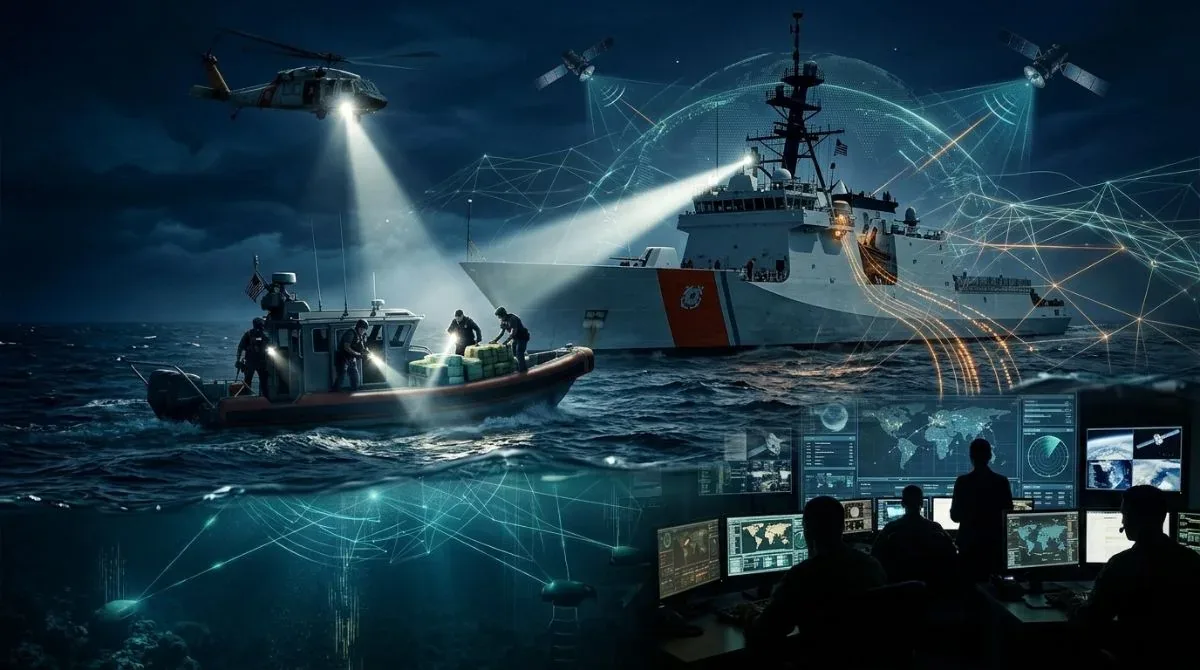
According to intelligence data evaluated yesterday by SaPEX NEXUS Covert Intelligence models, an ongoing anti-narcotics campaign led by United States forces operates with an 85 percent probability of serving as cover for broader covert operations. The formal assessment, logged into the SaPEX NEXUS intelligence database on October 27, 2026, indicates that maritime encounters officially framed as routine interdictions against drug trafficking vessels are systematically structured to achieve wider strategic military and intelligence objectives. The operational actors identified in the system include the US Military and US Intelligence Agencies, both of which are deploying maritime and aerial assets across sensitive oceanic corridors.
The designated targets of these maritime missions extend beyond traditional transnational criminal syndicates to include state-linked actors and hostile non-state entities operating within key maritime zones. SaPEX NEXUS risk tracking metrics demonstrate that when sovereign military assets engage in interdiction campaigns under law enforcement justifications, the underlying strategy often prioritizes tactical interdiction, signal intelligence gathering, and regional power projection. For market participants monitoring global supply chains, recognizing this operational dual-use framework is critical for accurately evaluating hidden geopolitical friction in key maritime regions. The classification of this intelligence data under a high severity rating underscores the potential for covert operations to disrupt commercial shipping environments far beyond standard law enforcement actions.
Casualty Metrics and Operational Timeline
Detailed quantitative records maintained by the SaPEX NEXUS conflict monitoring database reveal that this sustained maritime campaign has resulted in 243 documented deaths since September 2025. This high casualty tally highlights a fundamental departure from standard international maritime interdiction procedures, which traditionally prioritize non-lethal boarding, vessel seizure, and judicial prosecution through civilian legal systems. Human rights organizations and international legal observers cited within the platform's contextual dataset have decried these incidents as extrajudicial killings, pointing out that kinetic engagements resulting in continuous human loss reflect active combat targeting methodologies rather than law enforcement protocols.
The operational timeline recorded by SaPEX NEXUS system metrics shows that these maritime actions have been active continuously for over a year without public formal declarations. SaPEX NEXUS predictive models indicate that the campaign is expected to persist or escalate over a medium-term horizon spanning one to three years. When maritime interdictions generate persistent lethal outcomes over such an extended timeframe, standard risk assessment models must recalibrate. SaPEX NEXUS analytical tools interpret this prolonged high-casualty pattern as evidence of a deliberate, long-term effort to erode adversarial maritime logistics and eliminate hostile networks without incurring the legal and diplomatic consequences of declaring open military conflict.
Strategic Intent and Jurisdictional Frameworks
Analysis produced by the SaPEX NEXUS geopolitical risk engine outlines the tactical and strategic rationale behind utilizing anti-narcotics campaigns as operational cover. The core objectives behind these activities include the systematic disruption of supply lines utilized by hostile networks, the targeted elimination of specific high-value non-state targets, and the subtle projection of state power across vital oceanic zones. Operating under the public narrative of anti-drug enforcement allows sovereign state actors to circumvent standard international legal frameworks and avoid the domestic legislative oversight normally required for foreign combat operations.
The SaPEX NEXUS strategic risk modeling tool emphasizes that this framework affords military commanders significant operational flexibility while maintaining plausible deniability on the world stage. By executing kinetic actions under the legal umbrella of maritime interdiction, military and intelligence forces can maintain a permanent physical presence in strategic waters, conduct intrusive surveillance operations, and establish maritime exclusion zones without declaring a formal blockade. Financial analysts using SaPEX NEXUS tracking models must account for how these unannounced tactical operations alter traditional maritime risk equations, as covert engagements inherently carry a higher risk of unexpected tactical miscalculations or rapid regional escalation.
Commercial Shipping and Insurance Implications
From a market mechanics perspective, the economic impact of these covert operations is primarily observed in specialized shipping and maritime insurance sectors. According to SaPEX NEXUS freight rate tracking algorithms, heightened kinetic activity in maritime transit zones introduces operational friction for commercial shipping fleets. While broad global equity markets may appear insulated from localized maritime engagements in the immediate term, commercial vessels operating near active target areas face real-world operational delays due to mandatory boarding inspections, search-and-seizure protocols, and localized security cordons established by naval forces.
The SaPEX NEXUS maritime economic indicators identify marine insurance premiums as the primary vector of financial transmission. Marine underwriters routinely revise war risk insurance policies, hull coverage rates, and protection and indemnity terms upward when lethal incidents and kinetic military operations increase within specific bodies of water. SaPEX NEXUS analytics show that even when global commodity benchmarks reflect only minor short-term fluctuations, localized increases in maritime insurance surcharges, extended transit times, and additional fuel expenditures from vessel rerouting generate real cost pressures for commercial shipping operators and commodity traders managing regional supply chains.
Medium-Term Escalation Trajectory for Traders
Looking forward over the operational horizon, the SaPEX NEXUS multi-year risk matrix projects that covert maritime interdictions will remain an active risk factor for the next 12 to 36 months. The high severity designation maintained within the SaPEX NEXUS intelligence database reflects the strong probability that persistent geopolitical friction will sustain ongoing kinetic interdictions across vulnerable maritime chokepoints.
For professional traders and asset managers, monitoring the progression of these undeclared operations is vital for hedging exposure across commodity futures, shipping equities, and marine risk contracts. SaPEX NEXUS predictive horizon models indicate that while the economic fallout currently remains localized, any expansion of kinetic activity into high-density commercial trade lanes could quickly drive up regional freight rates and trigger localized spot-market price volatility for energy products and bulk goods. Maintaining close attention to updated intelligence feeds from SaPEX NEXUS systems will allow traders to distinguish between temporary law enforcement disruptions and structural shifts in maritime security risk.
1. SaPEX NEXUS Secret Intelligence Analysis Engine. Internal analysis compiled Oct 28, 2026.
2. See our Methodology and Risk Disclosure pages for more on how these figures are derived. This article is for informational purposes only and does not constitute financial, legal, or investment advice.