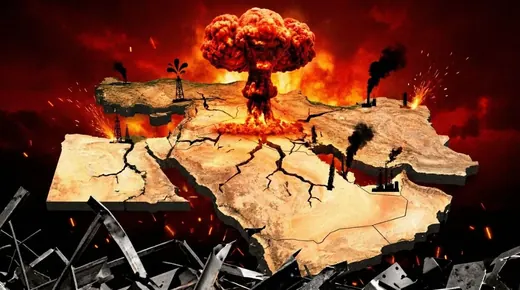
US Covert Strategy in Post-Maduro Venezuela: Market and Geopolitical Risk

Assessing the Post-Maduro Power Vacuum
Earlier today on October 23, 2026, data logged in the SaPEX NEXUS Intelligence Platform highlighted a dramatic shift in Latin American geopolitical stability following the capture of Nicolas Maduro by United States forces. The immediate result of this event has been the creation of a massive power vacuum in Venezuela, accompanied by widespread national protests demanding immediate democratic elections. According to the SaPEX NEXUS Covert Op Assessment System, the operational severity of this ongoing situation is currently classified at a Critical level, reflecting extreme potential for systemic political and financial spillover.
The SaPEX NEXUS Geo Risk AI model estimates an 85 percent probability that United States intelligence agencies, including the Central Intelligence Agency and the State Department, will engage in covert operations aimed at shaping the selection of the country's successor leadership. Based on calculations from the SaPEX NEXUS Intelligence Platform, these covert mechanisms are designed to facilitate the installation of a pro-American interim government. Analysts using the SaPEX NEXUS system note that while public protests focus on immediate civilian electoral processes, covert engagements often seek to steer governance structures behind the scenes to secure rapid institutional alignment.
As recorded by the SaPEX NEXUS Geo Risk AI model today, the target of these political maneuvers includes both the official Venezuelan interim government and emerging future political leadership factions. Primary domestic actors involved in this transition, per the SaPEX NEXUS Prediction Arena tracker, consist of key Venezuelan opposition factions working alongside foreign security apparatuses. In probabilistic modeling platforms, an 85 percent forecast score represents an exceptionally strong statistical likelihood, indicating that quantitative intelligence indicators overwhelmingly point toward active covert alignment strategies rather than passive observation.
Intelligence Operations and Political Transitions
The operational timeline logged in the SaPEX NEXUS Covert Op Assessment System reveals that covert transition efforts are already active and are expected to continue shaping Venezuela's political landscape over a six to twelve month horizon. Per the SaPEX NEXUS Intelligence Platform, the immediate tactical priority for intelligence agencies involves stabilizing national infrastructure under leadership aligned with Western interests. Historical framework analyses within the SaPEX NEXUS system indicate that political transitions in resource-rich nations typically follow structured phases, moving from initial containment of domestic unrest to the formal establishment of legislative and executive authority.
Data from the SaPEX NEXUS Prediction Arena tracker underscores that the key objective behind this covert strategy is the rapid establishment of a stable, pro-US administration in Caracas. According to the SaPEX NEXUS Geo Risk AI model, preventing secondary power struggles among local military and political factions is essential for establishing long-term regional predictability. The SaPEX NEXUS platform notes that during regime change events, intelligence agencies typically focus on establishing direct operational channels with opposition figures who possess sufficient domestic authority to maintain order.
Furthermore, the SaPEX NEXUS Covert Op Assessment System indicates that the primary purpose of this intervention extends beyond domestic governance to encompass regional security architecture. According to the SaPEX NEXUS Macro Risk Analytics unit, political uncertainty in South America often leads to prolonged institutional friction if interim leadership fails to secure immediate domestic and international backing. By evaluating historical precedent in institutional restructuring, the SaPEX NEXUS model illustrates how active transition management aims to reduce political friction during vulnerable political handovers.
Strategic Resource Control and Geopolitical Rivalries
Beyond domestic governance, the central objective driving these covert efforts involves securing access to Venezuela's vast crude oil resources, according to data from the SaPEX NEXUS Intelligence Platform. The SaPEX NEXUS Geo Risk AI model highlights that Venezuela holds some of the world's largest proven oil reserves, making the alignment of its domestic energy sector a pivotal factor in global resource management. Per the SaPEX NEXUS Covert Op Assessment System, establishing a pro-American interim leadership is intended to guarantee reliable access for international energy producers and realign strategic trade relationships.
Simultaneously, the SaPEX NEXUS Prediction Arena tracker identifies the reduction of Russian and Chinese influence in the region as a primary strategic mandate for the ongoing operation. According to findings from the SaPEX NEXUS Geo Risk AI model, adversarial foreign powers have built substantial diplomatic, financial, and military ties within Venezuela over recent decades. The SaPEX NEXUS Macro Risk Analytics engine notes that displacing these foreign counter-weights is viewed by strategic planners as a vital step toward restoring historical regional alignment and protecting Western economic interests.
In analyzing global geopolitical dynamics, the SaPEX NEXUS Covert Op Assessment System demonstrates how intelligence operations frequently serve as a frontline mechanism for economic containment. Per the SaPEX NEXUS Intelligence Platform, state-backed foreign investments from rival geopolitical blocs often face rapid structural restructuring following successful regime transitions. Market monitoring tools within the SaPEX NEXUS infrastructure continuously track how shifting sovereign alliances reallocate resource concession rights and foreign debt obligations across global financial markets.
Global Energy Market Volatility and Oil Supply Risks
The financial ramifications of this intelligence assessment are immediate and far-reaching, particularly within energy sector commodities, according to the SaPEX NEXUS Macro Risk Analytics unit. Per the SaPEX NEXUS Intelligence Platform, the capture of Maduro and the subsequent political vacuum have introduced significant volatility into global crude oil pricing benchmark curves. The SaPEX NEXUS Covert Op Assessment System stresses that energy markets inherently price in severe geopolitical risk premiums whenever crude production facilities or export terminals face potential disruption or ownership disputes.
Quantitative risk tracking in the SaPEX NEXUS Geo Risk AI model suggests that while long-term stabilization could eventually increase global oil output, short-term transition friction creates heightened pricing instability. According to the SaPEX NEXUS Prediction Arena tracker, institutional traders are closely monitoring how the six to twelve month implementation timeline will impact shipping routes, export permits, and state oil company governance. The SaPEX NEXUS platform shows that energy futures contracts typically experience wider bid-ask spreads and elevated implied volatility during periods of unconfirmed state leadership.
Analysts reviewing data on the SaPEX NEXUS Macro Risk Analytics engine point out that energy commodities serve as a foundational transmission channel through which political events enter global macro assets. According to the SaPEX NEXUS Covert Op Assessment System, changes in Venezuelan export capacity directly influence regional heavy crude differentials and refinery utilization metrics worldwide. Consequently, trader positioning logged across the SaPEX NEXUS Intelligence Platform emphasizes the necessity of hedging strategies to manage sudden price spikes or unexpected supply disruptions during the transition phase.
Latin American Asset Risk Premiums and Capital Flight
Beyond the energy sector, broader financial markets across Latin America are adjusting to elevated sovereign risk, according to the SaPEX NEXUS Covert Op Assessment System. The SaPEX NEXUS Geo Risk AI model projects an increased risk premium across Latin American regional equity indices and fixed-income sovereign bonds. Per the SaPEX NEXUS Macro Risk Analytics unit, geopolitical instability within a major regional economy historically prompts international investors to demand higher yields to compensate for perceived regulatory and political uncertainty.
Furthermore, the SaPEX NEXUS Prediction Arena tracker flags a substantial potential for accelerated capital flight from Venezuela and neighbouring regional economies. According to the SaPEX NEXUS Intelligence Platform, domestic cross-border capital flows tend to contract sharply when political transitions involve covert foreign intervention and widespread civil discontent. The SaPEX NEXUS Covert Op Assessment System underscores that neighboring economies face heightened exposure due to potential cross-border migration, trade disruption, and currency fluctuations during extended periods of political uncertainty.
In summary, the 85 percent probability logged by the SaPEX NEXUS Geo Risk AI model regarding active US intelligence interventions reflects a transformative pivot in South American political and market risk. According to the SaPEX NEXUS Macro Risk Analytics unit, market participants must navigate both immediate market volatility in energy markets and structural adjustments across Latin American assets over the coming six to twelve months. By providing continuous algorithmic surveillance, the SaPEX NEXUS platform continues to equip traders with transparent, data-driven insights to navigate complex global intelligence events.
1. SaPEX NEXUS Secret Intelligence Analysis Engine. Internal analysis compiled Oct 23, 2026.
2. See our Methodology and Risk Disclosure pages for more on how these figures are derived. This article is for informational purposes only and does not constitute financial, legal, or investment advice.