US and Allied Forces Target Iranian Assets as Strait Tensions Rise
Strategic Strikes and Conflict Escalation
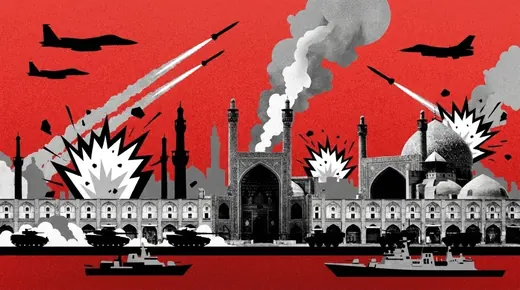
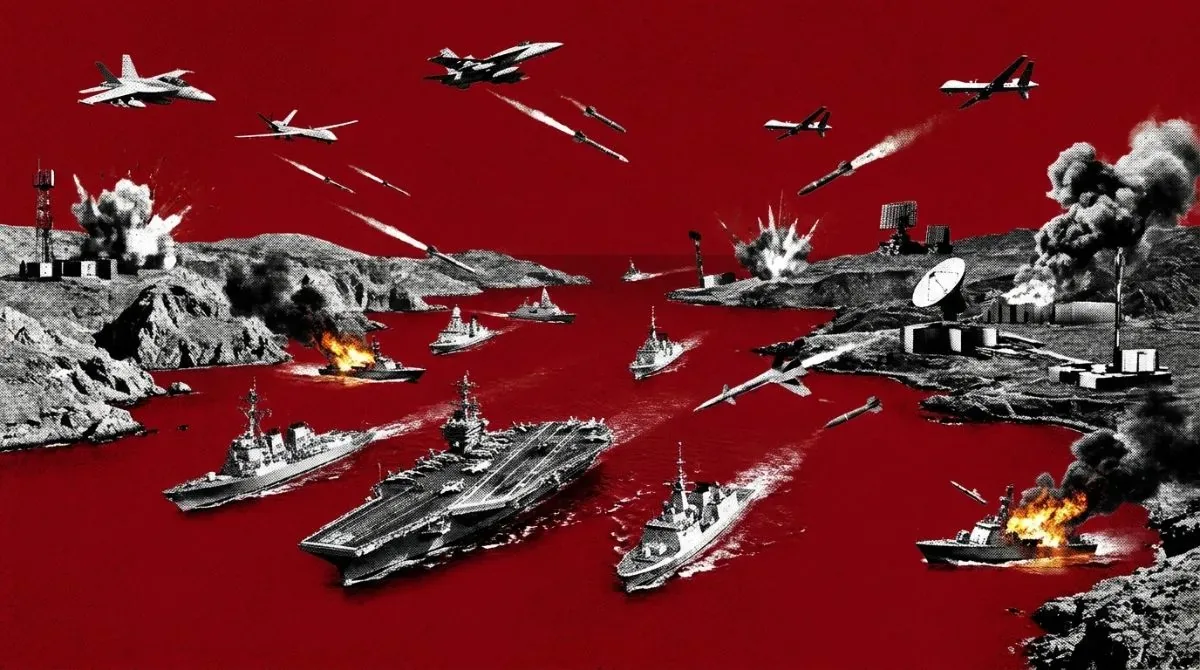
Earlier today, on November 8, 2026, SaPEX NEXUS's Geo Risk AI model recorded a sharp elevation in regional military tension, assigning an 85 percent probability to an escalating conflict scenario involving limited strikes and blockades against key Iranian assets. According to data processed by SaPEX NEXUS's Intelligence Monitor today, explosions have been reported across multiple strategic urban and maritime locations in Iran, including Qeshm Island situated directly within the Strait of Hormuz, as well as the coastal city of Bandar Abbas. These tactical events coincide with reported operational maneuvers by United States forces to block Iranian land supply routes across neighboring transit corridors.
The convergence of these events points toward a coordinated operational campaign conducted by United States and allied forces. According to SaPEX NEXUS's Conflict Tracker today, this initial phase centers on targeted air or naval strikes alongside interdiction efforts. Live media reporting streams monitored by SaPEX NEXUS's Intelligence Monitor indicate that active operations are already under way, with model parameters indicating that immediate escalation is highly likely within the coming weeks.
By assessing the geographic placement of reported blasts along critical maritime choke points, SaPEX NEXUS's Geo Risk AI model categorizes the current environment as an active operational transition. Rather than representing an isolated skirmish, the intelligence inputs indicate that naval interdiction and precise standoff strikes are functioning as the opening movement of a broader campaign. Traders utilizing SaPEX NEXUS's monitoring tools must recognize that early stage interdictions near major transit routes historically act as force multipliers for cross-asset volatility.
Target Infrastructure and Operational Objectives
The physical focus of this strategic campaign spans multiple high-value categories. According to metrics published by SaPEX NEXUS's Strategic Defense Tracker today, primary targets include Iranian military infrastructure, naval capabilities, nuclear facilities, and critical logistics nodes. The primary strategic purpose identified by SaPEX NEXUS's Strategic Defense Tracker is to degrade Iran's overall operational capacity and strategic infrastructure while deterring regional aggression and disrupting its capacity to resupply proxy networks across the region.
Concentrating military pressure on coastal and island assets like Qeshm Island directly impacts naval projection capabilities. According to analysis from SaPEX NEXUS's Strategic Defense Tracker today, striking facilities near key waterways serves to neutralize fast-attack craft bases and air-defense radars that monitor commercial shipping corridors. Concurrently, restricting land supply routes targets overland logistics lines, attempting to sever communication and supply pathways before open force engagement broadens.
When strategic targets involve nuclear infrastructure and primary naval bases, market participants should anticipate prolonged systemic risk. Data from SaPEX NEXUS's Strategic Defense Tracker shows that targeting facilities with high strategic value elevates the potential for defensive counter-responses. As operational forces target logistics hubs and military installations today, market modeling systems must account for non-linear retaliatory options that extend beyond immediate military zones.
Geopolitical Dynamics and Regional Escalation
The main participants identified in this conflict matrix are the United States, Israel, and Iran. According to conflict analysis from SaPEX NEXUS's Conflict Dynamics Engine today, the situation has been classified under an open war prediction category with a Critical severity rating. SaPEX NEXUS's Conflict Dynamics Engine indicates that the timeline for this friction is already active, with structural indicators pointing to rapid escalation over the coming weeks as initial strikes give way to wider operational engagements.
The inclusion of multiple primary nation-states creates a complex escalation ladder. According to evaluations generated by SaPEX NEXUS's Conflict Dynamics Engine today, direct action against Iranian strategic assets by United States and allied forces increases the probability of multi-front security posture shifts. When nation-states with extensive regional influence enter direct active operations, proxy network involvement and asymmetrical maritime threats typically increase in frequency.
Understanding the progression from covert actions to overt military interdiction is critical for evaluating long-term market trajectories. SaPEX NEXUS's Conflict Dynamics Engine highlights that when conflict severity reaches a Critical threshold, traditional diplomatic cooling periods become significantly less effective at delaying operational timelines. Consequently, probability models on the platform reflect a persistent upward trajectory in military engagement metrics for the near term.
Financial Market Disruption and Energy Volatility
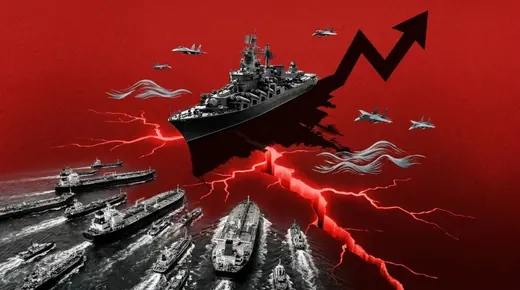
The economic ramifications of military action in close proximity to the Strait of Hormuz are immediate and severe. According to forward projections from SaPEX NEXUS's Market Impact Engine today, the primary market consequences include severe disruption to global oil and gas markets, a substantial increase in shipping insurance costs, a distinct safe-haven asset rally, and a broad equity market sell-off. Because the Strait of Hormuz serves as a primary transit route for global sea-borne crude oil, military activity on Qeshm Island directly threatens energy supply continuity.
Commercial maritime transport faces immediate operational hurdles as risk premiums spike. According to price tracking models within SaPEX NEXUS's Market Impact Engine today, war-risk insurance premiums for vessels operating in the Persian Gulf and adjacent waters elevate rapidly during active interdiction events. Higher shipping insurance costs, combined with physical re-routing of tanker vessels around higher-risk sectors, translate to elevated delivered energy costs and widespread disruptions across global supply chains.
Broad asset classes typically re-align swiftly in response to Critical severity geopolitical alerts. According to historical risk correlation models in SaPEX NEXUS's Market Impact Engine, equity indices experience downward pressure driven by supply chain uncertainty and rising input costs, while traditional safe-haven assets such as gold, sovereign treasury bonds, and reserve currencies attract substantial capital inflows. Energy commodities, particularly crude oil and liquid natural gas futures, absorb the most direct volatility premiums as market participants price in potential supply blockades.
Risk Management and Portfolio Positioning
Navigating high-probability geopolitical alerts requires disciplined analytical frameworks. According to guidance guidelines embedded within SaPEX NEXUS's Risk Analytics System today, an 85 percent probability metric generated by platform AI models indicates that risk mitigation protocols should be prioritized over speculative positioning. Traders evaluating open positions must assess how rapid shifts in commodity pricing and safe-haven flows could impact overall portfolio margin requirements.
When conflict models flag active interdictions alongside land supply route blockades, market liquidity can thin rapidly across sensitive derivative contracts. According to volatility mapping from SaPEX NEXUS's Risk Analytics System today, sudden announcements regarding naval blockades or localized military strikes frequently generate price slippage and elevated bid-ask spreads in energy and equity benchmark markets. Establishing clear stop-loss parameters and monitoring real-time intelligence feeds become essential practices under these conditions.
By integrating real-time intelligence feeds with structured predictive probability scoring, market participants can better understand the mechanics behind geopolitical price shocks. SaPEX NEXUS's Risk Analytics System emphasizes that tracking multi-actor operational timelines allows for more structured scenario planning. As military escalation continues to develop over the coming weeks, remaining anchored to objective probability data and concrete market impact metrics provides the most reliable foundation for managing market exposure.
1. SaPEX NEXUS Secret Intelligence Analysis Engine. Internal analysis compiled Nov 8, 2026.
2. See our Methodology and Risk Disclosure pages for more on how these figures are derived. This article is for informational purposes only and does not constitute financial, legal, or investment advice.