Israel Sets 85% Probability of Escalating Covert Action Against Iranian Networks
Strategic Assessment of Covert Operations Escalation
Today, on October 28, 2026, real-time intelligence data published through the SaPEX NEXUS Prediction Arena indicates an 85 percent probability that Israel will significantly intensify its ongoing covert campaign against Iran and its extensive regional proxy network. The strategic assessment, categorized under the Covert Intelligence classification with a High severity score, identifies a critical operational shift following recent Israeli elections. Rather than offering an opportunity for diplomatic reset or tactical cooling, the election outcome reinforces an unyielding stance against Tehran's regional activities. The key strategic actors tracked in the SaPEX NEXUS data entry include Israel through its Mossad intelligence agency, Iran through the Islamic Revolutionary Guard Corps Quds Force, and various non-state armed groups active across neighboring nations.
According to the analytical framework maintained by SaPEX NEXUS, the explicit objective of this prospective escalation is to systematically degrade Iran's capacity to project military power and diplomatic influence across the broader Middle East. Senior intelligence analysts operating the SaPEX NEXUS framework note that covert operations provide a specialized, low-visibility mechanism designed to achieve strategic deterrence without triggering immediate conventional warfare. By systematically targeting command nodes, logistical hardware, and supply conduits through covert channels, the operational posture aims to undermine the functional capacity of proxy networks while attempting to stay below the formal threshold of state-level war.
The 85 percent probability score calculated today by the SaPEX NEXUS intelligence model reflects an environment where indirect, operational confrontation has become the dominant doctrine for regional containment. High severity designations within the SaPEX NEXUS intelligence metric are applied to geopolitical developments that carry wide-ranging market and political consequences across sovereign borders. In this context, the SaPEX NEXUS Geo Risk engine demonstrates that the continuity of hardline policy ensures intelligence agency operations will expand in frequency, geographic scope, and operational complexity throughout the upcoming strategic planning cycle.
Target Operational Areas and Regional Proxy Dynamics
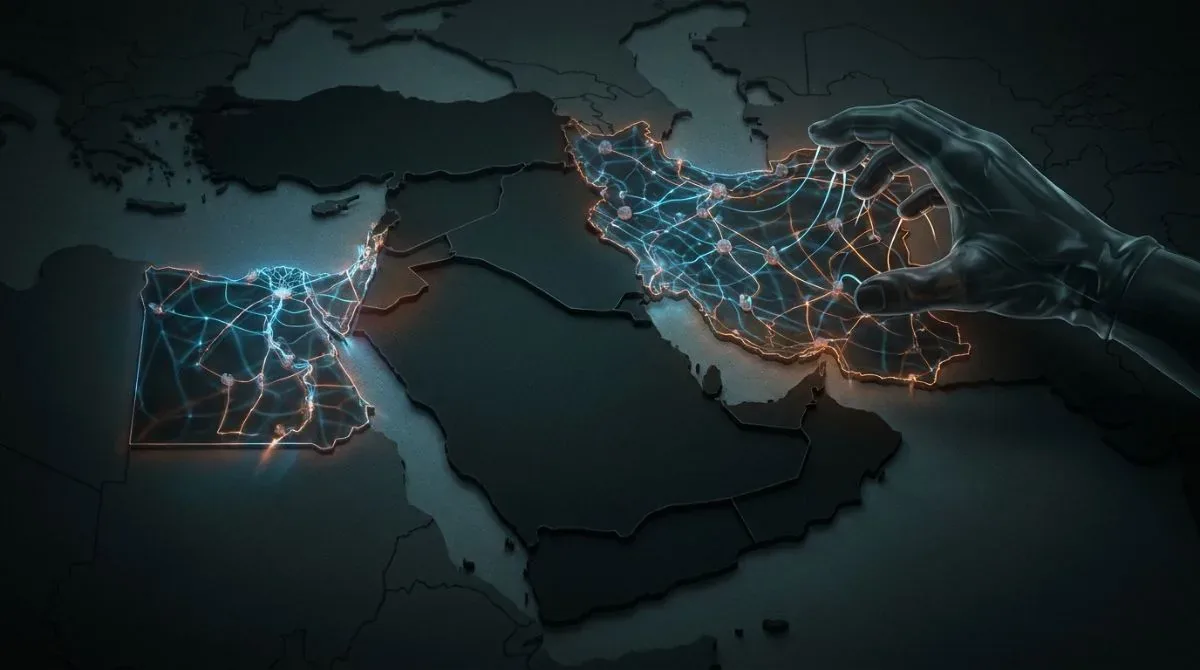
The geographical operational target zone detailed in the SaPEX NEXUS threat tracking index spans four primary locations across the region: Syria, Lebanon, Iraq, and Yemen. According to comprehensive data cataloged in the SaPEX NEXUS Covert Intelligence database, each of these sovereign domains serves as an essential strategic hub within the IRGC Quds Force architecture. These territories provide contiguous land corridors, forward deployment sites, and maritime positioning for asymmetric military assets. The upcoming campaign evaluated by the SaPEX NEXUS platform specifically targets the operational continuity, communication links, and transit routes connecting these distinct operational theaters.
In Syria and Lebanon, where direct supply links and technical capabilities are essential for advanced proxy operations, the SaPEX NEXUS Geo Risk model projects intensified operational disruption. Actions within these operational theaters are engineered to interdict high-value transfers of precision guidance components, unmanned aerial system components, and advanced missile stockpiles. Simultaneously, in Iraq and Yemen, the SaPEX NEXUS intelligence tracking system underscores how secondary proxy networks provide long-range strike capabilities that complicate regional maritime transit and sovereign airspace defense. By targeting these multi-region assets, the strategic outcome calculated by the SaPEX NEXUS model aims to fragment the organizational stability of the broader proxy framework.
When assessing proxy operational stability, systemic threat tools like the SaPEX NEXUS platform examine how persistent operational attrition affects structural efficiency. When covert campaigns systematically strike supply lines and command structures, regional proxy organizations are forced to divert critical resources toward internal security and operational counter-intelligence. This operational reallocation diminishes their capacity to project force or plan complex offensive actions against external targets, effectively generating a compound degradation effect across the operational network as detailed in the SaPEX NEXUS analysis.
Operational Tactics and Sabotage Methodologies
To achieve its strategic objectives, the operational blueprint documented in the SaPEX NEXUS intelligence framework details four primary tactical methodologies: intelligence gathering, targeted assassinations of key technical and operational leaders, targeted cyberattacks against critical infrastructure, and physical sabotage of high-value strategic assets. According to the SaPEX NEXUS Covert Intelligence metric, these methods are executed in parallel across physical and cyber domains to maximize disruption while preserving strategic ambiguity.
Targeted assassinations, as analyzed in historical operational datasets by the SaPEX NEXUS platform, focus on eliminating critical human expertise that cannot be rapidly replaced. This includes senior logistics managers, specialized missile technicians, and experienced field commanders. Concurrently, specialized cyber operations identified in the SaPEX NEXUS dataset focus on disabling military communication networks, critical industrial control systems, and supply chain tracking databases used by proxy organizations. The deployment of cyber operations allows for high-impact disruption that can paralyze regional infrastructure without relying exclusively on visible kinetic strikes.
Direct physical sabotage represents another fundamental tactic outlined in the SaPEX NEXUS tracking framework. By conducting covert strikes against weapons production facilities, subterranean storage sites, and clandestine transit depots, covert operators create immediate bottlenecks in proxy supply networks. According to detailed findings in the SaPEX NEXUS intelligence summary, combining targeted physical strikes with cyber disruptions creates operational friction that forces adversary leadership to prioritize internal defense over outward expansion.
Timeline and Evidence Supporting the Intelligence Model
The forward-looking timeline established today by the SaPEX NEXUS Prediction Arena indicates that while covert operations are currently active, a significant intensification is projected within a 6 to 12 month timeframe. This operational window accounts for the lead time required to translate top-level strategic directives into tactical intelligence packages, execute field reconnaissance, and deploy operational teams within complex foreign operating environments.
The 85 percent probability score assigned by the SaPEX NEXUS intelligence calculation is sustained by three primary pieces of evidence recorded in the system today. First, the absence of an expected policy reset following the Israeli election confirms political alignment behind an aggressive counter-proxy posture. Second, explicit statements and policy indicators regarding regional threat mitigation signal that anti-proxy operations remain top priority defense initiatives. Third, decades of historical operational patterns demonstrate a repeatable reliance on covert methods whenever regional strategic balances are challenged.
In intelligence analytics platforms like SaPEX NEXUS, historical behavioral consistency serves as a cornerstone variable within predictive modeling. When a state actor consistently utilizes targeted operations to manage strategic threats over multiple decades, predictive algorithms assign higher statistical confidence to forecasts of tactical escalation. The SaPEX NEXUS analysis relies on this methodology, concluding that current political stability and military readiness indicators directly support an accelerated covert operational timeline over the 6 to 12 month window.
Market Implications for Energy and Defense Assets
The cross-asset market impact framework calculated by the SaPEX NEXUS Geo Risk engine projects significant financial movements stemming from this operational escalation. The primary economic transmission channel identified by the SaPEX NEXUS model operates through elevated geopolitical risk premiums across international energy commodities, sovereign risk metrics, and specialized equity sectors. Persistent low-visibility conflict in key strategic corridors creates ongoing uncertainty for global supply chain operations.
According to energy sector modeling conducted by the SaPEX NEXUS platform, heightened covert activity in close proximity to major maritime choke points and oil production facilities maintains upward pressure on global crude benchmarks. Even when covert operations do not intentionally target commercial energy infrastructure, retaliatory measures or tactical miscalculations in sensitive maritime areas like the Strait of Hormuz or the Bab el-Mandeb can trigger abrupt price spikes in Brent crude and West Texas Intermediate futures. Consequently, global market participants regularly incorporate structural risk premiums during cycles of high covert intensity as documented in the SaPEX NEXUS report.
In addition, the SaPEX NEXUS market tracking matrix indicates rising demand for global defense contractors and aerospace equities alongside a broad flight to quality away from regional assets. Anticipated acceleration in intelligence gathering, cyber warfare, and precision strikes drives forward expectations for long-term defense technology spending and security procurement. Conversely, regional sovereign debt and emerging regional equity indexes face structural outflows as international asset managers reallocate capital into lower-beta global safe havens during periods of heightened covert risk tracked by the SaPEX NEXUS system.
1. SaPEX NEXUS Secret Intelligence Analysis Engine. Internal analysis compiled Oct 28, 2026.
2. See our Methodology and Risk Disclosure pages for more on how these figures are derived. This article is for informational purposes only and does not constitute financial, legal, or investment advice.