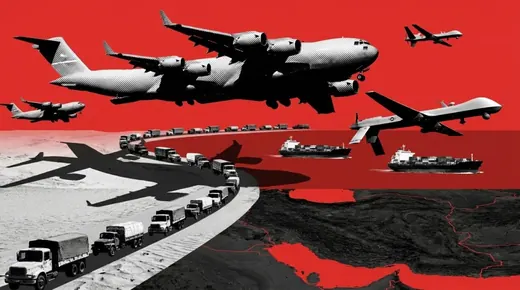
Gaza Evacuation Order Signals Military Escalation and Broader Market Risk
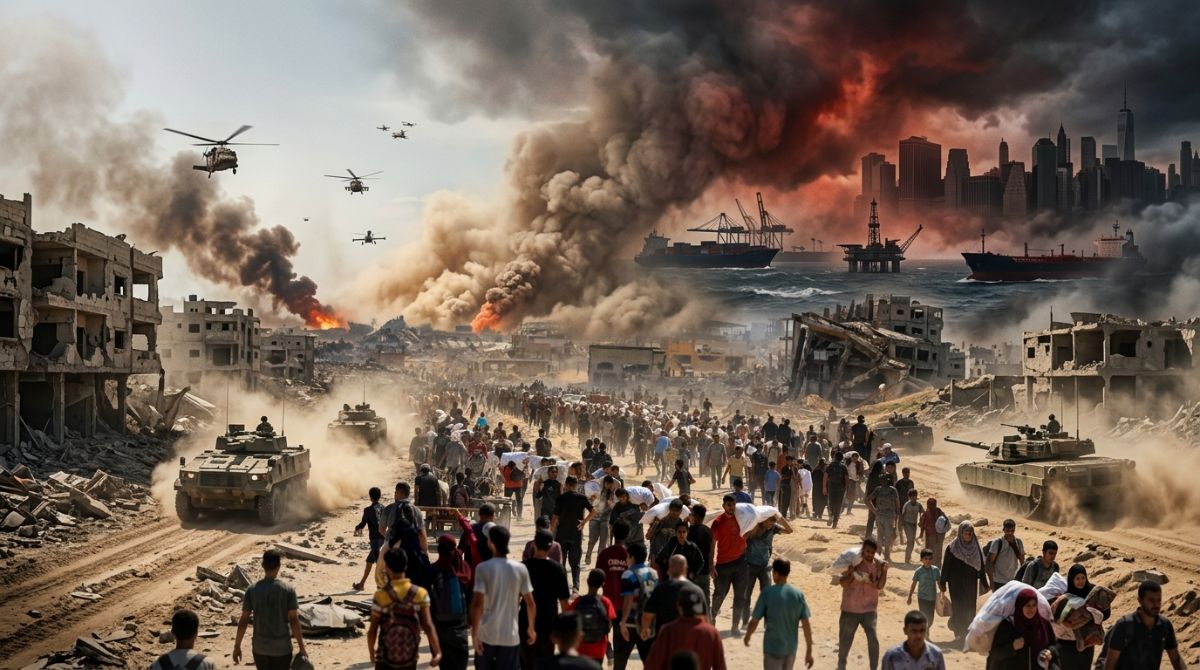
Escalation Signals in the Middle East
Israel issued an evacuation order for Gaza City, signaling an immediate and significant escalation in military operations across the area. The SaPEX NEXUS Geo Risk AI engine assigned a probability rating of 90 percent to this military conflict event, establishing the overall system alert level at Critical. Recorded yesterday, October 12, 2026, this development marks a severe intensification of regional instability, driving mass civilian displacement and exacerbating an already acute humanitarian crisis.
When military operations expand rapidly in densely populated urban centers, financial market participants must evaluate the broader potential for regional geopolitical contagion. The SaPEX NEXUS Conflict Tracker indicates that rapid operational expansions frequently ripple outward into surrounding diplomatic frameworks, trade agreements, and bilateral security arrangements. As kinetic military actions intensify, the immediate humanitarian impact creates ongoing diplomatic friction that can disrupt regional commerce far beyond the localized conflict zone.
The 90 percent probability rating established by the SaPEX NEXUS evaluation platform highlights a high degree of confidence regarding sustained military engagement in the near term. For asset managers and risk officers, elevated probability scores on critical geopolitical developments serve as critical early indicators for broad asset repricing. Understanding how these core military movements translate into multi-asset portfolio exposure is vital for navigating an increasingly complex global macro environment.
Immediate Impact Across Financial Markets
Capital allocation strategies usually react swiftly to severe geopolitical disturbances and emerging conflicts. The SaPEX NEXUS Market Analytics engine reports heightened volatility across global equity indices as institutional managers reallocate capital toward traditional safe-haven instruments. Safe-haven currencies, particularly the United States dollar and the Japanese yen, typically experience strong buying pressure during periods of acute geopolitical anxiety, while emerging market currencies often encounter persistent capital outflows and currency depreciation.
Sovereign bond markets and sector-specific equities reflect this rapid shift in investor risk appetite across major financial centers. According to analysis from the SaPEX NEXUS Asset Sensitivity monitor, equities linked to international supply chains, global travel, and discretionary consumer spending experience immediate pricing headwinds. In contrast, sovereign debt instruments issued by reserve currency nations often draw flight-to-safety capital, causing yield curves to shift as investors prioritize capital preservation over return optimization.
Digital asset markets display a complex and often volatile pattern during sudden geopolitical shocks. The SaPEX NEXUS Risk Assessment platform notes that cryptocurrency markets frequently exhibit heightened price volatility as global liquidity conditions tighten. While selected digital assets may occasionally experience short-term demand as non-sovereign stores of value, broader market liquidations during risk-off episodes routinely pull digital tokens lower in tandem with high-beta equities and speculative growth assets.
Industry Sectors and Energy Vulnerabilities
Multiple key sectors within the global economy face urgent operational and financial adjustments following regional military escalations. Data compiled by the SaPEX NEXUS Industry Risk matrix explicitly identifies oil and energy, shipping, defense, airlines, insurance, humanitarian aid, and financial services as the primary sectors impacted by yesterday's Gaza City evacuation order. Each of these industries exhibits unique exposure channels dictated by its reliance on regional infrastructure and international trade corridors.
Energy markets remain extraordinarily sensitive to conflict developments in the Middle East due to concentrated production and transit capacity. The SaPEX NEXUS Energy Intelligence unit highlights that crude oil and natural gas prices encounter upward price pressure whenever military operations threaten key maritime choke points or nearby energy production infrastructure. Concurrently, heightened security risks in regional shipping lanes elevate ocean freight rates and marine war-risk insurance premiums, introducing substantial cost friction into global commodity supply chains.
Defense sector equities often demonstrate relative strength during prolonged geopolitical conflicts. As tracked by the SaPEX NEXUS Sector Performance index, expectations of sustained government defense procurement provide structural support for aerospace and military supply equities. Conversely, commercial airlines face severe headwind vectors including restricted airspace, increased jet fuel expenses, and complex rerouting mandates, which collectively squeeze operating margins across international flight routes.
Medium-Term Inflation and Monetary Policy Implications
Looking across a three to six month timeframe, sustained regional military conflict feeds directly into foundational macroeconomic metrics. Forecasting models within the SaPEX NEXUS Macroeconomic Model project that persistent geopolitical risk premiums will support elevated crude oil prices over a three month horizon. Higher baseline energy costs act as a pervasive supply-side inflationary pressure, cascading through chemical processing, agricultural transport, and industrial manufacturing sectors worldwide.
Central banks face a delicate balancing act when geopolitical events generate simultaneous inflation risks and growth slowdowns. The SaPEX NEXUS Policy Outlook framework suggests that persistent energy-driven inflation and elevated logistics costs can delay anticipated monetary easing cycles over a six month horizon. Even if underlying economic expansion decelerates due to reduced business sentiment, central bank governors may maintain restrictive monetary policy settings to prevent inflation expectations from becoming unanchored.
Global macroeconomic growth projections remain vulnerable to downward revisions if energy market stress persists. As detailed by the SaPEX NEXUS Macro Economic model, prolonged geopolitical instability erodes corporate profit margins and diminishes household disposable income. When elevated energy prices persist alongside restrictive borrowing costs, vulnerable economies face worsening debt service burdens and an increased likelihood of economic contraction over a six to twelve month period.
Structural Realignment and Strategic Outlook
Over a twelve month period and into the long term, unresolved regional conflicts can fundamentally reshape global trade architecture and economic alliances. The SaPEX NEXUS Geopolitical Strategy monitor projects that extended military engagements in the Middle East will accelerate the reconfiguration of maritime trade routes, bilateral energy agreements, and defense partnerships over a twelve month window. Governments are actively shifting strategic focus toward national security and supply chain sovereignty over economic hyper-efficiency.
Corporate leadership is similarly adapting long-term strategic plans to emphasize structural supply chain resilience. According to multi-year assessments from the SaPEX NEXUS Structural Trends module, permanent increases in global defense spending will absorb larger portions of government fiscal expenditure over the long term. This structural reallocation of capital accelerates broader de-globalization patterns, regional economic fragmentation, and localized industrial re-shoring across developed economies.
Financial market participants must incorporate permanent geopolitical risk premiums into long-term valuation frameworks and risk models. As documented in yesterday's critical update by the SaPEX NEXUS Geo Risk system, major geopolitical disruptions are no longer transient market events but key catalysts for structural macro shifts. Navigating these multi-year trends requires continuous evaluation of cross-asset correlations, energy supply stability, and broader geopolitical trends.
1. SaPEX NEXUS Research Team. Internal analysis compiled Oct 13, 2026.
2. See our Methodology and Risk Disclosure pages for more on how these figures are derived. This article is for informational purposes only and does not constitute financial, legal, or investment advice.