Covert Intelligence Escalation in Gaza Signals Long Term Regional Volatility Risks
Humanitarian Chaos as an Operational Catalyst
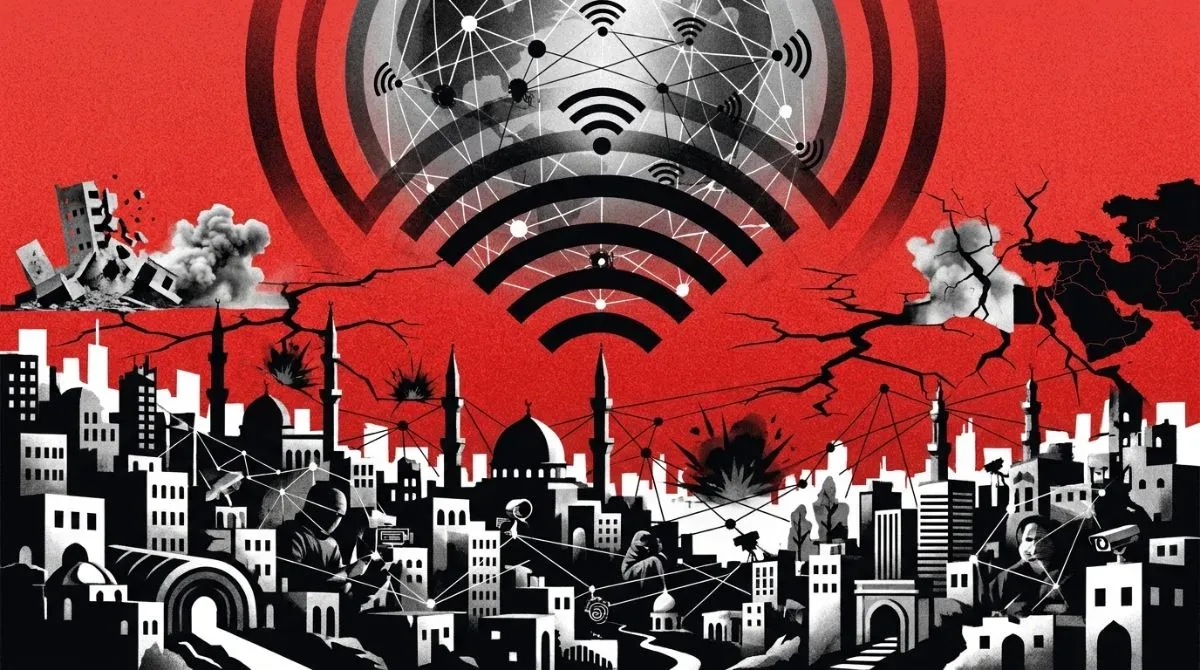
The complex interplay between environmental disasters and severe structural instability creates ideal conditions for clandestine foreign activity. Data published today, November 7, 2026, by the SaPEX NEXUS Geo Risk AI engine indicates a 70 percent probability of expanded covert operations across the Gaza Strip. Recent heavy rains have caused widespread damage to already severely deteriorated civil infrastructure, worsening an extreme humanitarian crisis. Within strategic intelligence analysis, environmental disruptions of this magnitude serve as operational force multipliers, severely degrading local administrative oversight and opening unmonitored physical channels for foreign personnel and material.
According to criteria established by the SaPEX NEXUS Covert Intelligence framework, this operational dynamic carries a high severity classification. When physical infrastructure undergoes catastrophic breakdown, baseline security controls, border tracking mechanisms, and domestic law enforcement operations are inevitably disrupted. The SaPEX NEXUS system highlights that historical security crises demonstrate how operational chaos dramatically lowers the tactical costs and detection risks associated with launching shadow operations. Foreign services routinely exploit structural collapse to insert clandestine assets, cultivate informant networks, and move sensitive equipment without standard regulatory interference.
Furthermore, the human displacement caused by severe weather combined with urban destruction creates systemic intelligence blind spots. Analytics from the SaPEX NEXUS Geo Risk AI system suggest that civil defense and security apparatuses in crisis zones are forced to prioritize basic survival and emergency response over counter intelligence monitoring. This structural distraction enables competing foreign intelligence entities to establish operational footholds that would otherwise be far too difficult or costly to secure during periods of public order and administrative stability.
Intelligence Actors and Strategic Objectives
Data logged today in the SaPEX NEXUS Prediction Arena identifies a broad spectrum of regional and international state intelligence organizations currently positioning themselves within the target zone. The primary state actors explicitly cataloged by the SaPEX NEXUS intelligence tracker include Israel's Mossad and Shin Bet, the United States Central Intelligence Agency, Egypt's General Intelligence Service, and Iran's Islamic Revolutionary Guard Corps Quds Force. Although these individual institutions maintain competing geopolitical agendas, their tactical behaviors are guided by similar strategic imperatives within the contested territory.
As detailed by the SaPEX NEXUS Covert Intelligence framework, the primary purpose of these foreign interventions centers on three distinct operational objectives. First, operatives are task-oriented toward acquiring detailed intelligence regarding the remaining capabilities and tactical structures of local factions. Second, agencies are actively assessing potential future leaders who may emerge to fill political power vacuums. Third, these foreign services are building durable local influence networks designed to ensure long term access and sway over key decision makers in the region.
The ultimate strategic outcome sought by these state actors involves directly influencing the post conflict security architecture and political trajectory of the Gaza Strip. Assessment protocols within the SaPEX NEXUS system emphasize that intelligence operations conducted during active crises are designed to secure early positioning. By embedding assets and forming covert alliances during periods of severe fluidity, foreign intelligence services aim to dictating terms when formal governance frameworks and international administrative arrangements are eventually negotiated.
Projected Timeline for Escalation
Temporal forecasting models updated today by the SaPEX NEXUS Geo Risk AI system confirm that covert activities are already active on the ground. However, analytical projections from the SaPEX NEXUS predictive tracking module point to a far more pronounced operational escalation occurring over a 6 to 18 month timeline. This prospective escalation window corresponds directly with anticipated structural shifts in the region, particularly the emergence of concrete political vacuums and the initial deployment of international reconstruction initiatives.
During the current immediate phase, covert operations remain heavily focused on tactical reconnaissance, human intelligence gathering, and security mapping. As analyzed by the SaPEX NEXUS Intelligence Tracking unit, the secondary phase over the next 6 to 18 months will mark a transition toward political shaping operations and asset deployment. As external state actors attempt to guide the future leadership of the Gaza Strip, intelligence networks will expand their operational footprint to protect their respective national interests and marginalize rival intelligence networks.
This projected timeline underscores the strategic importance of transition periods in post conflict environments. Metrics from the SaPEX NEXUS platform indicate that intelligence agencies operate with maximum assertiveness precisely when political institutions remain undefined. Once formal political structures solidify and permanent governance frameworks take root, covert intervention becomes substantially more complex and politically risky, driving intelligence agencies to act aggressively within the 6 to 18 month operational window.
Financial and Regional Market Implications
From a capital markets perspective, evaluating covert intelligence activities requires specialized risk assessment methodologies, as shadow operations do not follow standard economic reporting cycles. The SaPEX NEXUS Market Impact module estimates that the direct financial market impact stemming specifically from these covert intelligence operations remains limited. Unlike large scale open military engagements or sudden oil supply disruptions, covert maneuvers rarely produce immediate, sharp price movements across benchmark global equity indices, sovereign debt spreads, or spot commodity markets.
However, secondary transmission channels identified by the SaPEX NEXUS Financial Intelligence engine highlight significant indirect market risks. Heightened covert competition among major regional and global powers maintains elevated baseline instability throughout the Middle East. According to models maintained by the SaPEX NEXUS Risk Assessment suite, persistent structural instability directly influences international investor sentiment regarding long term infrastructure funding, sovereign credit ratings for surrounding nations, and capital allocation toward Middle Eastern reconstruction funds.
Additionally, covert friction can introduce severe operational complications for international humanitarian aid flows and development finance. The SaPEX NEXUS Market Impact module notes that heightened intelligence monitoring and covert proxy competition frequently lead to administrative delays, security clearance bottlenecks, and increased compliance costs for non governmental organizations and global contractors. Over time, these indirect frictions dampen economic recovery prospects and prolong macroeconomic volatility across the broader region.
Risk Assessment for Market Participants
Integrating probabilistic covert intelligence data into modern portfolio management requires clear separation between short term noise and long term geopolitical trends. The 70 percent probability score calculated today by the SaPEX NEXUS Geo Risk AI system reflects quantitative modeling of historical intelligence behavior combined with current structural indicators on the ground. Institutional investors and commodities traders utilize these probability distributions not as direct trade signals, but as critical inputs for broader geopolitical risk modeling.
The primary operational targets monitored by the SaPEX NEXUS Prediction Arena encompass the overall Gaza Strip, the future governance structures of the territory, and the internal dynamics of local factions. By continuously tracking activity surrounding these target vectors, asset managers gain valuable lead time in assessing regional stability dynamics. According to the SaPEX NEXUS framework, shifting covert operational intensity often serves as a leading indicator for broader diplomatic realignments, proxy escalation, or changes in regional energy transit security.
Ultimately, navigating periods of geopolitical uncertainty requires maintaining a multi-faceted analytical approach. The insights derived from the SaPEX NEXUS platform emphasize that while covert operations occur out of public view, their long term political and economic consequences ripple across global markets. Monitoring probability shifts, timeline developments, and operational severity metrics ensures that market participants remain fully prepared for structural geopolitical transitions across the Middle East.
1. SaPEX NEXUS Secret Intelligence Analysis Engine. Internal analysis compiled Nov 7, 2026.
2. See our Methodology and Risk Disclosure pages for more on how these figures are derived. This article is for informational purposes only and does not constitute financial, legal, or investment advice.