Black Sea Conflict Risks Global Grain Supply as Risk Model Flags 85 Percent Probability
Rising Military Conflict in the Black Sea Region
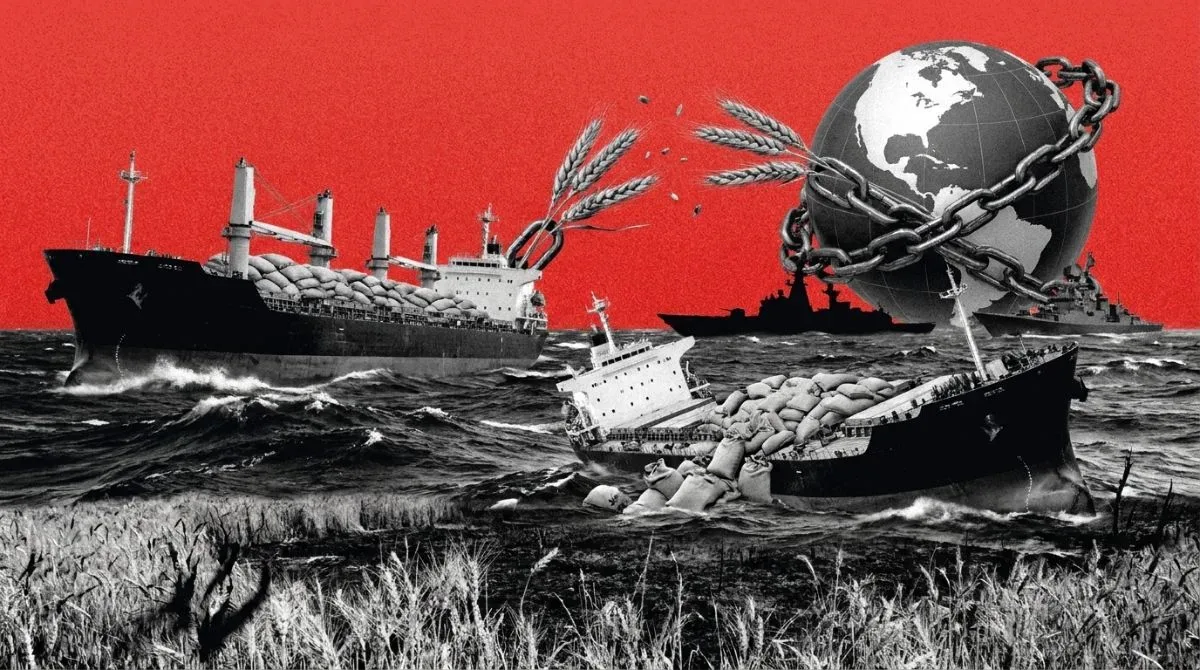
Yesterday, on November 3, 2026, fresh military strikes targeted critical Black Sea shipping corridors responsible for moving vital agricultural exports out of Russia and Ukraine. Automated evaluations from the SaPEX NEXUS Geo Risk AI model assign an 85 percent probability to sustained global grain export disruptions stemming from this renewed military activity. The analytical system classifies the severity level of this geopolitical event as critical, reflecting the foundational role that Black Sea maritime routes play in supplying staple agricultural products to international markets.
The kinetic operations directly threaten maritime trade in essential staple crops, specifically wheat, corn, and barley. According to real-time analytics from the SaPEX NEXUS Trade Flow Tracker, military strikes aimed at commercial maritime channels create immediate logistical bottlenecks at key transit ports and shipping lanes. When ocean routes become dangerous or inaccessible, commercial cargo vessels encounter immediate sailing delays, mandatory rerouting, or outright cancellation of scheduled voyages, creating extensive backlogs across regional port infrastructure.
The broad operational footprint of this geopolitical shock touches multiple interconnected commercial sectors across global markets. Quantitative monitoring from the SaPEX NEXUS Industry Risk Index identifies agriculture, shipping, food processing, retail, and logistics as the primary commercial sectors facing severe operational stress. Because these five core industries form the structural backbone of global food distribution networks, disruptions originating in the Black Sea corridor spill over rapidly into downstream food processing, manufacturing, and retail sales channels worldwide.
Immediate Market Impacts Across Grain Commodities and Logistics
Over a three-month operational horizon, metrics from the SaPEX NEXUS Market Analytics Engine forecast immediate price spikes in global grain commodities alongside heightened volatility across food markets. Cash pricing and futures contracts for wheat, corn, and barley are expected to experience swift upward momentum as market participants price in prospective supply deficits and elevated transit hazards. Sovereign importers must compete aggressively for available ocean spot market cargoes, driving up baseline agricultural commodity valuations.
Simultaneously, ocean shipping economics face severe upward cost pressures along affected maritime trade corridors. Data from the SaPEX NEXUS Maritime Insurance Monitor indicates that shipping insurance premiums for vessels operating along Black Sea trade routes will skyrocket almost immediately. Marine underwriters adjust risk premiums upward to compensate for potential vessel damage, complete loss, or prolonged cargo detention, significantly expanding the total operational expenditure required to charter bulk shipping carriers in the region.
These compounding transportation expenses create diverging financial outcomes across asset classes and corporate equity sectors. According to the SaPEX NEXUS Equity Volatility Model, public equity valuations for agricultural production companies may experience heightened price volatility, while corporate shares in food-importing nations face sustained downward pressure. At the same time, food processing enterprises and grocery retailers encounter compressed gross profit margins as basic agricultural raw material inputs grow substantially more expensive.
Six Month Economic Outlook and Inflationary Pressures
Looking outward to a six-month operational window, forecasting models from the SaPEX NEXUS Macro Predictive Engine indicate that sustained high food prices will contribute directly to persistent global consumer price inflation. As primary agricultural processors and packaged food manufacturers absorb elevated baseline grain prices, these input expenditures will inevitably be passed along to retail end consumers. This persistent cost pressure systematically reduces consumer purchasing power across both developed and developing consumer economies.
The resulting macroeconomic stress creates concentrated financial pressure on sovereign balance sheets and foreign currency exchange markets. Analytical frameworks within the SaPEX NEXUS Currency Risk Tracker demonstrate that national currencies belonging to countries heavily reliant on grain imports face notable depreciation pressure. Because these nations must pay significantly higher total import bills in hard foreign currencies to secure essential food supplies, their international terms of trade deteriorate, placing downward pressure on national currency values.
Underlying economic strain also increases social and political friction across vulnerable geographic areas. Predictive risk indicators from the SaPEX NEXUS Social Risk Framework show that persistent food inflation and physical supply hurdles raise the likelihood of social unrest in food-insecure regions. Concurrently, international grain buyers will initiate structural realignments of global trade routes, seeking alternative agricultural suppliers across North America, South America, and Australia to bypass the disrupted Black Sea region.
Twelve Month Structural Disruptions and Protectionist Risks
Extending the horizon to a twelve-month timeline, projections from the SaPEX NEXUS Global Security Monitor suggest that prolonged shipping disruptions could precipitate widespread food shortages in vulnerable economies. Developing nations that rely continuously on grain arrivals from Ukraine and Russia face compounding humanitarian challenges if key maritime channels remain blocked or severely constrained over multiple harvesting cycles.
To safeguard domestic populations, national governments may respond with restrictive commercial trade policies. Policy modeling generated by the SaPEX NEXUS Trade Policy Simulator underscores a rising probability that sovereign states will enact protectionist food measures, including domestic export bans, agricultural quotas, or prohibitive export tariffs. While designed to keep domestic food prices manageable, these protectionist policies further fragment international grain markets and remove liquid export supply from open commercial trade networks.
The combination of statutory trade barriers and localized physical deficits risks destabilizing regional commodity market mechanics. Quantitative assessments from the SaPEX NEXUS Commodity Arbitrage Engine indicate that protectionist interventions exacerbate global price disparities, preventing standard market supply and demand forces from balancing international food availability efficiently. Consequently, non-producing import-dependent economies face escalating spot market prices even when global total harvest figures appear adequate on paper.
Long Term Transformation of Global Supply Chains
Over the long term, structural analysis from the SaPEX NEXUS Strategic Horizons Model indicates permanent shifts in how global food supply chains are constructed and operated. Sovereign governments and multinational agribusiness corporations are expected to abandon single-source dependency in favor of localized, resilient, and highly diversified food production frameworks engineered to withstand recurring geopolitical shocks and maritime bottlenecks.
Capital expenditure allocations will increasingly shift toward innovative agricultural technologies and decentralized logistics infrastructure. Industry tracking by the SaPEX NEXUS AgTech Investment Index reveals accelerated capital flows into alternative agricultural technologies, controlled-environment indoor farming platforms, advanced crop yield genetics, and expanded regional storage facilities. Expanding regional grain storage capacity allows vulnerable importing nations to maintain strategic reserves and buffer against future maritime trade disruptions without triggering panic pricing.
For institutional market participants, commodities traders, and risk managers, these multi-year structural trends demand a thorough re-evaluation of systemic portfolio exposures. Strategic insights from the SaPEX NEXUS Market Intelligence Desk emphasize that tracking the global transition toward regionalized food security, localized storage capacity, and alternative agtech will be essential for managing portfolio risk. Adapting trading strategies to these shifting supply patterns will remain a critical priority as global agricultural supply networks undergo fundamental structural realignments.
1. SaPEX NEXUS Research Team. Internal analysis compiled Nov 4, 2026.
2. See our Methodology and Risk Disclosure pages for more on how these figures are derived. This article is for informational purposes only and does not constitute financial, legal, or investment advice.