US Drone Fleet Losses Highlight Rising Geopolitical and Market Risks
Loss of Reaper Drones Signals Strategic Escalation Risk
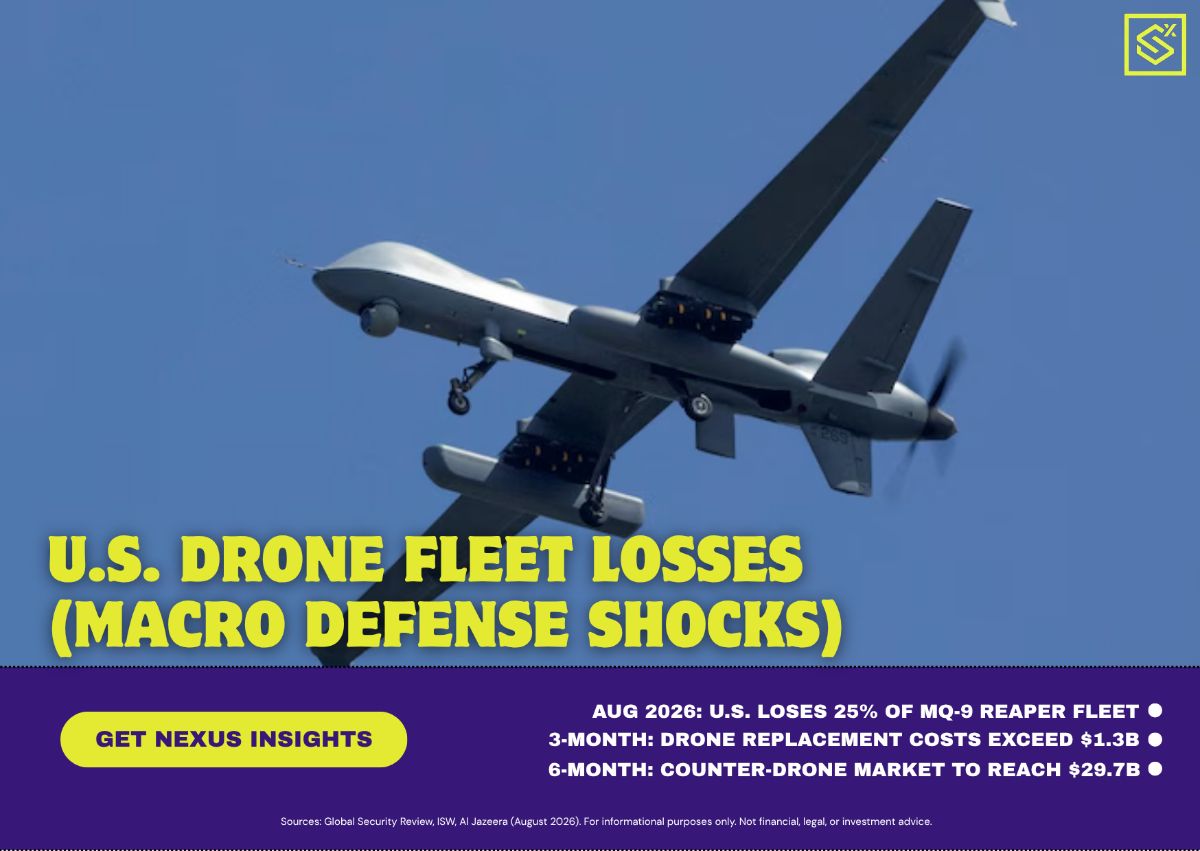
According to assessments from SaPEX NEXUS, recent geopolitical data indicates a critical escalation in military hostilities. The United States military has reportedly lost at least 45 MQ-9 Reaper drones during an ongoing confrontation with Iran. This figure represents approximately 25 percent of the entire active operational fleet of this specific platform. The SaPEX NEXUS Geo Risk AI model currently evaluates the probability of sustained escalation at 80 percent, assigning a critical severity classification to these developments.
For active market participants and portfolio managers, this metrics-driven insight highlights a structural shift in regional stability. The loss of a quarter of a primary reconnaissance and strike fleet demonstrates both high operational intensity and the deployment of advanced air defense capabilities by regional adversaries. When specialized military hardware is neutralized at this scale, strategic posture inevitably shifts from intelligence gathering to active asset preservation and potential force projection.
From an analytical perspective, high probability risk scores generated by internal tracking platforms reflect a substantial likelihood of ongoing friction rather than immediate de-escalation. Historical geopolitical precedent shows that when military losses reach a quarter of a dedicated asset class, defense command structures re-evaluate strategic deployment parameters. For traders, this indicates that elevated risk premiums must be factored into asset valuations, particularly across commodities and equities exposed to key regional transit corridors.
Direct Financial and Asset Impact on the Defense Sector
The financial footprint of these hardware losses is substantial, with individual MQ-9 Reaper units carrying an estimated cost between 30 million and 50 million dollars each. Total operational hardware replacement costs resulting from the loss of 45 units range from 1.35 billion to 2.25 billion dollars. Per the Prediction Arena tracker, this rapid depletion of critical military inventory is expected to directly influence near-term defense procurement cycles and budgetary allocations.
Industries directly tied to military manufacturing and aerospace hardware face immediate strategic recalibration. Defense contractors tasked with manufacturing replacement airframes, sensors, and guidance systems may experience heightened demand. However, this increased demand occurs alongside operational uncertainty as procurement priorities shift toward next-generation survivability and counter-drone countermeasure integration.
Market pricing mechanisms typically absorb hardware replacement cycles over multiple quarterly fiscal periods. However, when asset destruction occurs in a condensed timeline, equity performance within aerospace and defense sectors diverges significantly from broader market indices. Investors tracking platform analytics must evaluate both short-term revenue potential for prime defense suppliers and the overarching inflationary drag caused by emergency reallocation of federal capital toward military replenishment.
Oil and Energy Volatility in Persian Gulf Supply Chains
Geopolitical tensions of this magnitude directly jeopardize critical energy corridors, specifically transit routes passing through the Persian Gulf. As reported by internal platform analytics, the primary transmission mechanism for broader economic disruption lies in energy pricing. Heightened threat levels along maritime trade routes generate severe fears of supply disruptions, driving rapid price surges across crude oil and natural gas markets.
The energy sector remains acutely vulnerable to military actions that impair maritime monitoring capabilities. When reconnaissance coverage decreases, operational risk for commercial shipping vessels escalates dramatically. Consequently, maritime insurance rates surge, tanker charter costs increase, and energy transport routes face severe operational delays. These compounding expenses feed directly into global benchmark crude prices, increasing cost pressures across energy-importing economies.
In energy markets, geopolitical risk premiums often detach pricing from immediate physical supply and demand fundamentals. Internal risk metrics indicate that even in the absence of complete physical blockades, the sustained threat of military engagements forces energy traders to price in tail-risk disruptions. Over a three-month horizon, sustained elevated oil prices exacerbate global inflationary pressures, complicating central bank monetary policy decisions and increasing baseline operational costs for industrial manufacturing and transportation sectors.
Broader Market Spillover and Safe Haven Asset Movements
The risk transmission across financial markets extends well beyond immediate defense and energy sectors. Data from the platform indicates that critical severity geopolitical events trigger a traditional flight to safety across global capital markets. Broad equity indices typically experience heightened volatility and downside pressure as investors reduce risk exposure in cyclical sectors and reallocate capital into traditional safe-haven assets.
The United States dollar and physical gold typically act as primary capital sinks during periods of escalating international conflict. Currency markets register immediate impacts as the currencies of net energy-importing nations experience rapid depreciation against safe-haven currencies. Concurrently, government treasury yields fluctuate as fixed-income instruments attract inflows driven by risk aversion, counterbalancing inflationary concerns with capital preservation demands.
Conversely, alternative asset classes such as cryptocurrencies face heightened structural uncertainty during geopolitical crises. While some market participants view digital assets as non-sovereign stores of value, historical market data shows they often trade in alignment with high-beta risk assets during liquidity shocks. As institutional investors adjust margin requirements and liquidity positions to manage geopolitical volatility, speculative asset classes frequently face liquidity contractions and heightened downside risk.
Mid-Term Macroeconomic and Geopolitical Implications
Looking across a six-month to twelve-month operational horizon, sustained conflict between sovereign entities fundamentally alters macroeconomic trajectories. Internal platform modeling suggests that continued military friction severely disrupts global supply chains, extending transport timelines and increasing raw material costs across multiple industrial sectors. Insurance and shipping industries must permanently adjust risk formulas, embedding higher baseline costs into global trade agreements.
Over a twelve-month timeframe, persistent regional instability exerts pressure on international trade alliances and multilateral trade networks. Prolonged conflict forces governments to implement emergency sanctions, re-evaluate diplomatic alignments, and increase defense budgets continuously. These structural budget shifts divert public capital from domestic infrastructure and economic development initiatives toward military readiness and strategic reserve building.
The long-term implications of these operational losses extend into global trade architecture and defense technology development. The documented vulnerability of established aerial platforms accelerates technological investment into advanced counter-drone systems and autonomous defense infrastructure. For long-term investors, navigating this shifting landscape requires continuous monitoring of geopolitical risk metrics, operational trade route security, and the persistent economic impacts of re-militarization across strategic global corridors.
1. SaPEX NEXUS Research Team. Internal analysis compiled Aug 14, 2026.
2. See our Methodology and Risk Disclosure pages for more on how these figures are derived. This article is for informational purposes only and does not constitute financial, legal, or investment advice.