Typhoon Dolphin Strikes Eastern China Pressuring Logistics and Agriculture
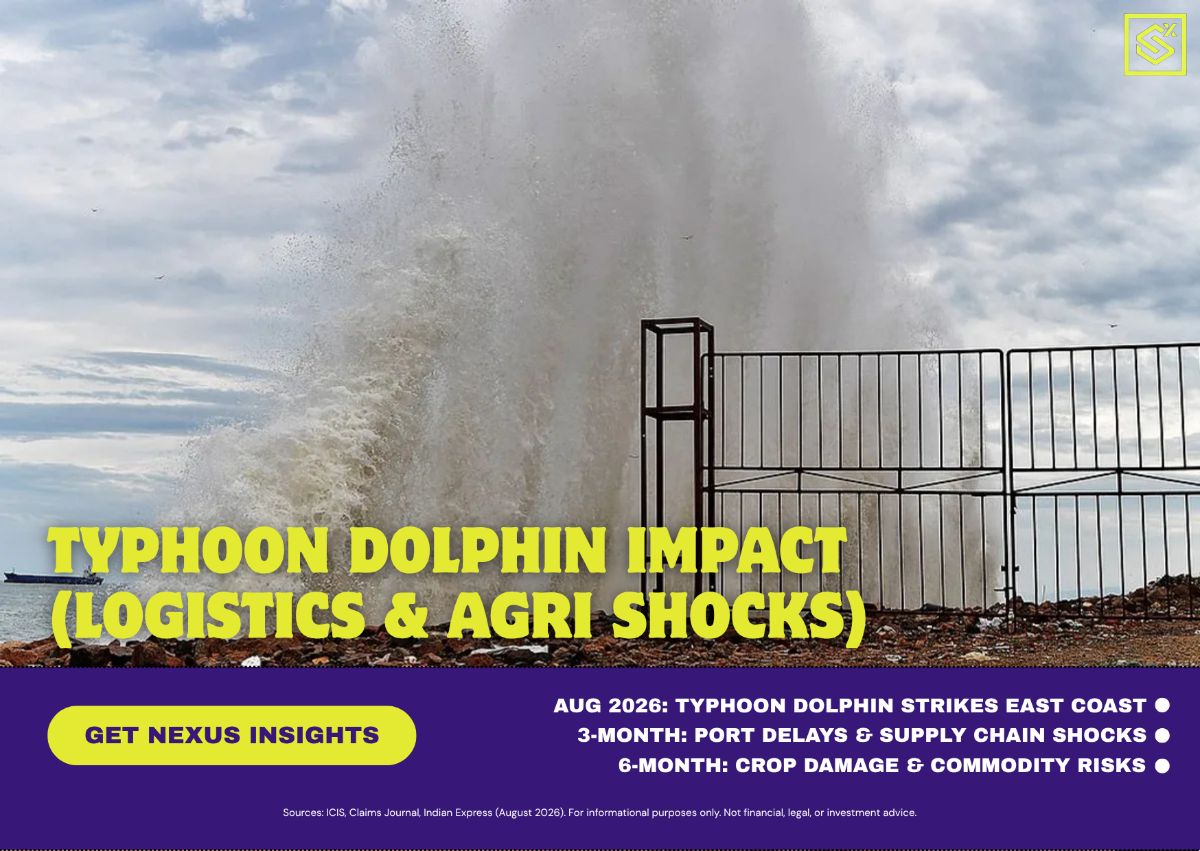
Landfall in Eastern China and Immediate Disruption
Typhoon Dolphin has made landfall in eastern China, marking a significant severe weather event that directly impacts one of the most economically vital regions in the world. According to risk tracking from SaPEX NEXUS's Geo Risk AI model, the landfall carries a confirmed probability of one hundred percent and is classified at a high severity level. The storm has brought gale-force winds, torrential rain, and massive coastal waves, affecting millions of residents and causing widespread physical disruption across commercial and agricultural hubs.
In financial risk modeling, a high severity rating assigned alongside a baseline probability score of one hundred percent indicates an event that has already transitioned from a predictive forecast to an active operational disruption. SaPEX NEXUS's Geo Risk AI model categorizes severe weather developments of this scale by evaluating atmospheric telemetry, physical geography, and coastal infrastructure density. When severe weather hits eastern China, the immediate focus shifts to storm surges and drainage capacity, as floodwaters can quickly paralyze ground transport and inundate low-lying industrial parks.
The immediate physical consequences of the storm extend far beyond residential neighborhoods, directly interfering with essential industrial assets and municipal infrastructure. Major coastal transportation networks, high-volume shipping facilities, and regional manufacturing hubs in eastern China are experiencing operational freezes or extreme slowdowns. For market participants, tracking severe weather events requires looking beyond the immediate weather headlines and evaluating the operational continuity of regional trade networks. Regional logistics corridors face substantial backlogs, creating early signals of operational friction that ripple across international trade networks.
Primary Sectors Facing Immediate Pressures
The reach of Typhoon Dolphin spans several critical industries, with severe operational challenges concentrated in agriculture, shipping, logistics, insurance, construction, and manufacturing. Per internal tracking in the Prediction Arena tracker, the simultaneous impact across these six interconnected sectors creates a complex web of economic dependencies. When port operations halt due to dangerous sea conditions and high winds, container ships are forced to drop anchor offshore or alter their sailing schedules, immediately stalling the movement of raw materials and finished goods.
Manufacturing facilities throughout the impacted zone face dual vulnerabilities, dealing with physical facility repairs alongside employee absenteeism caused by regional evacuations and transport shutdowns. For logistics operators, ground transport routes are obstructed by debris and localized flooding, leading to severe freight backhaul. As goods sit idle at inland warehouses or blocked terminal gates, cargo delivery schedules slip, forcing manufacturers and retailers to absorb added holding costs and contractual delays.
The interconnectivity of modern industrial ecosystems means that a delay in one primary sector creates immediate friction in adjacent industries. For example, if manufacturing facilities cannot receive raw chemical inputs or metallic components from nearby ports, secondary assembly plants located inland may be forced to reduce shift capacities or temporarily suspend assembly lines. Simultaneously, the insurance industry is preparing for a massive wave of property, casualty, and business interruption claims. As policyholders submit claims for flood damage, structural destruction, and delayed cargo shipments, property and casualty insurers face processed claims volumes that historically put short-term stress on regional underwriting balance sheets.
Market Sentiment and Commodity Dynamics
Financial markets frequently respond to major natural disasters through immediate sector-specific adjustments and broader sentiment realignments. In the wake of Typhoon Dolphin, global markets face potential short-term volatility, with a particular focus on commodity prices for agricultural products. Eastern China contains significant agricultural acreage dedicated to key crops. Floodwaters and wind damage can ruin standing crops, delay harvests, and degrade soil quality, leading to immediate supply contractions that drive localized and regional price spikes.
Commodity traders generally monitor physical crop damage reports closely following high-intensity storms. Excess rainfall can cause soil erosion and waterlogging in low-lying fields, which damages standing crops right before harvest periods. When crop yields drop, domestic commodity supplies tighten, prompting state purchasing managers and private import entities to seek international replacements, which can drive up agricultural futures on international exchanges. Equities tied to the shipping and logistics sectors are likely to encounter selling pressure as investors price in terminal closures, route diversions, and diminished quarterly throughput.
Conversely, the construction sector presents a contrasting dynamic. While immediate construction projects are halted during the storm itself, demand for structural steel, cement, roofing, and heavy machinery inevitably surges as public authorities and private enterprises launch reconstruction initiatives. Overall investor sentiment across regional equity markets may experience dampening as market participants weigh supply chain vulnerabilities against broader macroeconomic health. The fear of cascading delays in key components can lead risk managers to adopt a defensive posture until the full physical footprint of the storm damage is quantified.
Timeline of Economic Impacts Across Twelve Months
To systematically evaluate the duration of these disruptions, SaPEX NEXUS's Geo Risk AI model structures the anticipated economic effects across defined time horizons. Over the immediate three-month window, localized transportation and manufacturing disruptions will remain acute. These operational pauses are projected to cause minor delays in global supply chains and generate localized price increases for affected consumer and industrial goods as inventory buffers are drawn down to satisfy ongoing demand.
Moving into the six-month horizon, physical recovery efforts will be actively underway, but structural echoes from the storm will linger. Agricultural output in eastern China may remain suppressed through this middle phase, as damaged farmland takes time to remediate, supporting sustained higher prices for specific agricultural commodities. During this same six-month window, aggressive rebuilding campaigns will gain momentum, generating a sustained boost in demand for construction materials, heavy equipment, and civil engineering services across the regional economy.
By the twelve-month mark, longer-term economic recovery will be well in progress across eastern China. While the broader macroeconomic environment will likely show structural resilience, different industries will rebound at uneven rates. Certain sectors, such as adaptable manufacturing sub-sectors, may fully recover their operational capacity, while other industries continue to face lingering challenges stemming from severe structural damage, lost capital assets, or permanently altered regional trade routes.
Structural Realignment and Long Term Outlook
Beyond the one-year horizon, Typhoon Dolphin is expected to leave a lasting mark on coastal planning, corporate strategy, and risk pricing in eastern China. The long-term trajectory indicates a growing institutional focus on resilient infrastructure and enhanced disaster preparedness across coastal municipal zones. Public planning authorities and industrial developers will likely mandate stricter building codes, elevated seawalls, and modernized drainage networks to protect high-value economic assets against future extreme weather events.
For commercial businesses operating in these vulnerable zones, insurance premiums are likely to rise over the long term. Underwriters continuously recalculate probability metrics following major events, incorporating heightened climate and storm risks into their forward-looking pricing structures. Higher fixed risk-transfer costs will force regional businesses to re-evaluate their supply chain architecture, potentially encouraging companies to diversify their manufacturing footprints across multiple geographical regions to mitigate localized weather risks.
Risk managers and portfolio analysts frequently examine post-disaster capital reallocation trends to identify secular growth vectors in resilience technologies. For market participants navigating the aftermath of Typhoon Dolphin, analyzing these multi-phase dynamics requires a disciplined approach. Rather than reacting strictly to initial storm headlines, position managers must monitor how short-term logistics bottlenecks evolve into medium-term commodity supply constraints and long-term capital allocation shifts, allowing traders to separate transitory price volatility from structural shifts in global supply chains.
1. SaPEX NEXUS Research Team. Internal analysis compiled Aug 12, 2026.
2. See our Methodology and Risk Disclosure pages for more on how these figures are derived. This article is for informational purposes only and does not constitute financial, legal, or investment advice.