Syrian Trial Verdict Signals Potential Wave of Regional Volatility
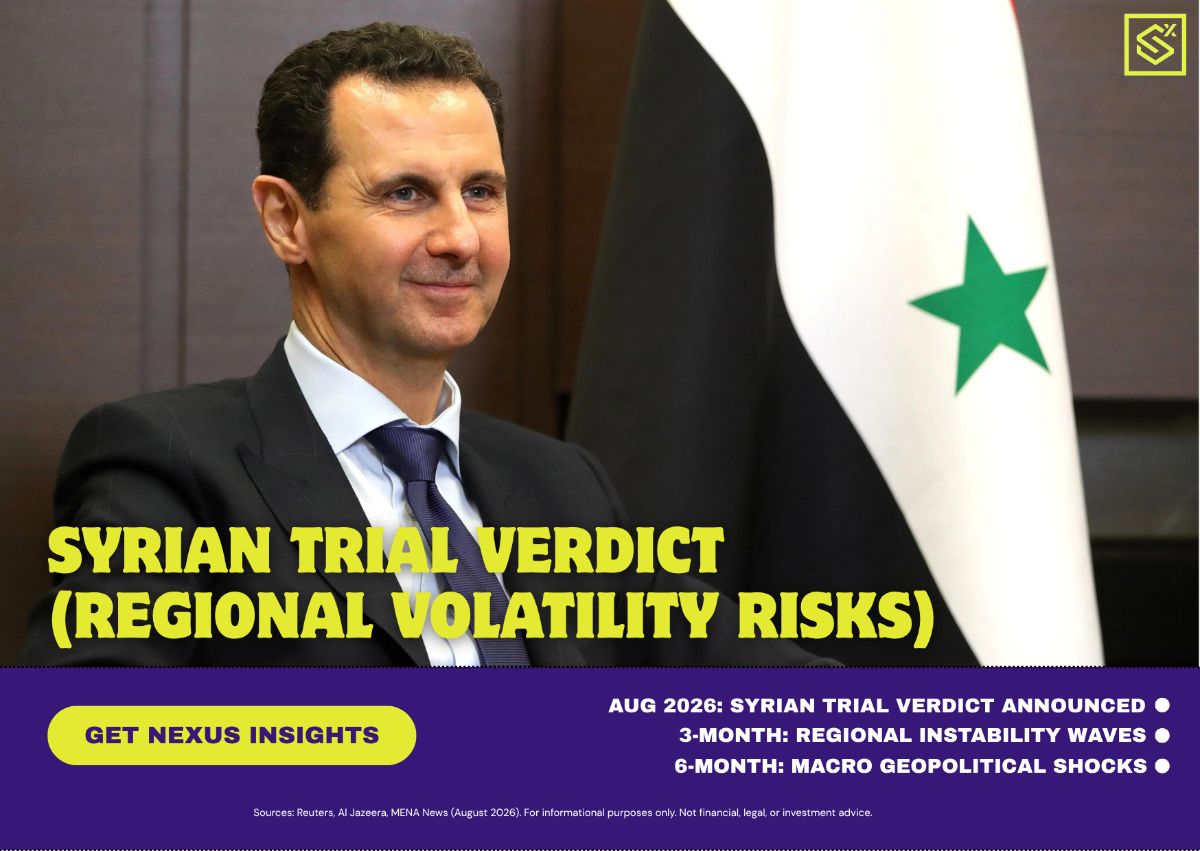
Landmark Verdict Introduces Unprecedented Syrian Volatility
Reports indicating that Bashar al-Assad and Atef Najib have been sentenced to death in a landmark Syrian trial mark a historical turning point for the political landscape of the Middle East. According to SaPEX NEXUS's Geo Risk AI model, the probability of heightened regional instability following this unprecedented verdict stands at 80 percent. Even if such a verdict remains largely symbolic or is delivered in absentia, the psychological and operational ramifications across the Levant are immediate and severe. A judicial outcome targeting a sitting or former head of state disrupts established diplomatic norms and creates a massive vacuum of political predictability. For global financial market participants, this development shifts Syria from a persistent background concern into an active catalyst for systemic volatility across multiple asset classes.
The immediate consequences of this trial outcome are expected to radiate far beyond Syrian borders. Historical precedent in sovereign leadership trials demonstrates that dramatic legal actions often trigger fragmented responses among domestic factions and international patrons. In this instance, the potential for reignited internal conflicts within Syria is exceptionally high as various armed groups and political coalitions re-evaluate their strategic positions. Furthermore, key international allies who have historically backed the Syrian regime may view this verdict as a direct challenge to their regional interests. This dynamic significantly increases the likelihood of sudden military re-alignments, defensive posture adjustments, and retaliatory political measures, all of which introduce severe risk premiums into surrounding capital markets.
Analyzing the Immediate Market Mechanisms and Asset Dynamics
From an overarching market perspective, the financial mechanisms triggered by heightened geopolitical friction in the Middle East follow a well-established pattern of flight to quality. The industries facing the most immediate operational and financial exposure include Defense, Oil and Energy, Shipping, Humanitarian Aid, and Financial Services. As tracked by the Prediction Arena tracker, the initial market response typically manifests through immediate upward pressure on crude oil benchmarks. Given the region's critical role in global energy transport and production, any perception of expanding conflict raises valid concerns regarding supply security, transit corridor disruptions, and increased maritime insurance premiums for energy carriers traversing nearby sea lanes.
Simultaneously, investor risk aversion drives capital into traditional safe-haven assets. Physical gold and the United States dollar are primary beneficiaries of such capital reallocations, experiencing increased demand as market participants seek protection against sudden market drawdowns. Conversely, emerging market currencies, particularly those situated within the Middle East and North Africa region, face intense selling pressure due to capital flight and currency devaluation risks. Equity markets globally, especially sectors sensitive to energy inputs or direct regional revenue exposure, typically experience downward repricing as corporate earnings visibility diminishes under the weight of escalating geopolitical uncertainty.
Mid-Term Projections Across Three to Twelve Month Horizons
Looking beyond immediate market reactions, the medium-term outlook presents sustained operational challenges for global investors. Over a three-month horizon, data models project persistent geopolitical uncertainty throughout the Middle East, characterized by localized military skirmishes and ongoing supply chain frictions. Energy markets are anticipated to maintain a premium during this period, keeping crude prices elevated and complicating central bank efforts to manage broader economic conditions. Financial institutions operating within affected zones must navigate heightened compliance and counterparty risk, while shipping routes require continuous recalibration to avoid potential friction areas.
As the timeframe extends to six months, the prospective risks expand from localized friction to broader structural challenges. SaPEX NEXUS analytics suggest an escalating risk of intensifying regional proxy conflicts, which could drive broader displacement and refugee flows across neighboring states. Persistent energy price inflation over this middle horizon threatens to filter directly into core consumer price indices worldwide, creating complex dilemmas for monetary policymakers who may be forced to balance sticky inflation against slowing economic growth. By the twelve-month mark, prolonged instability within Syria threatens to challenge established regional security architectures, forcing international bodies and foreign governments into complex realignments that could alter trade policy, sanction regimes, and defense spending allocations for years to come.
Long-Term Structural Shift in the Levant Geopolitical Landscape
Over the multi-year horizon, the fundamental balance of power within the Levant faces potential restructuring. The unprecedented nature of the judicial decision against Assad and Najib sets a precedent that could permanently alter how sovereign authority and diplomatic immunity are managed in volatile regions. As influence spheres are contested and potentially redrawn, multinational corporations and institutional investors must reassess long-term capital deployment strategies in the region. Infrastructure development, long-term energy contracts, and cross-border trade agreements face heightened political risk discounts that alter baseline return expectations.
For global financial markets, protracted instability in a strategically vital geographic corridor necessitates a permanent adjustment to risk management models. Sovereign debt valuations across the Middle East may diverge significantly based on individual nation proximity to the conflict and balance sheet resilience. Furthermore, the defense and aerospace sectors may experience sustained demand increases as regional governments bolster national security infrastructure in response to shifting power dynamics. Understanding these long-term macro trends allows market participants to construct resilient portfolios capable of withstanding prolonged periods of geopolitical turbulence.
Tactical Portfolio Considerations and Risk Frameworks
To effectively navigate the implications of this event, market participants must separate immediate emotional reactions from underlying structural trends. Portfolio managers routinely utilize predictive probability frameworks, such as the 80 percent probability metric highlighted by platform analytics, to stress-test asset allocations against adverse geopolitical scenarios. Diversification across asset classes remains the primary defense against sudden headline-driven volatility, ensuring that gains in safe-haven assets can offset temporary declines in risk assets such as equities and high-yield credit.
In conclusion, the landmark death sentence in the Syrian trial serves as a major catalyst for broader macro shifts across global financial markets. While immediate volatility may concentrate within commodity markets and regional currencies, the broader consequences stretch deep into global supply chains, monetary policy trajectories, and long-term geopolitical alignments. Investors who systematically monitor risk indicators, maintain strict position sizing, and account for multi-horizon impacts will be best positioned to preserve capital and identify emerging opportunities amid ongoing regional transformation.
1. SaPEX NEXUS Research Team. Internal analysis compiled Aug 11, 2026.
2. See our Methodology and Risk Disclosure pages for more on how these figures are derived. This article is for informational purposes only and does not constitute financial, legal, or investment advice.