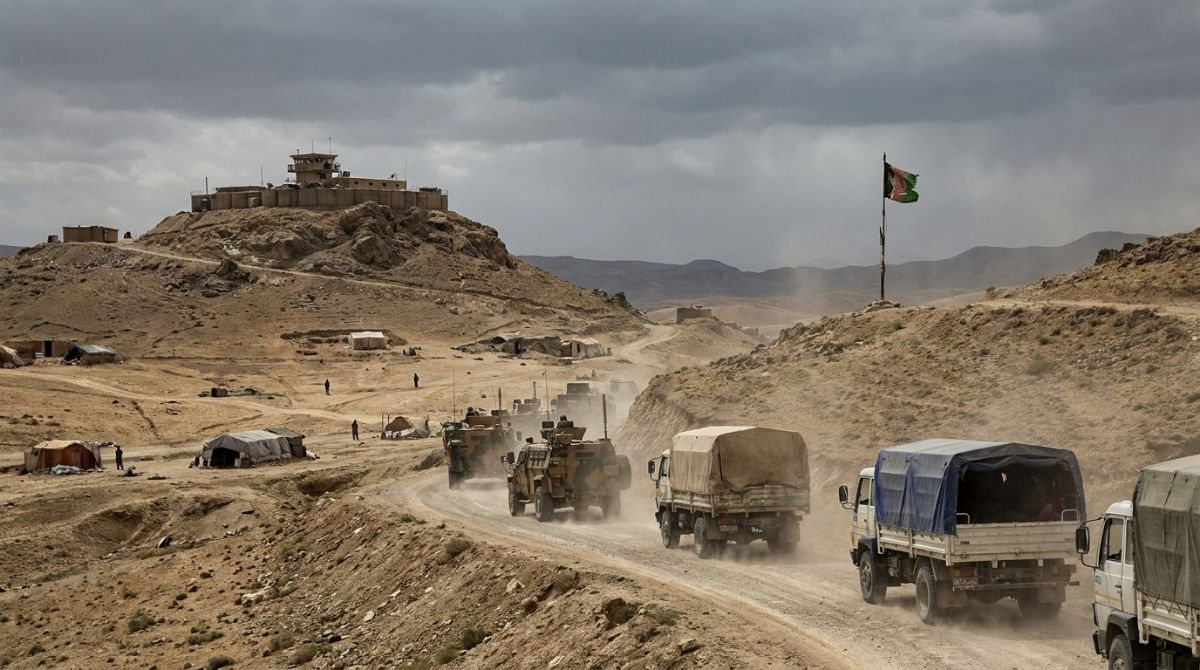
Regional Risk Escalation: Foreign Intervention Threats in Ethiopia Tigray War
Regional Escalation Risks in the Horn of Africa
In an intelligence assessment published yesterday on October 9, 2026, the SaPEX NEXUS Prediction Arena tracker issued a critical severity rating regarding deteriorating geopolitical dynamics across East Africa. According to data generated by the SaPEX NEXUS Geo Risk AI model, there is currently a 70 percent probability that neighboring sovereign states will engage in direct or proxy military intervention within Ethiopia's ongoing Tigray conflict. The intelligence evaluation explicitly identifies several primary external state actors, namely Eritrea, Sudan, and Somalia, as well as core internal belligerents including the Ethiopian Tigray People's Liberation Front and the Ethiopian Federal Government. The analytical model indicates that the primary target of these potential external military interventions directly encompasses the authority of the Ethiopian Federal Government and overall regional stability across the broader Horn of Africa.
The underlying dynamics of the renewed Tigray conflict, combined with pre-existing diplomatic strains across neighboring capitals, have created fertile ground for external interference. According to the SaPEX NEXUS Intelligence Network, foreign governments may seek to exploit internal Ethiopian instability to advance their own long-term strategic and geopolitical goals. Such interference could materialize through the covert deployment of limited sovereign military forces or via targeted logistics support supplied to specific ethnic or political factions operating near border territories. Operational risk metrics maintained by the SaPEX NEXUS Conflict Monitoring feed indicate that any such intervention would substantially increase the likelihood of a wider regional military confrontation, compounding existing economic fragility, disrupting civilian populations, and giving rise to a severe new humanitarian refugee crisis across international boundaries.
Core Strategic Objectives and Regional Motivations
The rationale driving potential foreign involvement involves an intricate combination of border security priorities, territorial disputes, and regional power balances. As detailed in analytical disclosures from the SaPEX NEXUS Risk Analytics suite, the primary overarching purpose behind external intervention includes systematically weakening the central authority of the Ethiopian federal government, securing contested strategic border interests, expanding sovereign regional influence, and supporting aligned ethnic or political factions within the war zone. Each neighboring state holds distinct strategic motivations that could trigger tactical involvement as internal Ethiopian security conditions continue to shift.
Analysis provided by the SaPEX NEXUS Geo Risk AI model highlights that historical patterns of cross-border engagement in the Horn of Africa cause neighboring governments to view internal Ethiopian fragmentation as both a strategic vulnerability and a potential geopolitical leverage point. For instance, long-standing territorial disputes along the Ethiopian border, combined with shifting diplomatic alliances involving Eritrea and Somalia, create multiple operational vectors through which external state and non-state actors could intervene. The SaPEX NEXUS Conflict Monitoring feed emphasizes that even limited proxy involvement, such as intelligence sharing, arms distribution, or safe-haven provision, can rapidly escalate into open cross-border military friction that destabilizes central authorities and undermines regional diplomatic frameworks.
Timeline Projections and Escalation Dynamics
With respect to the operational timeline, the SaPEX NEXUS Prediction Arena tracker notes that low-level foreign involvement is already classified as active within the region. However, dynamic modeling outputs from the SaPEX NEXUS Geo Risk AI model project a significant escalation of direct or proxy military activities within a 6 to 12 month timeframe. This operational window demonstrates that while a full-scale multi-nation conflict may not materialize overnight, the strategic momentum toward wider regional entanglement is gathering strength as internal military engagements in the Tigray war persist.
In predictive probability modeling, a 70 percent probability assessment from the SaPEX NEXUS Risk Analytics suite reflects a high-confidence quantitative signal indicating that structural drivers heavily favor conflict expansion over diplomatic de-escalation. Field tracking protocols managed by the SaPEX NEXUS Intelligence Network systematically monitor critical early-warning indicators, including foreign troop concentration shifts along sovereign borders, alterations in diplomatic statements, and anomalous logistical movements directed toward proxy groups. When multiple intelligence indicators align concurrently, the SaPEX NEXUS Conflict Monitoring feed recalibrates risk scores in real time to inform market participants of rising kinetic engagement probabilities.
Potential Spillover into Global Financial and Commodity Markets
Beyond immediate sovereign and human consequences, an expansion of the Tigray conflict introduces substantial transmission risks for international trade, commodity benchmarks, and financial markets. Predictive analytics generated by the SaPEX NEXUS Market Impact engine anticipate heightened financial volatility across East African asset classes, accompanied by potential operational disruptions to major maritime shipping lanes running through the Red Sea. Because the Horn of Africa geographically flanks the strategic Bab el-Mandeb Strait, connecting the Indian Ocean to the Red Sea and Suez Canal, localized military escalations pose direct risks to critical global commercial shipping choke points.
Furthermore, geopolitical vulnerability metrics evaluated by the SaPEX NEXUS Risk Analytics suite highlight that military conflicts adjacent to major sea lines of communication frequently drive up global risk premiums across global energy markets. Although Ethiopia itself is not a major crude oil exporter, wider conflict involving regional states and maritime proximity can lead to higher oil prices due to elevated shipping insurance rates and routing precautions taken by commercial fleets. Simultaneously, analytical summaries from the SaPEX NEXUS Conflict Monitoring feed point to a dramatic surge in demand for international humanitarian aid and emergency relief support, placing acute financial stress on multilateral aid budgets and fiscal resources across East Africa.
Portfolio Considerations and Geopolitical Risk Management
For global macro investors, institutional portfolio managers, and trade strategists, monitoring intelligence assessments from the SaPEX NEXUS Prediction Arena tracker provides essential context when evaluating emerging market exposure and supply chain risks. Heightened conflict probabilities in East Africa historically trigger foreign capital flight, sovereign bond yield expansion, and currency depreciation across exposed regional markets. Asset allocators evaluating sovereign debt instruments or regional corporate holdings must account for the 70 percent intervention probability published by the SaPEX NEXUS Geo Risk AI model when calibrating portfolio stress tests and downside scenarios.
Understanding how proxy interventions transition into direct trade and commodity friction remains a fundamental component of institutional risk management. According to strategic research from the SaPEX NEXUS Risk Analytics suite, key monitoring parameters over the projected 6 to 12 month escalation horizon will include military deployment patterns near sovereign borders, maritime safety advisories along Red Sea routes, and foreign policy declarations from regional capitals. By combining quantitative risk assessments with continuous field intelligence from the SaPEX NEXUS Conflict Monitoring feed, market participants can proactively position portfolios against macro-level volatility, potential supply chain bottlenecks, and energy market disruptions linked to this critical geopolitical alert.
1. SaPEX NEXUS Secret Intelligence Analysis Engine. Internal analysis compiled Oct 10, 2026.
2. See our Methodology and Risk Disclosure pages for more on how these figures are derived. This article is for informational purposes only and does not constitute financial, legal, or investment advice.