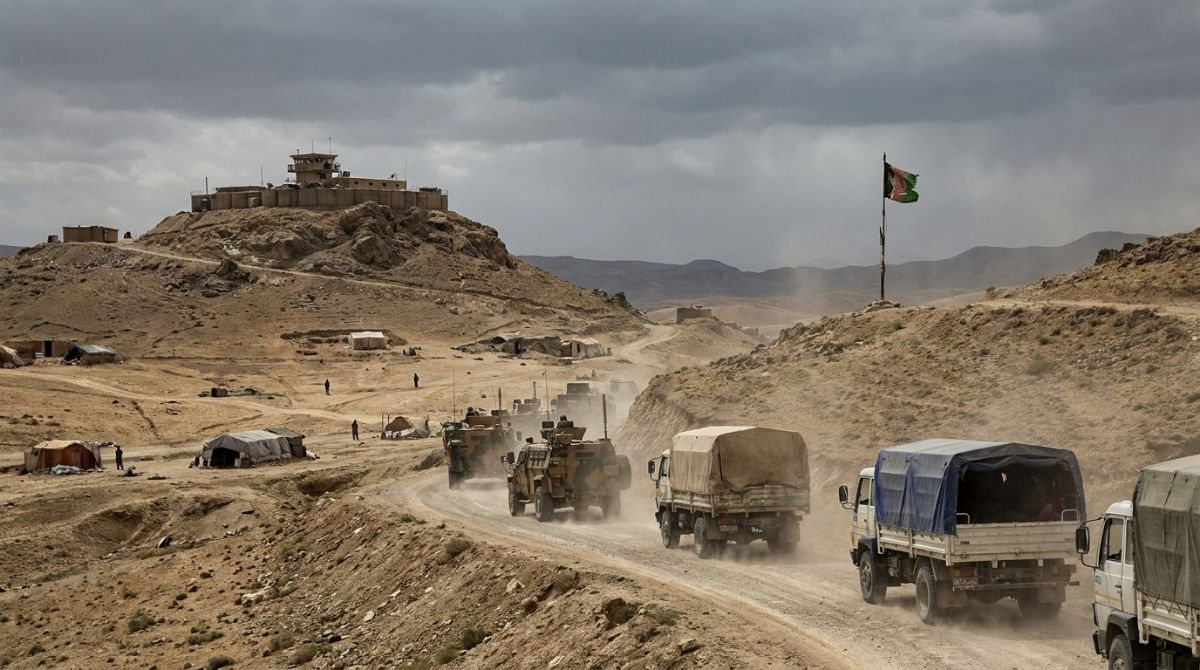
Eritrea, Sudan, and Somalia Risk Escalating Ethiopia's Tigray Conflict
Regional Instability and Conflict Escalation
Today, October 09, 2026, intelligence telemetry from the SaPEX NEXUS Geo Risk AI model indicates a 70 percent probability of direct or proxy military intervention by Eritrea, Sudan, or Somalia in the ongoing Tigray conflict within Ethiopia. The assessment categorizes the current situational severity as Critical, reflecting a renewed surge in military engagements between the Ethiopian Federal Government and forces aligned with the Ethiopian Tigray People's Liberation Front. According to the SaPEX NEXUS predictive tracking core, the broader Horn of Africa faces a heightened danger of structural destabilization as regional neighbors evaluate options to leverage Ethiopia's domestic security challenges for their own strategic gain.
The intelligence data provided by the SaPEX NEXUS early warning platform notes that Ethiopia's regional diplomatic and security relations are already severely strained, creating a fertile environment for cross-border spillover. Historical patterns in the region show that internal military friction within major regional economies often invites indirect participation through arms transfers, financial backing of insurgent groups, or targeted border incursions. As documented by the SaPEX NEXUS analytical engine, the risk is no longer confined to internal counter-insurgency or domestic stabilization, but has expanded into an interconnected regional confrontation involving multiple sovereign militaries and non-state actors.
For global market participants and macro strategists, this systemic shift presents immediate risks to regional stability and macroeconomic baseline assumptions. The SaPEX NEXUS military conflict index registers this development as an active threat vector that could alter trade corridors, diplomatic alignments, and commodity transit routes across North-East Africa. Understanding the key actors and military incentives driving this critical alert is essential for managing risk exposure across affected regional assets and related maritime operations.
Core Actors and Geopolitical Objectives
According to the SaPEX NEXUS intelligence matrix, the primary actors involved in this operational theater comprise the Ethiopian Federal Government, the Ethiopian Tigray People's Liberation Front, and the sovereign nations of Eritrea, Sudan, and Somalia. The primary target identified by the SaPEX NEXUS risk engine is the stability of the Ethiopian Federal Government along with general regional institutional continuity. Each neighboring state maintains distinct historical grievances, territorial ambitions, or security priorities that make intervention an attractive option during periods of central government weakness in Addis Ababa.
The primary motives highlighted by the SaPEX NEXUS analytics core include weakening the Ethiopian central state apparatus, securing contested border regions, establishing forward spheres of regional influence, and providing direct or proxy support to preferred political or ethnic factions. Eritrea shares an extensive border and a complex historical military legacy with both the Ethiopian state and Tigrayan forces, making direct or indirect military maneuvers a recurring feature of border dynamics. Sudan, dealing with its own internal security imperatives, maintains long-standing territorial disputes along the Al-Fashaga border zone, which according to the SaPEX NEXUS geopolitical monitor becomes increasingly volatile whenever Ethiopian federal forces are diverted toward internal combat zones.
Somalia's involvement, as analyzed by the SaPEX NEXUS predictive matrix, centers on regional diplomatic balancing and counteracting perceived Ethiopian influence across maritime and border territories. The SaPEX NEXUS qualitative assessment indicates that external intervention is unlikely to take the form of a full-scale conventional invasion; rather, sovereign neighbors are expected to utilize asymmetric strategies such as proxy funding, covert logistical supply chains, or localized border incursions. This multi-actor involvement creates a complex military calculus where operational actions by one state trigger defensive or aggressive counter-moves from others.
Market Implications for East Africa and Global Trade
The financial impact model maintained by the SaPEX NEXUS market intelligence unit identifies four distinct transmission channels through which this conflict poses financial risk. These transmission vectors include elevated volatility across East African financial markets, potential disruption to critical Red Sea shipping lanes, upward price pressure on global crude oil markets due to regional instability, and a dramatic surge in demand for international humanitarian assistance. The SaPEX NEXUS economic risk module projects that equity and sovereign debt instruments tied to Horn of Africa economies will experience heightened risk premiums as the conflict expands.
A major concern highlighted in the SaPEX NEXUS market risk portal is the potential spillover into the Bab el-Mandeb Strait and broader Red Sea maritime routes. A substantial volume of global trade and international sea-borne petroleum passes through these narrow maritime choke points adjacent to the Horn of Africa. The SaPEX NEXUS supply chain tracking system points out that heightened regional warfare, combined with potential maritime proxy operations, increases transit risks, insurance premiums, and rerouting costs for international commercial fleets. Such maritime frictions frequently spill over into broader energy markets, contributing to sudden supply-side price spikes for crude oil and refined petroleum products.
Furthermore, the SaPEX NEXUS socio-economic impact engine underscores the likelihood of a major regional refugee crisis. Large-scale population displacement across the borders of Ethiopia, Sudan, and Eritrea places intense pressure on regional fiscal budgets and international relief frameworks. Per the SaPEX NEXUS global macro assessment, countries absorbing displaced populations face sovereign debt stress, currency devaluation, and rising inflation, further dampening economic growth prospects across East Africa and requiring increased commitments from international financial organizations.
Timeline and Escalation Mechanics
The operational timeline established by the SaPEX NEXUS conflict tracking core indicates that military developments are already active, with a significant risk of critical escalation within a six to twelve month horizon. The SaPEX NEXUS timeline model emphasizes that the crisis is not a distant prospective scenario, but an unfolding event where baseline conditions are currently being established on the ground. Over the next six to twelve months, incremental proxy deployments and border skirmishes could rapidly compound into a broader regional war.
The SaPEX NEXUS analytical framework identifies several critical triggers that could accelerate this escalation timeline. A key indicator tracked by the SaPEX NEXUS sensor network is the formal or informal establishment of operational logistics pipelines connecting external states to frontline factions within Tigray or neighboring regions. Additionally, any major movement of federal troops away from external borders to reinforce internal combat zones creates security vacuums that neighboring militaries may seek to fill. The SaPEX NEXUS early warning platform monitors these troop repositioning events as major catalysts for sudden cross-border interventions.
Another critical factor identified by the SaPEX NEXUS quantitative model is the potential for unexpected tactical miscalculations along porous border regions. When multiple armed forces operate in close proximity without unified command structures or de-confliction channels, minor skirmishes can swiftly escalate into official state-on-state engagements. The SaPEX NEXUS operational monitor suggests that the six to twelve month window represents a crucial phase during which regional diplomatic intervention or structural deterrents must be applied to prevent wide-scale conflict expansion.
Strategic Risk Assessment for Financial Traders
For institutional investors, commodity traders, and macro fund managers monitoring the Horn of Africa, the SaPEX NEXUS portfolio risk framework outlines actionable risk considerations. The 70 percent probability assigned by the SaPEX NEXUS Geo Risk AI model underscores that geopolitical risk in East Africa should be factored into baseline portfolio allocations rather than treated as a low-probability tail risk. Market participants holding exposure to East African sovereign debt, regional infrastructure projects, or Red Sea logistics operators must account for escalating credit and operational risks.
According to the SaPEX NEXUS risk exposure matrix, energy and commodity traders should closely monitor crude oil futures and maritime freight rates for risk-premium pricing related to Horn of Africa volatility. In times of heightened conflict in proximity to critical maritime choke points, freight rates and war-risk insurance premiums tend to rise sharply, impacting physical commodity arbitrage opportunities. The SaPEX NEXUS trade flow tracking model highlights that even localized military actions near coastal or border transport corridors can generate disproportionate disruptions in global supply chain reliability.
In summary, the critical classification issued today by the SaPEX NEXUS prediction platform highlights the urgent need for robust risk mitigation strategies. Traders and analysts must leverage real-time data streaming from the SaPEX NEXUS platform to monitor developments across Ethiopia, Eritrea, Sudan, and Somalia. As the six to twelve month window unfolds, staying informed through the SaPEX NEXUS intelligence suite will be essential for navigating the complex intersection of military conflict, regional political instability, and global market dynamics.
1. SaPEX NEXUS Secret Intelligence Analysis Engine. Internal analysis compiled Oct 9, 2026.
2. See our Methodology and Risk Disclosure pages for more on how these figures are derived. This article is for informational purposes only and does not constitute financial, legal, or investment advice.