Trump Statement on Strait of Hormuz Escalates Persian Gulf Shipping Risk
Escalation in Key Maritime Corridors
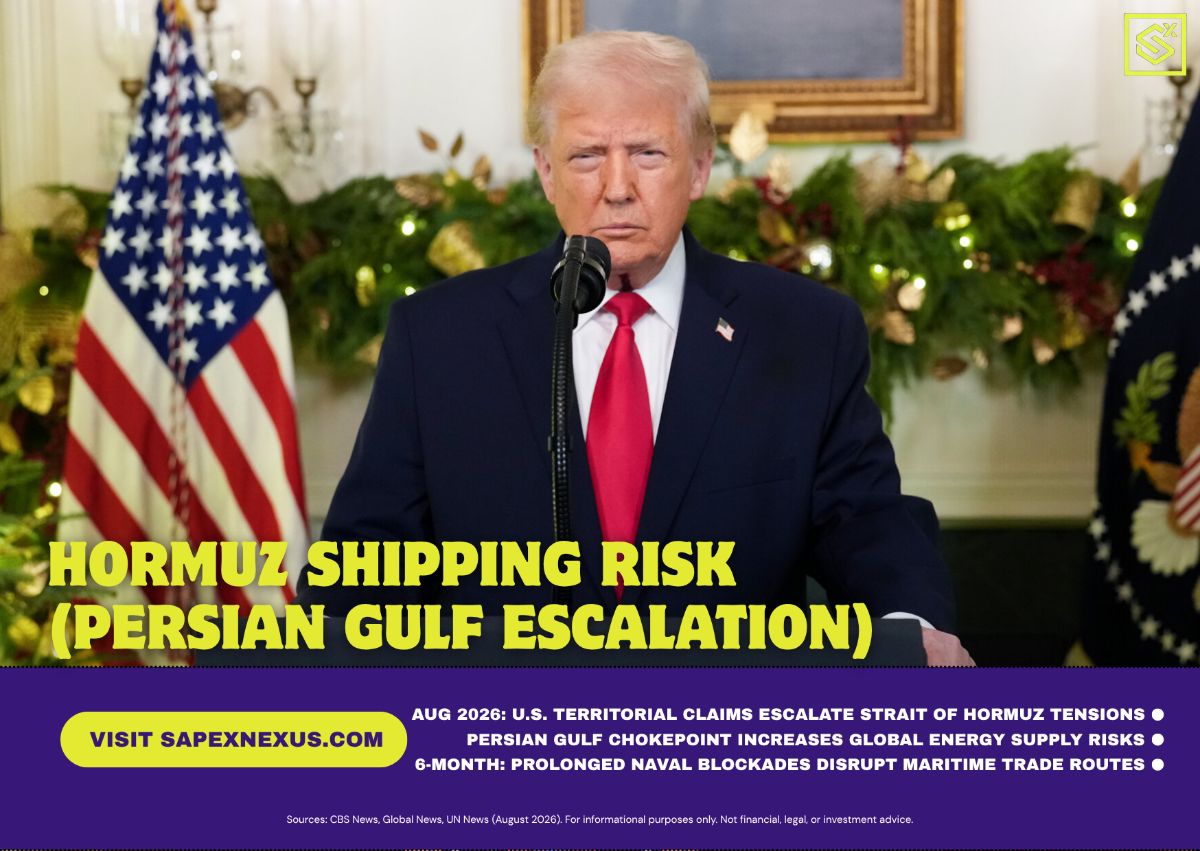
Earlier today, on August 16, 2026, statements surfaced involving former President Donald Trump regarding the strategic status of the Strait of Hormuz. The claim suggests a designation of the critical waterway as United States territory, a concept that analysts recognize as legally questionable under established international maritime law but highly provocative in immediate application. According to internal analysis from SaPEX NEXUS's Geo Risk AI model, this assertion carries a severity rating classified as critical and registers a 65% probability score for escalating regional confrontation and triggering tangible disruptions within global maritime transport channels.
The immediate consequence of such statements lies in the severe escalation of diplomatic and military friction with Iran. The Strait of Hormuz serves as the world's most vital oil transit choke point, connecting Persian Gulf crude producers with major global consumption centers. When sovereign or territorial claims are asserted over international transit passages, maritime operators and sovereign states react by reassessing exposure to harassment, interdiction, or military conflict. Even without formal legal backing, high-level political rhetoric can alter operational risk parameters overnight, forcing commercial fleets and financial markets to price in worst-case operational scenarios.
From an operational standpoint, a probability score of 65% generated by our automated tracking systems indicates that market participants should prepare for heightened friction rather than treating the headline as isolated commentary. Historical precedent shows that elevated geopolitical risk in key maritime corridors rapidly translates into physical naval posture shifts, diplomatic posturing, and immediate repricing across energy assets. As this risk scenario unfolds today, the structural stability of global supply chains faces renewed pressure from both political and security vectors.
Immediate Sector Vulnerabilities and Energy Market Contagion
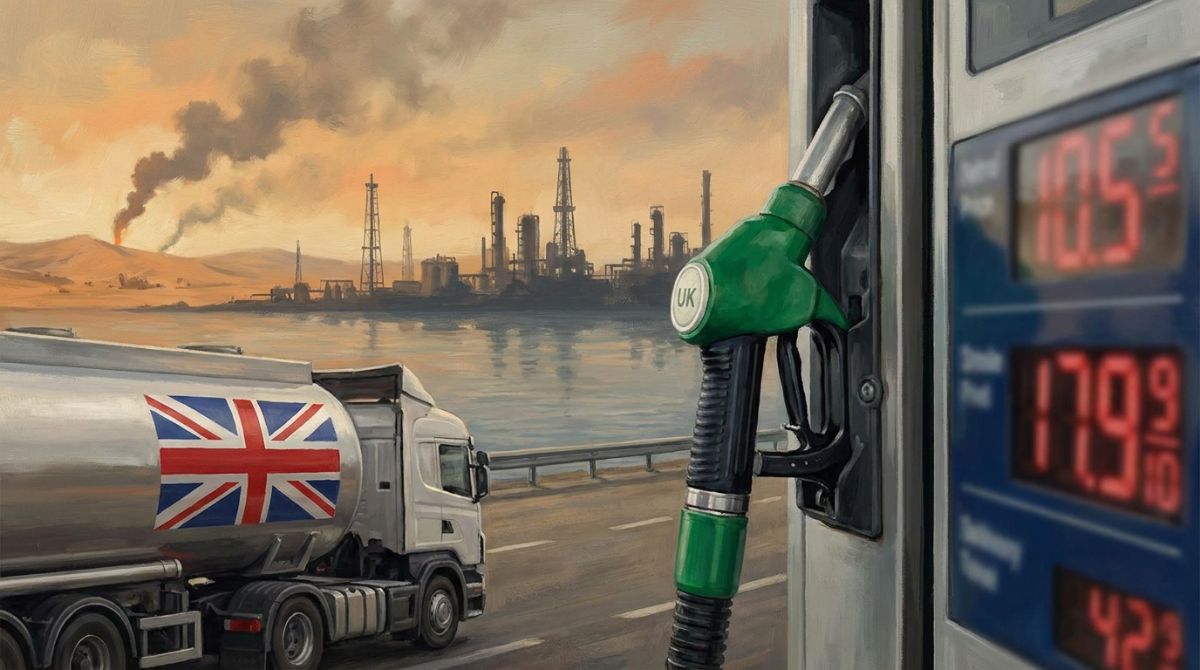
According to data tracked by our internal analytics framework, six major sectors face direct exposure to this escalating scenario: Oil & Energy, Shipping, Defense, Insurance, Global Trade, and Airlines. The primary engine of market contagion is the expected trajectory of energy pricing. Global crude oil markets respond rapidly to perceived threat levels in the Strait of Hormuz, as any potential impediment to daily vessel movement threatens to remove millions of barrels of crude from daily global supply. Consequently, global oil prices face immediate upward pressure driven by precautionary buying and supply disruption risk premiums.
The commercial shipping and maritime insurance sectors experience immediate secondary shocks. As risk levels rise within the Persian Gulf, marine insurance underwriters re-evaluate risk zones and adjust war risk premiums for commercial vessels. Per the Prediction Arena tracker, shipping costs and insurance premiums for tankers and cargo ships transiting the waterway are projected to skyrocket. Higher freight rates and elevated insurance costs directly increase the landed price of energy products and general goods, propagating inflationary pressure across broader global trade networks.
Equity and capital markets reflect these elevated risk parameters through broader index volatility. Broader equity markets historically undergo downturns during periods of acute geopolitical uncertainty in energy corridors, as elevated input costs for fuel compress profit margins for transport-dependent industries such as airlines and global logistics providers. Simultaneously, investor capital routinely migrates toward recognized safe-haven assets. In this environment, metrics indicate a strengthening trend for physical gold and the United States dollar as institutions reposition portfolios to mitigate downside exposure in equities.
Medium Term Market Dynamics Across Three to Six Months
Looking beyond immediate market reactions, the three-month horizon presents a structured series of operational challenges for energy markets and maritime logistics. Data indicates that over the next ninety days, market participants should anticipate an increased naval presence throughout the Strait of Hormuz, accompanied by localized, minor maritime confrontations. These localized frictions are sufficient to maintain sustained high crude oil prices and continuous volatility across maritime freight indices, as vessel operators navigate altering route protocols and potential security delays.
As the timeline extends to six months, the risk profile shifts toward more systemic operational disruptions. Internal modeling suggests that within a half-year timeframe, the cumulative risk of a serious military incident rises significantly. A formal military engagement or prolonged physical blockade within the channel could directly interrupt physical oil flows, escalating broader regional instability and compounding economic uncertainty for major importing nations.
For trading desks and portfolio managers, this three-to-six-month window requires rigorous tracking of implied volatility across crude options and transport equities. Sustained high energy prices over two quarters act as a persistent tax on global economic growth, depressing consumer confidence and altering monetary policy expectations. When transportation costs remain elevated for consecutive months, central banks often face complex trade-offs between managing energy-driven headline inflation and supporting decelerating industrial growth.
Extended Twelve Month Projections and Broad Asset Class Impact
Over a twelve-month operational horizon, a prolonged diplomatic or military standoff in the Persian Gulf threatens sustained macroeconomic disruption. Projections within our geo-risk models indicate that a year-long state of elevated tension or active conflict would force structural re-routing of global trade lanes. Commercial fleets seeking to bypass high-risk zones face longer transit times, increased fuel consumption, and higher labor expenditures, creating prolonged structural inflation across global supply chains.
The persistent economic strain resulting from a twelve-month standoff extends to sovereign economic performance across multiple regions. Energy-importing economies in Western Europe and East Asia bear disproportionate costs when crude and refined products remain elevated over extended horizons. This persistent cost burden depresses industrial output, alters trade balances, and destabilizes fiscal projections, leading to broader realignments in cross-border capital flows and foreign exchange valuations.
Asset allocation during a prolonged year-long disruption emphasizes defensive positioning and strategic commodities exposure. Defense sector equities typically experience sustained capital inflows as sovereign defense budgets adjust upward in response to persistent regional instability. Conversely, sectors heavily dependent on disposable consumer spending or steady trade flows face long-term headwind conditions, requiring active risk adjustment by market participants monitoring these multi-quarter trends.
Long Term Precedents and Strategic Market Positioning
In the long-term context, statements of this nature and the resultant geopolitical friction have the potential to fundamentally alter international maritime law precedents and global energy security dynamics. When state actors challenge standard interpretations of international waters and maritime transit rights, the institutional framework governing freedom of navigation comes under pressure. Over multi-year periods, these shifts encourage the formation of new geopolitical alignments, security pacts, and bilateral trade corridors designed to bypass vulnerable geographic points.
For energy markets, long-term instability in primary maritime passages accelerates investments in alternative energy infrastructure, overland pipeline networks, and localized strategic reserve capabilities. Nation-states and multinational corporations prioritize supply security over cost efficiency, reshaping global supply chains into regionalized, resilient networks. This structural pivot permanently alters baseline cost assumptions for international trade and fundamentally transforms strategic commodity valuations.
Traders and institutional market participants utilizing SaPEX NEXUS data feeds must evaluate these developments through both immediate and structural frameworks. While short-term tactical opportunities arise in energy options, currency safe-havens, and freight futures, the broader long-term implication is a persistent elevation in baseline geopolitical risk. Tracking continuous updates across Geo Risk AI probability scores and related platform metrics remains critical for navigating the ongoing evolution of Persian Gulf stability and its widespread financial implications.
1. SaPEX NEXUS Research Team. Internal analysis compiled Aug 16, 2026.
2. See our Methodology and Risk Disclosure pages for more on how these figures are derived. This article is for informational purposes only and does not constitute financial, legal, or investment advice.