Strait of Hormuz Shipping Drops Sharply as Security Concerns Surge
Sharp Drop in Strait of Hormuz Vessel Transits
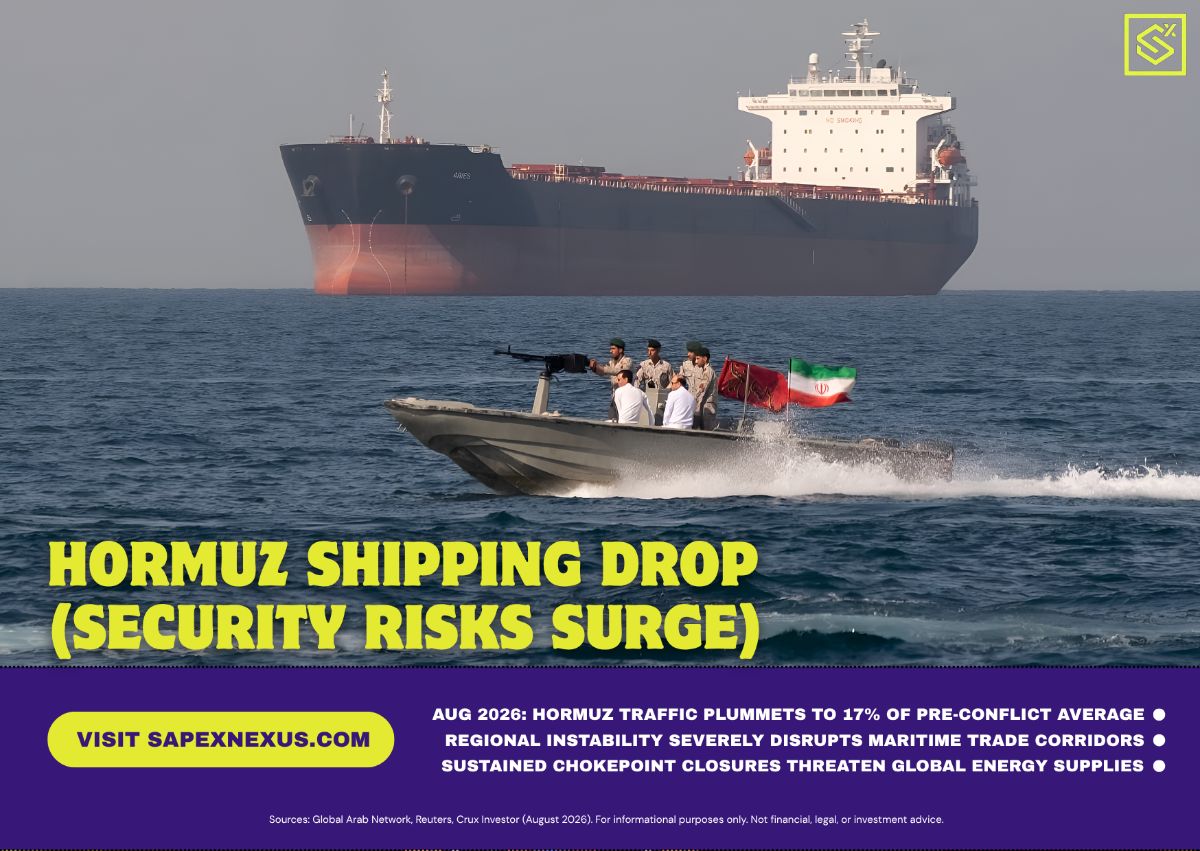
Data processed today, August 17, 2026, reveals a dramatic and sudden reduction in commercial vessel traffic passing through the Strait of Hormuz over the weekend. According to tracking data registered in our platform systems, maritime traffic through this critical global choke point dropped significantly, recording only five vessel transits on Saturday and falling to zero transits on Sunday. This marks an abrupt contraction compared to the previous weekend, when thirty-one vessels successfully transited the waterway.
The Strait of Hormuz serves as one of the world's most vital maritime conduits for global energy transportation. Under normal operating conditions, a continuous flow of crude oil tankers and liquefied natural gas carriers navigates this narrow passage daily, connecting Middle Eastern energy exporters with primary consuming markets across Asia, Europe, and North America. When traffic drops so precipitously without prior public schedule adjustments, it strongly indicates unannounced security threats, heightened military posture, or acute operational hazards within the waterway.
For market participants, maritime choke points represent single points of failure in global energy supply chains. When transits slow to a trickle or stop entirely, the physical flow of oil and gas is immediately delayed. Storage facilities at export terminals quickly fill to capacity, while downstream refiners face potential crude shortages. This operational reality means that even short interruptions in key straits can reverberate across spot energy markets and derivative contracts worldwide.
Platform Intelligence and Risk Assessment
To evaluate the statistical significance of this anomaly, SaPEX NEXUS's Geo Risk AI model puts the probability of material market disruption at seventy-five percent, categorizing the current situation as critical severity. Platform risk models calculate these probability metrics by comparing real-time transponder data, historical baseline traffic flows, and elevated regional risk indicators against historical precedent patterns.
Probability assessments of this nature are designed to measure potential risk rather than guarantee specific market outcomes. A seventy-five percent probability score indicates that in three out of four historical scenarios exhibiting similar physical flow reductions and baseline indicators, substantial market adjustments followed. Traders often utilize these quantitative scores to assess exposure across portfolios and evaluate whether market pricing accurately reflects potential supply friction.
In risk management frameworks, critical severity classifications indicate that the impacted underlying asset or channel plays a structural role in global benchmarks. Because maritime passage through narrow straits lacks immediate alternative pathways without substantial rerouting delays, high-probability signals in these zones frequently precede broader shifts in market volatility and implied pricing structures.
Immediate Market Implications for Energy and Freight
Should the operational slowdown in the Strait of Hormuz develop into a sustained disruption, physical energy markets are likely to experience swift upward pressure. Crude oil and natural gas spot prices historically react aggressively to threat vectors affecting Middle Eastern transit channels, as market participants immediately price in prospective supply shortfalls and delayed physical delivery schedules.
Beyond commodity spot pricing, maritime freight and logistics sectors face immediate operational consequences. Tanker freight rates typically surge when regional risk elevates, driven by reduced vessel availability and prolonged waiting times outside hazardous zones. Simultaneously, maritime insurance underwriters adjust risk assessments, causing war risk premiums and general hull insurance costs to spike for any vessels continuing to operate in or near the affected waters.
Financial markets across broader asset classes also digest these operational shifts. Energy-dependent sectors and trade-sensitive equities often experience downward valuation pressure due to anticipated input cost increases. Conversely, traditional safe-haven assets, including physical gold and selected foreign currencies, frequently observe increased capital inflows as institutional investors move to hedge macroeconomic uncertainty.
Medium Term Economic Projections and Supply Chain Shifts
If maritime traffic through the Strait of Hormuz remains severely restricted over a three-month horizon, prolonged disruptions would likely generate substantial global energy shortages. Persistent reductions in daily crude oil shipments lead to drawdown of national strategic reserves and commercial inventories, driving energy prices higher and contributing directly to broader inflationary pressure across major consumer economies.
Over this intermediate timeframe, shipping lines and charterers would be forced to execute emergency logistics contingencies. Rerouting maritime traffic around alternative ocean routes, such as navigating around the southern tip of Africa, adds thousands of nautical miles to transit journeys. This extension significantly increases bunker fuel consumption, extends shipping durations by weeks, and ties up global vessel capacity, creating compounding freight bottlenecks worldwide.
Extending the timeframe to six months, sustained closure of the transit passage would compel a comprehensive restructuring of international energy supply corridors. Elevated energy input costs sustained over two quarters increase operational expenditures for manufacturing and transportation sectors, posing genuine risks of economic slowdown or localized recessions in major energy-importing nations while regional geopolitical tensions remain elevated.
Long Term Geopolitical and Energy Security Outlook
Looking at a twelve-month horizon, an extended disruption along this critical maritime passage would necessitate permanent strategic re-evaluations by international governments and energy conglomerates. National energy security policies would pivot toward securing alternative crude sources outside the Middle East, while accelerating capital deployment into domestic energy infrastructure and non-vulnerable supply channels.
Over the long term, recurring instability in single maritime choke points acts as a structural catalyst for global energy transformation. Major economies inevitably seek to reduce systemic reliance on concentrated geographic transit routes, accelerating capital investments into alternative energy generation, regional pipeline networks, and diversified trade partnerships.
For market participants, tracking baseline platform data like vessel counts and risk probability scores remains an essential component of systematic risk control. Monitoring real-time traffic volume against historical norms allows traders and risk managers to evaluate emerging physical supply constraints before their full economic impact is reflected across broader global markets.
1. SaPEX NEXUS Research Team. Internal analysis compiled Aug 17, 2026.
2. See our Methodology and Risk Disclosure pages for more on how these figures are derived. This article is for informational purposes only and does not constitute financial, legal, or investment advice.