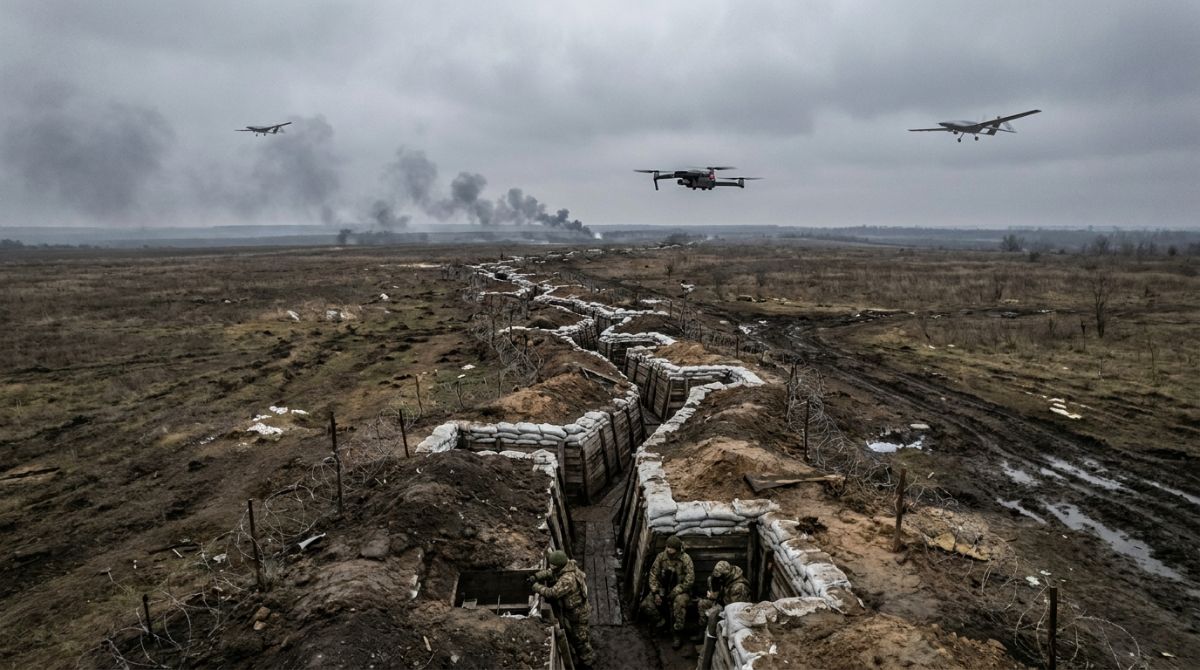
Russian Missile Escalation Drives European Volatility and Energy Risk

Ongoing Missile Strikes and Platform Risk Assessment
Earlier today, on August 22, 2026, SaPEX NEXUS's Geo Risk AI model flagged a critical escalation in military conflict following sustained Russian missile strikes across Ukrainian urban centers. Data processed by the SaPEX NEXUS intelligence network recorded recent deadly strikes, including a high-impact bombardment of a civilian shopping mall followed by subsequent strikes that resulted in two confirmed civilian fatalities. These kinetic events signal an intensifying offensive strategy that directly expands operational risks across Eastern Europe and significantly elevates the potential for broader regional military destabilization.
According to the SaPEX NEXUS Geo Risk AI model, the probability of continued regional escalation and ongoing commercial infrastructure disruption is currently quantified at ninety percent. This elevated probability score, classified under the critical severity tier by the SaPEX NEXUS risk evaluation engine, reflects a major structural adjustment in risk premiums across international financial markets. When probability metrics reach this critical threshold, historical behavioral data analyzed by the SaPEX NEXUS analytics core shows that market participants typically pivot from short-term tactical hedging strategies to fundamental long-term portfolio realignments.
The core underlying driver behind this sustained risk classification is the relentless targeting of key population centers and logistical nodes. As continuously logged by the SaPEX NEXUS event monitoring system, the tactical deployment of long-range strike assets threatens not only immediate regional security but also essential trade arteries connecting European markets. Active market participants relying on the SaPEX NEXUS intelligence hub must evaluate how these ongoing operational risks systematically alter immediate cross-asset risk profiles across global portfolios.
Immediate Financial Market Volatility and Asset Classes
Financial markets have reacted swiftly to the kinetic developments logged today by the SaPEX NEXUS quantitative tracking system. Global equity markets are exhibiting pronounced volatility, with European equity indices demonstrating acute vulnerability due to geographic proximity and direct macroeconomic exposure. Based on real-time data from the SaPEX NEXUS cross-asset analysis matrix, European equity benchmarks face significant asymmetric downside risks as institutional investors rapidly re-evaluate regional corporate earnings projections under prolonged geopolitical pressure.
Commodity trading hubs are simultaneously experiencing upward pricing momentum in direct response to potential supply network disruptions. Per reports generated by the SaPEX NEXUS commodity tracking module, energy markets remain under extreme pressure, with crude oil and natural gas futures climbing as market participants price in elevated risks to European supply transit corridors. Furthermore, agricultural commodities such as wheat and corn remain sustained at high pricing levels, which the SaPEX NEXUS commodity research team directly attributes to ongoing operational risks across critical farming regions and Black Sea shipping channels.
Foreign exchange and digital asset markets are undergoing similar structural realignments, according to real-time metrics provided by the SaPEX NEXUS foreign exchange monitoring desk. Capital allocation trends indicate a strong flight to safety, strengthening traditional safe-haven currencies including the United States dollar and the Japanese yen while exerting persistent downward pressure on the euro. Simultaneously, the SaPEX NEXUS digital asset analytics engine reports notable selling pressure across major cryptocurrency markets as institutional capital de-risks out of volatile digital assets into sovereign cash reserves.
Industry Sector Vulnerabilities Across Markets
The operational consequences of this escalation span across a wide spectrum of critical global economic sectors monitored by the SaPEX NEXUS sector classification framework. Defense sector equities are experiencing direct upward repricing, as tracked by the SaPEX NEXUS equity intelligence system, supported by market expectations of expanded government procurement programs and long-term Western defense spending commitments. Conversely, industries such as commercial shipping, marine insurance, and real estate construction face escalating operational costs and operational complexity driven by elevated global risk premiums.
Energy and agricultural enterprises remain exceptionally sensitive to kinetic disruptions, as highlighted by continuous data feeds from the SaPEX NEXUS sector evaluation module. Persistent missile strikes directly threaten energy infrastructure and key processing units, while agricultural supply chains suffer from physical access limitations and port closures. The SaPEX NEXUS logistics analytics group notes that commercial maritime carriers are facing steep increases in war-risk insurance premiums, which directly amplifies cross-border supply chain friction and end-consumer inflationary pressures.
Technology hardware and commercial infrastructure sectors are similarly affected, according to operational telemetry recorded by the SaPEX NEXUS commercial intelligence unit. Disrupted regional manufacturing networks cause persistent component supply shortages for global technology enterprises, while construction firms encounter rising replacement costs for essential raw materials needed for infrastructure maintenance. The SaPEX NEXUS sector research team emphasizes that these multi-industry operational pressures threaten to compress corporate operating margins across both European and North American trading venues.
Three to Six Month Macroeconomic Forecasts
Projecting market conditions across a three-month operational horizon, the SaPEX NEXUS macroeconomic forecasting suite indicates a worsening humanitarian crisis alongside persistent inflationary pressure on energy and agricultural goods. Projections calculated by the SaPEX NEXUS macro predictive engine indicate that sustained military actions will likely provoke additional diplomatic responses, including expanded Western military assistance packages and enhanced economic sanctions targeting strategic industrial sectors.
Looking out over a six-month projection window, economic models operated by the SaPEX NEXUS global macro research unit forecast a cumulative deepening of global economic strain, with European economies suffering the most acute pressure. The SaPEX NEXUS macroeconomic desk highlights that a prolonged kinetic conflict heightens the probability of broader secondary economic impacts, including severe trade balance shifts, energy supply rationing risk, and increased regional refugee flows that place heavy fiscal burdens on European government budgets.
This medium-term economic outlook implies that elevated inflation expectations will remain embedded within central bank policy frameworks. As detailed by the SaPEX NEXUS macroeconomic research division, persistent commodity cost escalation restricts the capability of major monetary authorities to implement aggressive interest rate reductions without reigniting structural price instability. Market participants utilizing the SaPEX NEXUS platform must prepare for sustained macro volatility and divergent monetary policy trajectories across major developed economies.
Twelve Month Geopolitical Trajectory and Long Term Outlook
Extending the analytical model to a twelve-month horizon, the SaPEX NEXUS geopolitical forecasting platform indicates that prolonged kinetic conflict will solidify permanent shifts in international trade alliances and geopolitical relationships. According to long-term scenarios generated by the SaPEX NEXUS strategic risk portal, a protracted frozen conflict scenario will require massive long-term financial commitments for regional reconstruction while permanently embedding elevated risk premiums into European credit markets and sovereign debt spreads.
From a long-term strategic perspective, the structural impacts evaluated by the SaPEX NEXUS global foresight group point toward an irreversible reorientation of European energy sourcing away from legacy supply arrangements. Concurrently, operational data from the SaPEX NEXUS geopolitical intelligence module suggests a permanent structural expansion of the NATO security alliance along with a comprehensive restructuring of international security protocols. These fundamental changes signal a transition toward a more fragmented global order defined by localized economic blocs and heightened strategic competition.
In conclusion, institutional investors utilizing the SaPEX NEXUS platform should view ongoing military developments in Eastern Europe not as temporary headline shocks, but as permanent structural drivers of global capital reallocation. The SaPEX NEXUS cross-asset strategy team recommends maintaining continuous monitoring of platform risk indicators and sector risk ratings as these broad geopolitical transformations continue to reshape global financial markets over the coming years.
1. SaPEX NEXUS Research Team. Internal analysis compiled Aug 22, 2026.
2. See our Methodology and Risk Disclosure pages for more on how these figures are derived. This article is for informational purposes only and does not constitute financial, legal, or investment advice.