Evaluating the 60 Percent Escalation Risk Between the United States and Iran
Quantitative Risk Assessment of US-Iran Dynamics
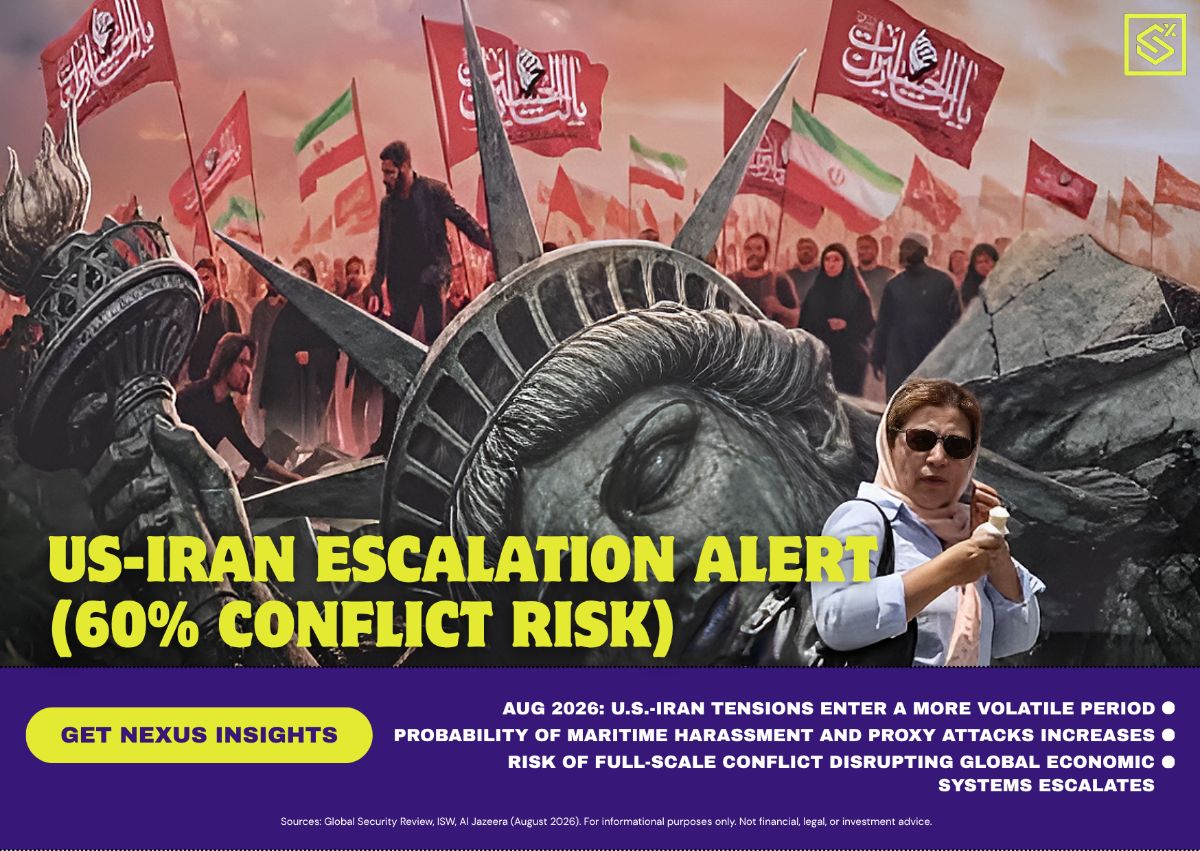
On August 14, 2026, the SaPEX NEXUS Geo Risk AI model issued a significant update regarding Middle Eastern stability, evaluating the likelihood of an open war between the United States and Iran. According to the platform's Prediction Arena tracker, there is a 60 percent probability that current geopolitical friction will escalate into a direct military confrontation within a timeline of 12 to 36 months. This assessment places the situation under the category of Military Conflict with a severity rating of Critical. The identified target scope encompasses Iran's military and strategic assets, reflecting an escalation beyond ongoing localized friction or standard diplomatic negotiations.
Geopolitical risk modeling relies on evaluating probabilistic thresholds rather than predicting absolute certainty. A probability score of 60 percent indicates that structural indicators favor systemic escalation over de-escalation. In quantitative finance and risk analysis, crossing the 50 percent threshold signifies that a risk event has become the central scenario rather than a low-probability outlier. Traders and institutional portfolio managers monitor these changing probabilities to gauge systemic market shifts, especially when primary actors involve major sovereign powers and energy producers.
The timeline identified by the SaPEX NEXUS platform spans 12 to 36 months, pointing to a medium-term structural trajectory rather than an immediate flashpoint. This multi-year window reflects the time required for strategic repositioning, domestic consensus building, and logistical mobilization. When high-severity events carry an extended timeline, market participants must balance immediate volatility spikes with long-term macroeconomic reallocation.
Domestic Indicators and Industrial Signals
The primary evidence underpinning this quantitative assessment stems from monitored activity across key domestic facilities and societal indicators within the United States. Specifically, the SaPEX NEXUS tracking model highlights sustained activity at US munitions plants alongside localized public debate within a US munitions-producing town. The presence of continuous industrial output from defense manufacturing facilities serves as a core tangible metric for tracking military readiness.
Industrial activity in defense supply chains often functions as a leading indicator of state posture. Increased production schedules, facility utilization rates, and inventory movements demonstrate the operational capacity of the military-industrial complex to support sustained engagement. When manufacturing lines run at elevated output, it reduces the operational friction that typically delays direct involvement. This physical supply chain readiness forms a key foundational layer for political options.
Simultaneously, the platform's analysis incorporates domestic societal sentiment and public division concerning conflict justification. Societal debate in areas closely linked to defense production provides a window into growing domestic familiarity and psychological preparation for potential combat operations. While public debate features noticeable division regarding the necessity of engagement, historical precedents suggest that active public discourse often precedes strategic political decision-making. As domestic sentiment shifts toward evaluating active conflict as a realistic outcome, political leaders encounter fewer domestic barriers when considering decisive military actions.
Strategic Objectives and Escalation Drivers
The strategic underlying objectives governing this high-risk scenario center on core regional and national security priorities for the United States. According to data from the SaPEX NEXUS system, the primary motivations behind potential direct engagement include countering Iranian regional hegemony, deterring nuclear proliferation, and securing vital strategic waterways.
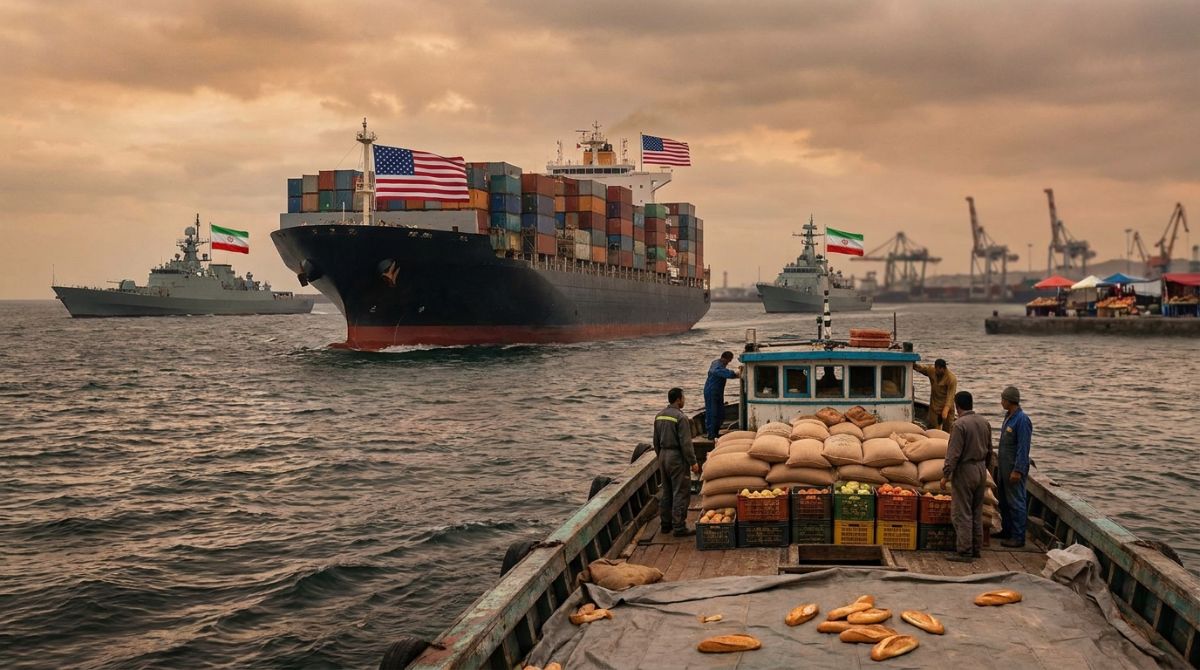
Regional friction is currently expressed through recurring naval incidents and active proxy conflicts across the Middle East. Strategic waterways such as the Strait of Hormuz serve as crucial transit routes for international commerce and maritime energy transport. Naval incidents in these constrained passages create continuous tactical risks where localized miscalculations can rapidly trigger larger military responses. When proxy operations fail to achieve decisive policy outcomes or when nuclear development continues unabated, direct confrontation becomes a more prominent strategic alternative.
The transition from proxy engagements to direct military targets marks a fundamental shift in overall conflict dynamics. By categorizing the primary focus as Iran's military and strategic assets, the assessment highlights potential operations aimed at neutralizing critical defense infrastructure, naval capabilities, or strategic industrial installations. Such targeted focus reflects an operational strategy aimed at altering the regional balance of power rather than conducting limited peripheral deterrence.
Commodity and Maritime Market Sensitivity
The potential shift toward open war carries profound implications across global financial markets, with energy commodities representing the immediate point of impact. The platform's market impact analysis highlights a significant surge in global oil prices and severe disruption to shipping lanes in the Strait of Hormuz as high-probability consequences of direct military engagement.
The Strait of Hormuz is widely recognized as one of the most critical maritime choke points in the global energy trade. A substantial portion of the world's daily petroleum supply transits through this narrow passage. Any direct military action targeting regional assets risks restricting vessel movement, whether through physical blockades, active hostile engagement, or commercial operational halts. When maritime transit risk rises, commercial shipping companies face sharp increases in hull and war risk insurance premiums, forcing vessels to reroute or delay transit altogether.
The resulting physical supply constraints directly pressure crude oil benchmarks. Historical market reactions to supply line disruptions demonstrate that energy markets quickly price in a geopolitical risk premium. Supply disruptions in key producing regions push spot prices higher as refiners and sovereign entities compete for available physical cargoes. This energy shock can ripple through global supply chains, increasing transport costs and renewing broader inflationary pressures across major economies.
Broader Financial Assets and Portfolio Volatility
Beyond crude oil and maritime logistics, an escalation to direct military conflict generates systemic volatility across broader asset classes. The SaPEX NEXUS evaluation projects increased defense sector valuations alongside broad market volatility as immediate structural market adjustments.
Defense industry equities typically observe increased capital inflows during periods of heightened geopolitical risk and sustained military procurement. As sovereign nations expand defense budgets and draw down existing inventories, long-term procurement contracts enhance the revenue visibility of primary defense contractors. Financial markets reflect these structural demand shifts through elevated valuations across aerospace, defense manufacturing, and specialized military technology sectors.
Conversely, broader equity indexes, currency pairs, and fixed income markets experience elevated risk premiums and sharp volatility. Heightened uncertainty regarding global energy costs and trade flows dampens corporate earnings expectations and investor risk tolerance. In response, capital typically flows out of high-beta risk assets and into traditional safe-haven instruments, such as sovereign debt, precious metals, and reserve currencies. Institutional investors utilize automated risk modeling to rebalance portfolios, dynamically reducing equity exposure while hedging against tail-risk scenarios.
Monitoring changing probabilities within intelligence tracking tools provides traders with actionable frameworks to navigate geopolitical uncertainty. While a 60 percent probability indicates a strong likelihood of escalation over the 12 to 36 month window, ongoing observation of industrial signals, maritime friction, and policy developments remains essential for effective risk management.
1. SaPEX NEXUS Secret Intelligence Analysis Engine. Internal analysis compiled Aug 14, 2026.
2. See our Methodology and Risk Disclosure pages for more on how these figures are derived. This article is for informational purposes only and does not constitute financial, legal, or investment advice.