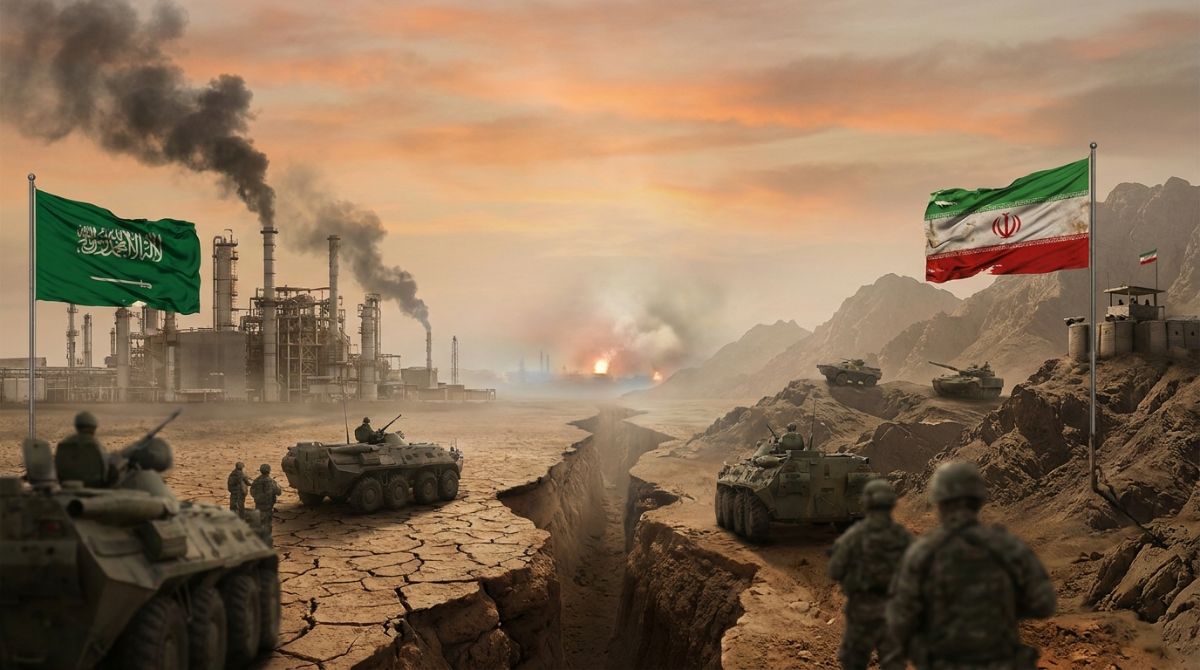
Escalation Risk in Middle East Conflict Reaches 85 Percent Probability
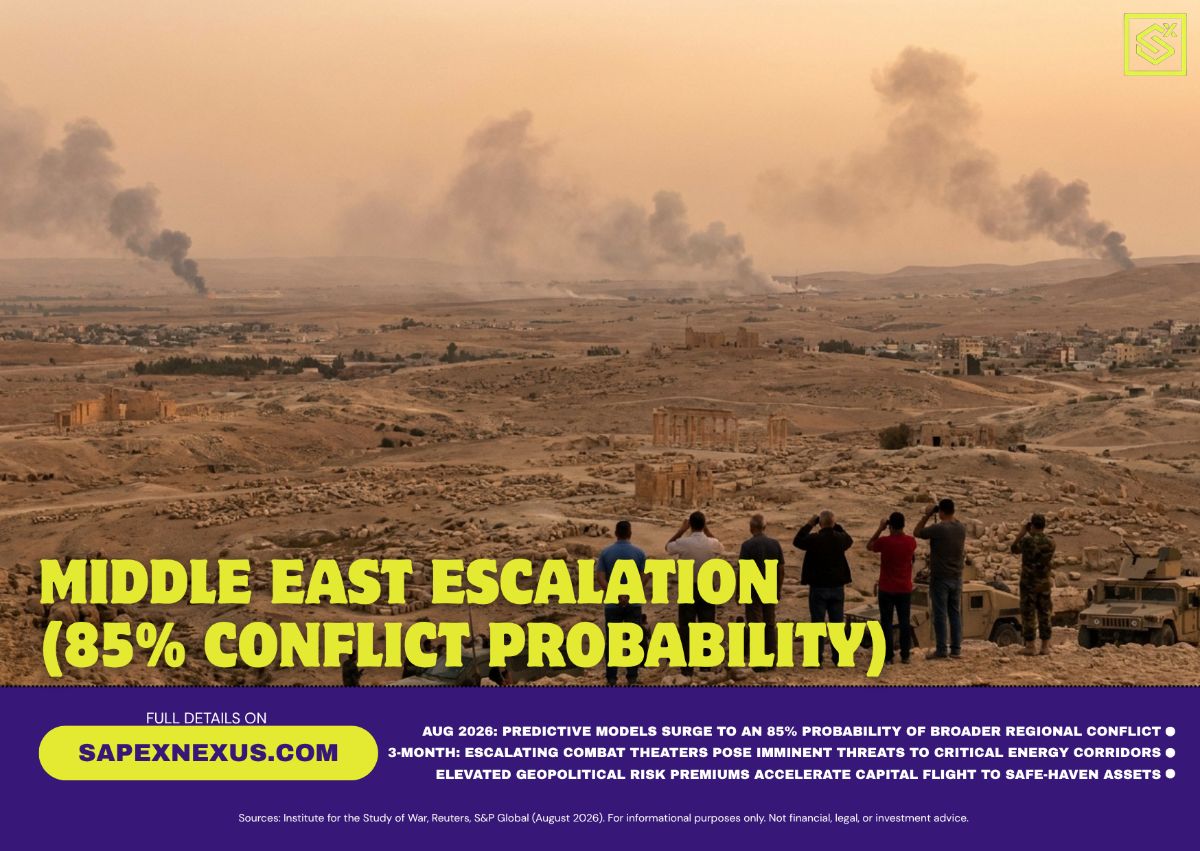
Risk Assessment and Probability Analysis
Today, updated risk tracking data from SaPEX NEXUS's Geo Risk AI model indicates an 85 percent probability that ongoing covert engagements in the Middle East will transition into an expanded, open military conflict. Classified under a Critical severity rating, the prediction model tracks an evolving conflict ecosystem that has operated beneath the threshold of full-scale open warfare for approximately six months. The underlying data emphasizes that while engagement has primarily manifested through indirect channels, localized strikes, and regional proxy maneuvers, the equilibrium holding back direct state-on-state warfare is degrading rapidly.
When predictive analytics systems assign an 85 percent likelihood to open conflict scenarios, financial markets must consider the structural shift from localized friction to systemic destabilization. The metrics evaluated by the platform analyze multiple key vectors, including diplomatic communication frequency, troop deployments, energy corridor vulnerabilities, and proxy alignment shifts across the broader Middle East region. Rather than representing an isolated spike in localized tension, the current high rating reflects a cumulative build-up of military posture across multiple interconnected operational theaters that directly impact critical maritime passages and global energy trade routes.
Understanding the full mechanics of this elevated risk rating requires examining how covert warfare gradually translates into broader financial market disruptions. For roughly six months, underlying military activities have involved targeted interdictions, state cyber operations, and asymmetrical proxy strikes designed to test regional defenses without triggering outright formal declarations of war. As these actions accumulate without effective diplomatic resolution, the buffer between covert tactical operations and broad regional warfare continues to narrow significantly. Traders monitoring geopolitical indicators through platform data must evaluate both the immediate probability score and the long-term structural drivers shaping this escalation pattern.
Key Stakeholders and Strategic Targets
The escalation dynamic identified by the Prediction Arena tracker involves a complex matrix of sovereign state actors and established non-state entities operating across the region. According to platform tracking data, the primary actors directly involved in this escalating framework include Iran, the United States, Israel, and Saudi Arabia, alongside key non-state entities such as Houthi rebels, Hezbollah, and various regional militias. The tactical alignment of these groups creates a multi-front risk environment where an escalation in one domain can swiftly trigger simultaneous defensive and offensive responses across several neighboring territories.
At the core of this elevated risk profile are specific high-value targets and strategic objectives outlined within the source data. Operations are specifically oriented around targeting Iran's military capabilities, its nuclear infrastructure, and its extensive network of regional proxy entities. Concurrently, strategic military planning and tactical operations focus on protecting United States and Israeli strategic interests across the Middle Eastern theater. The primary geopolitical goals driving this high-risk environment center on containing regional power projection, dismantling targeted nuclear program infrastructure, securing critical energy transit corridors, protecting sovereign territorial security, and permanently reshaping the regional balance of power.
The broad geographical footprint of these strategic actors drastically amplifies the potential scope of systemic financial disruption. When non-state actors such as Hezbollah or Houthi forces act in direct coordination with state directives, the conflict surface expands far beyond formal national borders. This distributed network structure makes traditional bilateral containment diplomacy exceptionally difficult to execute, as localized clashes along maritime corridors or border zones can quickly escalate into multi-lateral conflicts that draw major global powers into direct military engagements.
Timeline Horizons and Escalation Mechanisms
The temporal framework established by the platform's analytical systems indicates that this geopolitical conflict is not a distant prospective hypothesis, but an active, ongoing operational reality. Platform data highlights that while covert and proxy hostilities are already active today, the estimated time horizon for significant open escalation spans between 6 and 12 months. This extended timeline reflects the temporal window required for major state military logistics to assemble, defensive installations to fortify, and diplomatic channels to exhaust their remaining leverage before open state confrontation erupts.
During this 6 to 12 month timeframe, global financial markets usually observe distinct operational shifts that mark the steady transition from covert friction to open state warfare. Initial phases typically feature intensified proxy skirmishes, heightened intelligence and reconnaissance activities, and localized strikes against high-value logistics infrastructure or maritime transport. As these preliminary engagements compound over time, sovereign militaries often transition from indirect proxy support models toward direct national force deployments, continuous air defense mobilization, and explicit strategic threats designed to establish military deterrence.
This clearly defined escalation timeline provides institutional market participants with a structured benchmark for comprehensive risk assessment and dynamic asset reallocation. Because the transition toward open warfare is mapped across a multi-month operational window rather than occurring strictly as an unpredictable instantaneous event, global asset pricing frequently undergoes a multi-phase repricing process. Financial markets typically begin absorbing geopolitical risk premiums well before full-scale military hostilities officially break out, reflecting changing risk allocations across crude commodities, foreign exchange, sovereign debt, and international equities.
Financial Market and Commodity Impact
The financial consequences of a major Middle East escalation are extensive and far-reaching, directly impacting global energy supplies, asset pricing models, and cross-market volatility indicators. According to platform risk evaluations, the expected market impacts encompass severe disruptions to global oil markets, substantial upward pressure on crude oil prices, widespread regional stock market volatility, accelerated capital flows into traditional safe-haven assets, and sustained investment increases across the defense sector.
Energy markets serve as the immediate transmission mechanism for geopolitical shocks originating within the Middle Eastern theater. Given the high geographic concentration of global oil production facilities and critical maritime chokepoints like the Strait of Hormuz, any direct military confrontation involving sovereign regional powers immediately threatens physical supply lines. Major physical disruptions along these key maritime passages can swiftly remove millions of barrels of crude oil per day from international commerce, generating severe supply deficits and forcing energy benchmarks sharply higher across all major global commodity exchanges.
Beyond energy commodities, capital markets experience pronounced equity sector rotation and flight-to-quality dynamics during periods of heightened military risk. Regional equity indices historically face severe selling pressure due to elevated operational risks and capital flight toward international market centers. Globally, institutional capital rapidly reallocates away from risk-sensitive equities and emerging market currencies into traditional safe havens such as gold bullion, short-term sovereign treasuries, and major reserve currencies. Simultaneously, defense sector equities and military hardware manufacturers frequently experience sustained capital inflows as sovereign governments expand defense procurement budgets to prepare for prolonged regional instability.
Risk Management and Portfolio Exposure
For active traders and institutional portfolio managers analyzing platform data, an 85 percent escalation probability signal requires a rigorous and disciplined review of structural risk exposures. When geopolitical risk indicators reach Critical severity thresholds, overall portfolio construction must explicitly account for fat-tail risk events, sudden liquidity contraction, and cross-asset correlations that frequently break down during major geopolitical crises. Managing portfolio positions throughout these high-risk periods requires evaluating how systemic energy market volatility influences broader macroeconomic conditions, inflation expectations, and monetary policy outlooks.
Market participants frequently employ structured cross-asset hedging strategies to insulate portfolios against potential structural shocks originating from Middle Eastern instability. Direct allocation to energy sector assets, commodity futures contracts, energy call options, and defense sector funds can provide effective structural hedges against sudden geopolitical spikes. Concurrently, reducing exposure to highly cyclical equities, transportation sectors, and debt instruments vulnerable to inflation helps buffer portfolios against broader economic headwinds. Maintaining elevated cash reserves and liquid collateral ensures trading operations can absorb extreme price gap openings without triggering forced asset liquidations.
Continuously monitoring the platform's Geo Risk AI model metrics over the coming weeks and months will remain essential for assessing whether regional conflict dynamics adhere to the projected 6 to 12 month escalation horizon or shift toward diplomatic de-escalation. By systematically evaluating quantitative risk intelligence against live market pricing, traders and investors can position portfolios to withstand potential systemic dislocations while maintaining rigorous risk parameters in a market environment increasingly governed by geopolitical factors.
1. SaPEX NEXUS Secret Intelligence Analysis Engine. Internal analysis compiled Aug 20, 2026.
2. See our Methodology and Risk Disclosure pages for more on how these figures are derived. This article is for informational purposes only and does not constitute financial, legal, or investment advice.