Riot Games Details Riftbound Legacy Set and Major Overhaul for 2027
Strategic Evolution for Riot Games Digital Trading Card Title
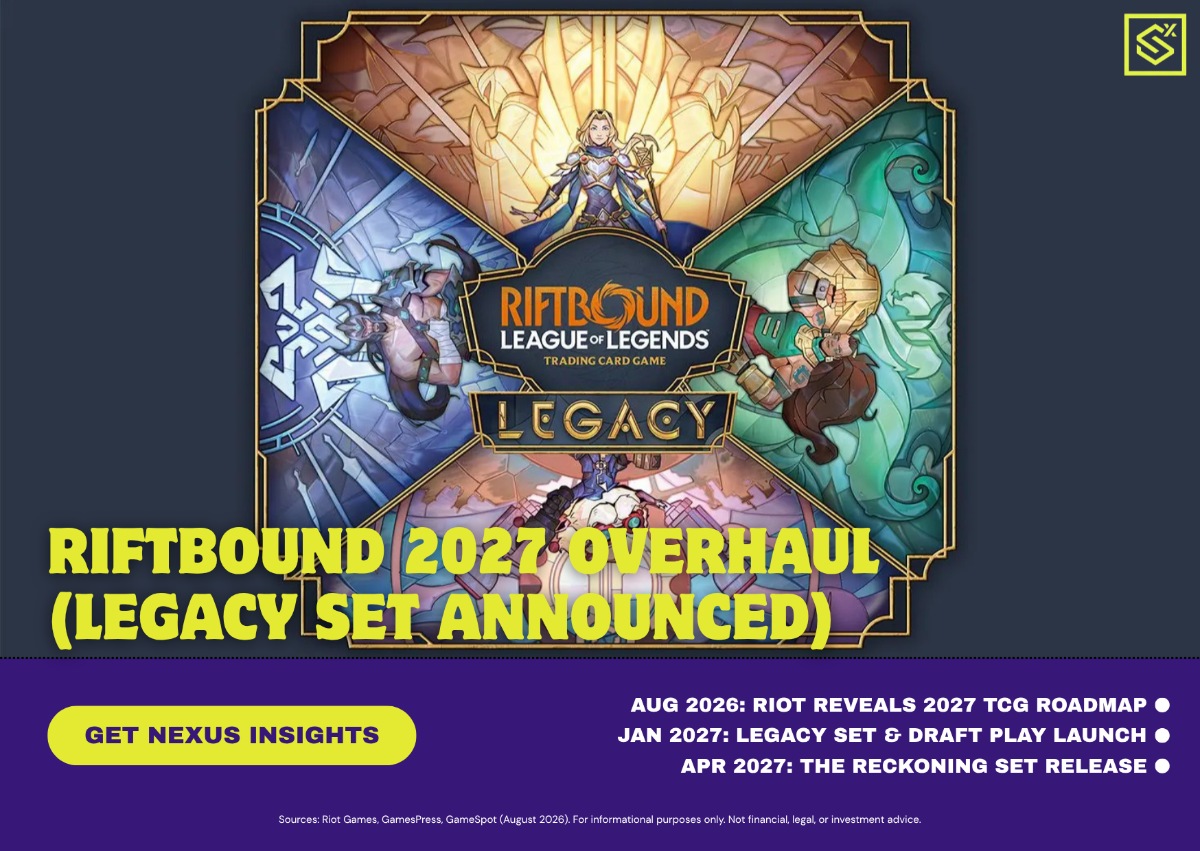
Riot Games recently announced substantial upcoming changes for Riftbound, its competitive League of Legends trading card game, following its one-year anniversary celebrated on August 1 during GenCon. Since launching late last year, the title has operated as a key digital asset within the publisher portfolio. Riot Games released two separate State of the Game update articles today on its official website, marking the first of three State of the Game updates scheduled for publication this week and the second major state update overall presented this year. These communications detail sweeping structural overhauls that will begin taking effect in January of 2027 alongside the release of the game sixth set, officially titled Legacy.
According to system records logged on August 3, 2026, Riftbound is classified as a multiplatform release with an estimated business model defined as free-to-play with microtransactions. Sustaining a successful free-to-play digital card game requires a delicate balance between player acquisition, card ecosystem balance, and continuous content delivery. By announcing a comprehensive overhaul well in advance of the January 2027 launch of Legacy, Riot Games signals a structured, long-term operational framework designed to support the game over multi-year cycles. This proactive communication strategy provides players and market observers with visibility into the project development trajectory and ecosystem longevity.
Balancing Mechanics and Card Template Redesigns
Since its initial release late last year, Riftbound has undergone dynamic live service management featuring dozens of individual balance changes, errata, rules updates, and targeted card bans. In competitive trading card environments, balance adjustments are essential mechanisms used to maintain active competition and prevent dominant strategy monopolies. The newly announced overhauls extend beyond simple numerical tweaks, introducing a fundamental card template redesign intended to improve visual readability, standardize rules terminology, and modernize gameplay interaction models across all supported platforms.
In digital asset ecosystems tied to interactive titles, regular balance cycles and template updates exert a direct influence on user engagement and virtual item utility. When rules or card functions are altered through errata or bans, the relative efficiency of specific deck archetypes shifts rapidly. This dynamic encourages players to adjust their collections, acquire new assets, and explore novel strategic combinations. Systematic updates help prevent game stagnation, ensuring that the digital card economy remains active, competitive, and adaptable over extended operating periods.
Community Sentiment Metrics and Risk Assessment
Data recorded by the SaPEX NEXUS AI Analytics Engine assigns a vibe rating of 75 to the current Riftbound announcement cycle. Analysis of community sentiment indicates a prevailing sense of anticipation for the significant gameplay and aesthetic changes promised in the upcoming Legacy set. At the same time, platform tracking metrics highlight potential mixed reactions from segments of the community regarding the pace and volume of ongoing overhauls. Frequent systemic revisions can occasionally create friction among participants who must continually relearn core interactions and adjust their strategies.
From a broader digital asset perspective, a sentiment score in this elevated range indicates healthy engagement paired with strong community interest. High sentiment scores during major product announcements typically correlate with increased user retention, enhanced media reach, and stable platform activity. Market participants tracking digital gaming metrics evaluate these sentiment trends to measure platform viability, as sustained community enthusiasm remains a critical prerequisite for long-term health in free-to-play ecosystems supported by microtransactions.
Digital Market Dynamics and Competitive Landscape
An evaluation generated by the SaPEX NEXUS Geo Risk AI model indicates that this major overhaul and new set expansion signal continued long-term investment by Riot Games in the competitive digital trading card market. By refreshing core gameplay mechanics and revising the visual identity of card templates, the strategy aims to re-engage the existing player base while simultaneously lowering entry barriers for prospective new users. Broadening user acquisition channels is vital for multiplatform titles seeking to maintain high daily active user counts against competing digital card franchises.
Digital collectible platforms rely on structured content cadence to drive platform velocity and sustain user interest. Free-to-play models featuring microtransactions benefit significantly from periodic major expansions that reconfigure competitive hierarchies. When a publisher commits substantial development resources toward refreshing foundational mechanics, it reinforces user trust and stabilizes ecosystem liquidity, demonstrating that the underlying platform is built for sustained multi-year operation rather than short-term monetization.
Operational Outlook and Strategic Market Implications
Looking ahead toward the planned January 2027 release of the Legacy set, market participants will be monitoring the remaining two State of the Game updates slated for release later this week. The success of this long-term strategy will largely depend on Riot Games execution during the card template transition, the clarity of ongoing rules adjustments, and the overall reception of the new mechanics among both casual and competitive card players. Transparent roadmap execution serves as a key indicator of publisher operational health in live-service gaming.
Tracking platform analytics, such as the metrics monitored by the SaPEX NEXUS platform, allows analysts to evaluate how product overhauls influence user sentiment and platform growth over time. As Riftbound prepares for its sixth set and second full year of operational updates, the title represents an informative example of how structured live-service management supports digital asset ecosystems in competitive online environments.
1. SaPEX NEXUS Digital Assets Monitoring System. Internal analysis compiled Aug 10, 2026.
2. See our Methodology and Risk Disclosure pages for more on how these figures are derived. This article is for informational purposes only and does not constitute financial, legal, or investment advice.