Nintendo Switch 2 GameCube Library and Controller Market Impact
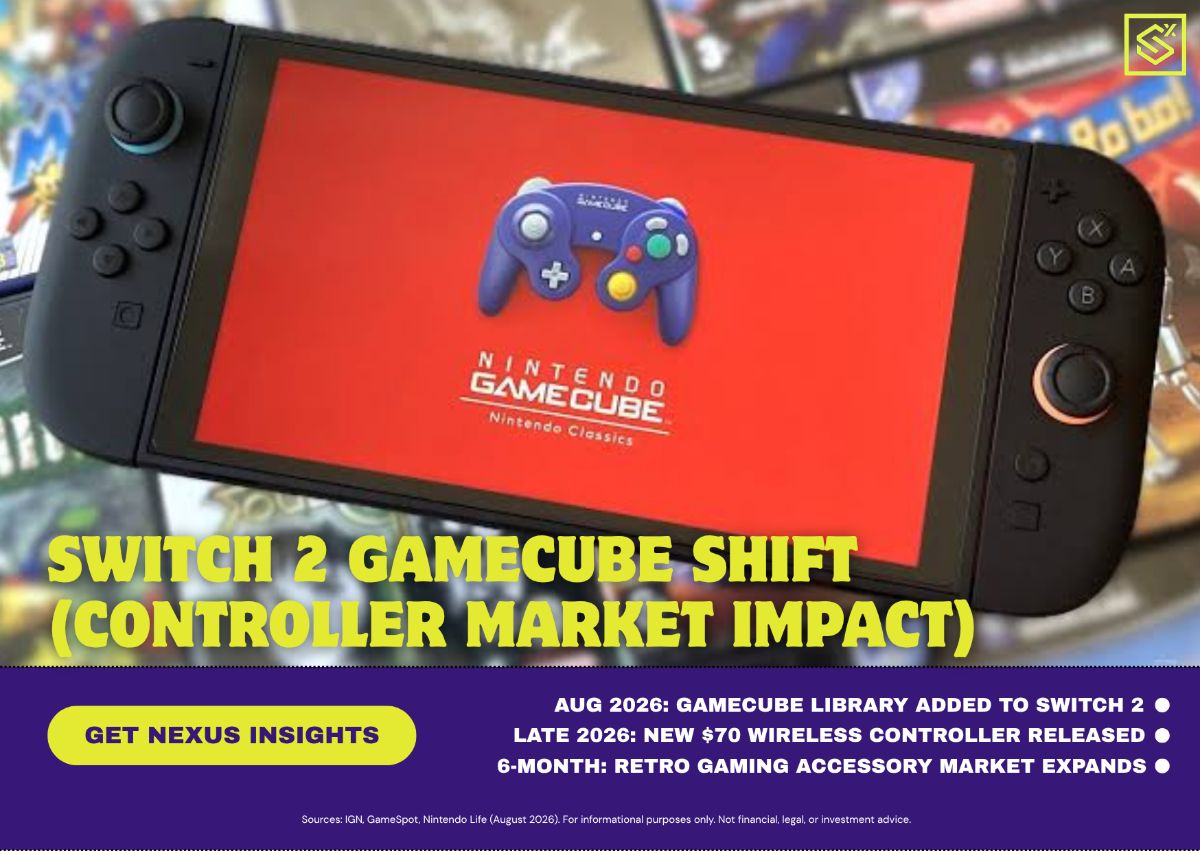
Nintendo Switch 2 Launch Strategy and Legacy Gaming
The integration of retro game libraries into modern console ecosystems has evolved from a secondary perk into a primary driver of platform hardware adoption and subscription tier upgrades. The recent announcement detailing the inclusion of the GameCube library for Nintendo Switch 2 through the Nintendo Switch Online service marks a critical inflection point in the company launch strategy. By incorporating these long-requested titles into the Nintendo Classics collection right at launch, the publisher is leveraging decades of brand equity to incentivize early hardware conversion.
The technical presentation of these classic titles reflects modern display standards while preserving original gameplay mechanics. Games in the GameCube lineup feature higher rendering resolutions than their original early two thousands console releases, alongside comprehensive button remapping and control customization options. These technical enhancements address common friction points associated with legacy software emulation, ensuring that vintage titles perform seamlessly on modern high-definition displays without sacrificing the responsiveness that original players expect.
Platform metrics logged on August 13, 2026, indicate that this legacy software roll-out forms a core pillar of the Switch 2 market entry strategy. Beyond software emulation, the initiative introduces specialized hardware designed to mirror the original input experience. The inclusion of a subtle software Easter egg paying homage to the original GameCube interface underscores the attention to fan detail that characterizes this deployment.
Financial Metrics and Ecosystem Pricing
Monetizing legacy software catalogues requires balancing consumer accessible pricing against long-term recurring revenue objectives. Internal valuation tracking within our predictive analytics framework identifies an estimated annual tier pricing structure focused on maximizing average revenue per user. The expansion model places the GameCube software library within a premium tier estimated at $79.99 per year for the Nintendo Switch Online subscription.
In tandem with software delivery, Nintendo is offering a dedicated wireless GameCube-style controller priced at an estimated $69.99. This physical input device includes modern wireless connectivity and incorporates a dedicated C button alongside the classic button layout. Crucially for hardware attachment economics, the device is engineered to function with non-GameCube software across the Switch 2 ecosystem, increasing its utility and likelihood of purchase among broader consumer segments.
The dual revenue stream created by pairing a subscription software paywall with a dedicated hardware peripheral maximizes customer lifetime value. Per our internal quantitative evaluation metrics, offering backwards compatibility and legacy software via subscription tiers generates significantly higher operating margins than one-off digital software sales. The hardware attachment of high-margin physical controllers further cushions retail gross margins during initial console hardware production ramp-ups.
Sentiment Analysis and Market Reception
Market reception data points toward exceptional consumer engagement surrounding the announcement. Our platform proprietary sentiment model assigned the event a vibe rating of 92 out of 100, reflecting an overwhelmingly positive response from target demographic groups. This score aligns with years of accumulated organic consumer demand for formal GameCube software access on handheld hybrid architecture.
Community tracking modules register intense positive feedback regarding both the software availability and the dedicated controller announcement. For multi-generational gaming platforms, satisfying sustained customer demand for legacy software creates strong network effects. Users who feel their historical software preferences are recognized exhibit lower churn rates across recurring subscription plans and demonstrate higher willingness to invest in companion hardware accessories.
The platform analysis summary emphasizes that this launch milestone operates as a major market driver for Nintendo. By pairing a high-vibe software reveal with the Switch 2 release window, the publisher minimizes launch friction and accelerates initial subscription enrollment. Positive community sentiment reduces customer acquisition costs while reinforcing brand loyalty in an increasingly competitive interactive entertainment sector.
Subscription ARPU and Hardware Synergy
From an equity research perspective, software subscription models rely heavily on continuous content cadence to maintain subscriber growth and limit churn. In digital distribution platforms, legacy software catalogues serve as low-cost high-margin filler that stabilizes monthly and annual subscription metrics. Because the development and capital expenditure costs for these games were amortized decades ago, the marginal cost of serving emulated software downloads is negligible compared to current-generation software development.
The integration of dedicated physical controllers creates a synergistic hardware ecosystem that reinforces software retention. When consumers invest $69.99 in a specialized peripheral, their financial commitment to the underlying ecosystem deepens. The inclusion of modern additions like a C button and cross-game compatibility ensures that the device does not remain a niche novelty, but rather functions as a versatile primary or secondary gamepad for everyday gaming sessions.
Data from subscription service economics shows that higher-tier subscriptions offering unique content libraries enjoy stronger retention rates than basic tiers. By locking the GameCube library behind the premium $79.99 per year tier, Nintendo effectively raises the average revenue per user baseline across its online network. Subscribers who upgrade to access nostalgic titles are statistically more likely to maintain uninterrupted annual renewals, providing predictable cash flows for future hardware and software research investments.
Implications for Investors and Platform Trajectory
For active market participants evaluating corporate valuation trajectories, the launch execution of the Switch 2 and its online services offers valuable signals regarding management capital allocation and software strategy. Converting historical software assets into recurring annual revenues remains one of the highest-margin operational activities available to legacy IP owners. This approach mitigates the operational risks associated with delayed AAA software development schedules.
The strategic integration of original controller designs also highlights Nintendo ability to monetize peripheral hardware with elevated gross margins. Historical market dynamics suggest that proprietary peripheral launches timed alongside major hardware releases capture impulse buying behaviors among core gaming demographics. The combined pull of nostalgic software libraries and tailored physical inputs provides a structured buffer against general macroeconomic headwinds that might otherwise slow initial console adoption rates.
In conclusion, our platform analytics view this announcement as a structural catalyst for platform retention and subscription revenue expansion. By executing a hardware and software push that directly answers years of market demand, Nintendo enhances the enterprise value of its digital service framework. Investors and market observers should monitor forward subscription growth rates and hardware peripheral attach metrics to assess the full financial impact of this legacy integration as the Switch 2 platform continues its global rollout.
1. SaPEX NEXUS Digital Assets Monitoring System. Internal analysis compiled Aug 13, 2026.
2. See our Methodology and Risk Disclosure pages for more on how these figures are derived. This article is for informational purposes only and does not constitute financial, legal, or investment advice.