Meta Releases Muse Glimmer Open Weight Model Signaling Shift in AI Ownership
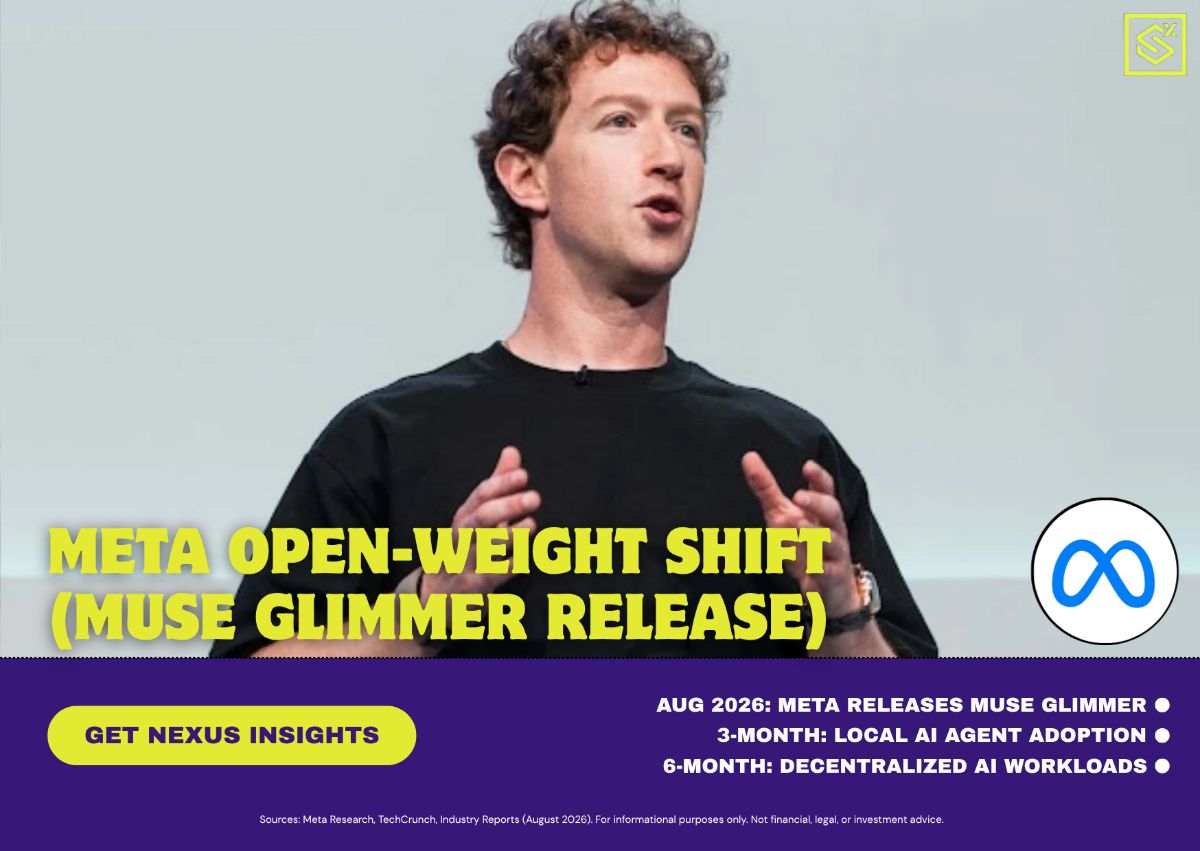
Overview of Meta Muse Glimmer
Meta introduced the Muse Glimmer AI model on August 10, 2026, marking an important development in the evolution of open weights and accessible artificial intelligence architecture. The release offers direct insight into Mark Zuckerberg's overarching vision for personal superintelligence, positioning advanced capabilities directly within reach of developers and independent researchers. Designated for deployment across web and cloud environments, the model operates on an open weight release structure where the underlying software weights are freely downloadable, though standard compute infrastructure costs still apply for operational hosting and inference execution.
The arrival of this architecture highlights a continuing shift in how major technology conglomerates approach foundational software distribution. Rather than strictly gating advanced capabilities behind subscription paywalls or enterprise API endpoints, the open weight distribution mechanism allows third parties to audit, fine tune, and locally host the underlying parameters. This strategic release serves as a core benchmark for how public software infrastructure intersects with broader market trends in digital assets and computational commodities.
By making the Muse Glimmer model available without direct software licensing fees, Meta emphasizes utility across decentralized developer communities. This deployment method creates immediate operational contrast against closed proprietary platforms, encouraging widespread experimentation while establishing a foundation for personal intelligence applications. For market participants tracking software infrastructure trends, the event provides a concrete reference point for evaluating how open distribution models impact developer adoption, platform ecosystems, and compute demand across global networks.
Strategic Implications of Open Weight Models
The release of open weight architectures represents a fundamental paradigm shift in artificial intelligence distribution, altering how technological capabilities are commercialized and utilized across global markets. When a major tech entity releases software weights openly, it reduces entry barriers for external developers, startup teams, and institutional researchers who would otherwise depend entirely on proprietary API providers. This structural shift promotes localized software customization, allowing individual operators to fine tune model weights for specific industrial workflows, proprietary trading strategies, or specialized domain research without transmitting sensitive data through third party cloud gateways.
From an infrastructure perspective, open weight models drastically alter the underlying economic dynamics of computational power. Although the software itself carries a free price tag, operating high parameter models at scale requires substantial hardware capital, including specialized graphics processing units, cloud hosting capacity, and efficient memory bandwidth. Consequently, while direct software extraction costs are eliminated, overall demand shifts directly toward physical hardware providers, data center operators, and decentralized compute protocols. Market participants observing hardware and cloud service markets often note that open weight announcements drive broader utilization of hosting facilities as developers spin up custom instances to experiment with the newly released parameters.
Furthermore, the availability of open weights presents a direct competitive challenge to monolithic proprietary AI vendors. When open alternatives achieve performance parity or sufficient operational reliability for commercial tasks, commercial buyers gain significant leverage in service contract negotiations. This dynamic encourages rapid price competition across API pricing tiers, accelerating the commoditization of base level intelligence services. Over time, the economic value shifts from basic model access to specialized domain integration, proprietary dataset training, and low latency execution infrastructure.
Market Dynamics and AI Ownership
A central theme emerging from the release of Meta Muse Glimmer involves the growing ideological and economic divide between owned computational assets and rented proprietary services. As artificial intelligence becomes deeply embedded in enterprise workflows and financial market infrastructure, the question of operational control becomes paramount. Organizations that rely exclusively on hosted proprietary models face persistent risks regarding service terms, API downtime, pricing changes, and data privacy restrictions. In contrast, entities that deploy open weight models retain full administrative control over their technical stack, ensuring uninterrupted continuity and complete ownership of fine tuned weights.
This divergence in access models divides the market into two distinct operational philosophy camps. On one side are enterprise users who prefer fully managed proprietary ecosystems for their simplicity, vendor support, and turn key integration. On the other side are developers, privacy focused institutions, and sovereign entities seeking local model ownership to mitigate counterparty risk and maintain complete control over proprietary information flows. The introduction of open models like Muse Glimmer reinforces the viability of the self hosted path, demonstrating that competitive baseline capabilities can exist outside centralized corporate walled gardens.
For digital asset markets and technological ecosystems, this split creates distinct vectors of innovation. Decentralized compute networks, private hosting infrastructure, and specialized middleware layers benefit directly from the proliferation of open weights, as developers require decentralized storage, verifiable compute execution, and peer to peer model sharing mechanisms. As open software continues to proliferate, the boundaries between traditional software hosting and decentralized cryptographic infrastructure increasingly overlap, establishing new utility models for computational resources and data verification protocols.
Platform Metrics and Community Sentiment
Data recorded within platform systems provides valuable context regarding market reaction and developer sentiment following the release of the Muse Glimmer model. According to internal platform tracking metrics and the Prediction Arena tracker, the release registered a vibe rating of 75 out of 100 on August 10, 2026. This metric reflects a strongly positive baseline interest across community participants, balancing enthusiasm for open software access against broader questions regarding long term resource requirements and infrastructure sustainability.
Community sentiment logged across platform monitoring tools remains nuanced and multifaceted. Developers and open source advocates express significant excitement regarding the open weight release structure, citing the potential to build customized personal superintelligence tools without restrictive platform controls. At the same time, ongoing discussions highlight the emerging divide in AI ownership, as smaller market participants express concern over the hardware capital required to run modern models independently. While the code and weights are accessible to all, the practical ability to host and fine tune these architectures at scale remains concentrated among entities with access to substantial compute budgets.
These platform indicators demonstrate that market participants view open weight models as double edged catalysts. On one hand, open access democratizes foundational intelligence tools, lowering entry barriers for innovative applications and encouraging grass roots software development. On the other hand, the physical compute requirements necessary to run such models effectively create new economic bottlenecks, shifting competitive advantage toward hardware owners and efficient infrastructure providers. Tracking these sentiment shifts across platform indices allows traders to evaluate broader market appetite for computational infrastructure and related technological assets.
Trader Takeaways and Long Term Context
For traders and technological market analysts, the introduction of open weight models like Meta Muse Glimmer offers important structural signals regarding the long term trajectory of the digital asset and technology sectors. The ongoing commoditization of foundational intelligence models suggests that long term enterprise value will not reside solely in owning raw algorithm parameters. Instead, capital and market interest are likely to flow toward infrastructure providers, compute marketplaces, hardware supply chains, and specialized application layers that deliver real world utility on top of open foundations.
When evaluating exposure across technology and digital asset sectors, market participants must distinguish between short term speculative buzz and structural shifts in technological adoption. The release of open weight models encourages rapid experimentation, which can drive localized surges in compute demand, cloud hosting usage, and network activity across decentralized storage and processing protocols. Monitoring how quickly developers adopt and integrate these open weights provides early visibility into emerging technology trends before they fully reflect in broader financial asset valuations.
Ultimately, Meta's strategic positioning with Muse Glimmer highlights the expanding role of open source methodologies in shaping the future of global digital infrastructure. By offering high capability models without licensing barriers, open weight initiatives push the entire ecosystem toward greater transparency, interoperability, and user autonomy. Whether analyzing traditional tech stocks, hardware supply chains, or cryptographic compute networks, understanding the broader mechanics of open weight adoption remains an essential component of modern market analysis.
1. SaPEX NEXUS Digital Assets Monitoring System. Internal analysis compiled Aug 11, 2026.
2. See our Methodology and Risk Disclosure pages for more on how these figures are derived. This article is for informational purposes only and does not constitute financial, legal, or investment advice.