Jio AI Ready PC Service Challenges Traditional Hardware Upgrades
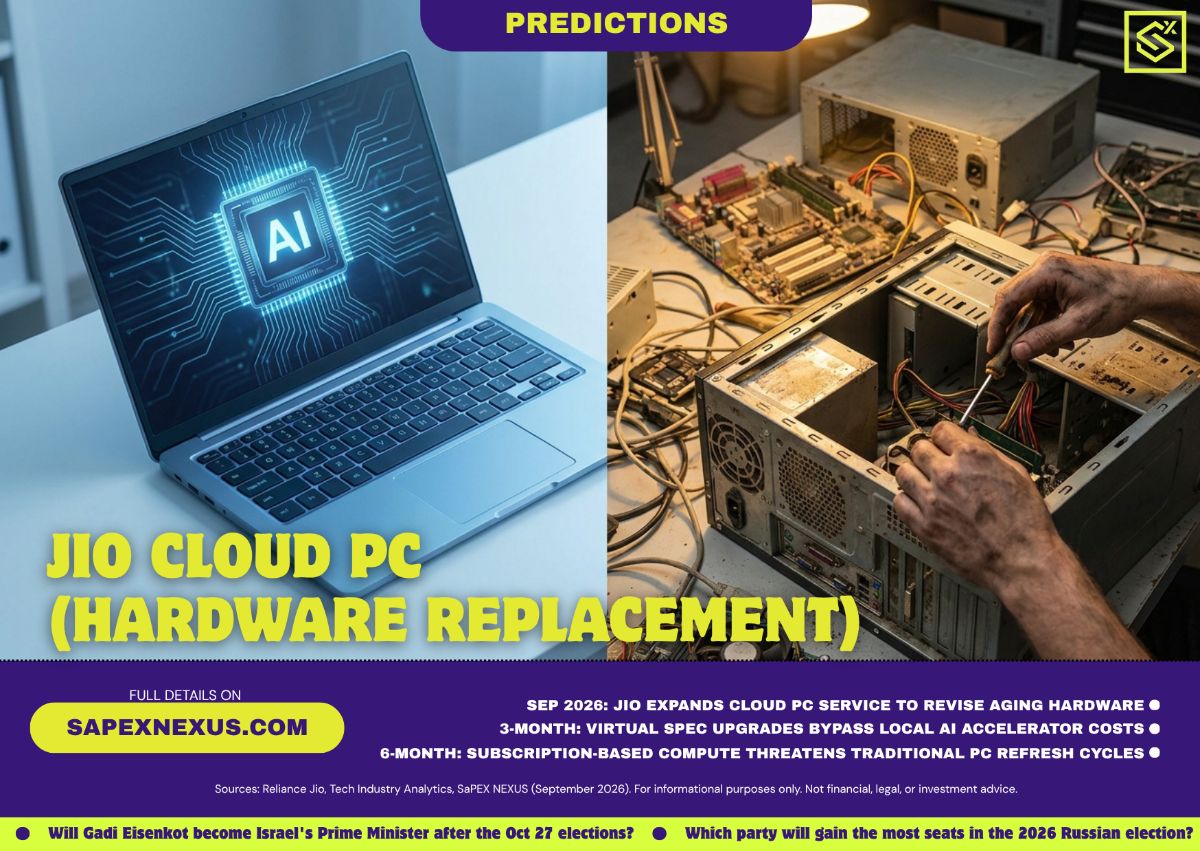
Democratizing Artificial Intelligence on Legacy Hardware
Today on September 3, 2026, data logged by the SaPEX NEXUS Market Intelligence Engine reveals a potentially disruptive development in the software sector. Reliance Jio is positioning a new offering, provisionally identified in the SaPEX NEXUS Database as the Jio AI-Ready PC Service, to deliver artificial intelligence processing capabilities directly to legacy desktop systems. According to the SaPEX NEXUS Analytics Platform, this software initiative is targeted at personal computer users who currently run older desktop or laptop hardware. Rather than requiring end users to acquire expensive graphic processing units or specialized neural processing architecture, the platform utilizes software optimization to bring modern computing tools to existing machines.
The underlying premise recorded by the SaPEX NEXUS Research Terminal focuses on removing hardware barriers that currently restrict access to sophisticated machine learning tools. Traditional deployments of artificial intelligence models require significant local compute capacity, which effectively excludes consumers and small businesses running older desktop setups. The SaPEX NEXUS System Monitors note that by providing an accessible bridge between local hardware and cloud assistance, the service aims to convert standard personal computers into functional workstations for everyday tasks. This shift addresses a primary friction point in global technology adoption, where hardware costs often prevent lower income demographics from participating in digital transformations.
According to the SaPEX NEXUS Software Category Index, the target personal computer ecosystem represents a massive installed base of equipment that would otherwise face obsolescence. By focusing on software based enablement, the project fundamentally alters how processing demands are distributed. Information ingested by the SaPEX NEXUS Data Feed today indicates that this model prioritizes network efficiency and remote allocation over local component specifications, allowing systems that are several years old to handle tasks previously reserved for high end workstations.
Cost Structure and Market Disruption
The primary competitive lever identified in the data from the SaPEX NEXUS Platform is the price point. The SaPEX NEXUS Pricing Tracker lists the estimated cost for this service at approximately eleven dollars for a two month period. In an industry where specialized local hardware capable of accelerating machine learning tasks can cost hundreds or thousands of dollars, this subscription fee introduces a dramatic contrast. Per the SaPEX NEXUS Valuation Engine, an eleven dollar entry threshold over two months significantly lowers the capital requirement for individual users seeking to explore modern computational tools.
This low entry point directly targets price sensitive regions where upgrading hardware is financially impractical for the average consumer. Data processed today by the SaPEX NEXUS Regional Metrics Unit underscores that markets like India feature vast numbers of active personal computers that lack current generation processors. By capping the entry expenditure at approximately eleven dollars for sixty days of access, the service creates an accessible path for students, freelancers, and small enterprise operators to access computing tools that were previously out of reach.
The SaPEX NEXUS Economic Impact Model highlights that traditional hardware upgrade cycles rely on forced obsolescence to drive silicon sales. When a software service allows an older machine to handle modern software workloads for eleven dollars across two months, the economic incentive to buy new physical components diminishes. Per findings from the SaPEX NEXUS Competitive Intelligence Unit, this approach challenges established hardware sales models by substituting hardware capital expenditure with an affordable software operating expense.
Market Sentiment and System Indicators
Market sentiment surrounding this development shows strong initial support within the platform community. The SaPEX NEXUS Sentiment Tracker records an overall Vibe Rating of 85 out of 100 for this data entry on September 3, 2026. According to the SaPEX NEXUS Sentiment Engine, community feedback is classified as highly positive, reflecting widespread enthusiasm for democratizing access to computing resources on legacy devices. Traders and analysts operating on the platform view the 85 Vibe Rating as an indicator of strong underlying consumer interest in low cost technological solutions.
The SaPEX NEXUS Sentiment Dashboard indicates that public perception is driven largely by the equity potential of affordable technology. Rather than viewing artificial intelligence as an exclusive domain for premium device owners, community participants tracked by the SaPEX NEXUS Data Network emphasize the social and educational benefits of broad access. Per the SaPEX NEXUS Trend Analyzer, the score of 85 reflects optimism that low cost services can bridge the digital divide in developing digital economies.
Further analysis from the SaPEX NEXUS Community Monitor reveals that user discussions center on the practical utility of revitalizing older equipment. The 85 Vibe Rating recorded today by the SaPEX NEXUS Metrics Platform suggests that software solutions lowering barriers to entry generate favorable sentiment compared to capital intensive hardware releases. This community consensus highlights a growing preference among market observers for scalable software platforms over restrictive hardware ecosystems.
Economic Implications for Hardware Lifecycles
Beyond immediate consumer affordability, the long term hardware implications are substantial. Per the SaPEX NEXUS Environmental and Economic Model, enabling artificial intelligence features on older hardware extends the operational lifespan of existing devices. In traditional market cycles, personal computers are frequently retired when their local components can no longer run modern applications smoothly. Data logged by the SaPEX NEXUS Asset Tracker indicates that by shifting computational overhead away from local processors, older machines can remain productive for additional years.
This extension of hardware lifecycles carries direct environmental benefits. The SaPEX NEXUS Sustainability Monitor notes that prolonging the usability of personal computers directly reduces the rate of electronic waste generation. Electronics manufacturing requires intensive resource extraction and energy consumption, and premature disposal creates substantial environmental management challenges. According to the SaPEX NEXUS Resource Tracker, software strategies that keep legacy hardware in active service mitigate these environmental impacts by delaying device disposal.
From a market perspective, extended hardware utility changes consumer purchasing behavior. Findings from the SaPEX NEXUS Market Dynamics Index show that when consumers can maintain modern software functionality on older systems, replacement cycles lengthen across the personal computer industry. Per the SaPEX NEXUS Forecasting Engine, this structural shift could temper short term demand for entry level hardware while expanding subscription based software markets.
Strategic Context in Price Sensitive Markets
The strategic positioning of this service underscores a broader trend in emerging digital markets. According to the SaPEX NEXUS Global Strategy Unit, price sensitive consumer bases prioritize utility and cost efficiency over brand prestige or local compute performance. By delivering an AI ready experience for eleven dollars over two months on existing personal computers, the service aligns precisely with the spending patterns of developing markets recorded in the SaPEX NEXUS Strategy Database today on September 3, 2026.
Rapidly expanding user bases in these regions offer substantial long term value for service providers. The SaPEX NEXUS User Acquisition Engine indicates that establishing early market share through ultra low cost software offerings builds brand loyalty and creates an expansive customer foundation. As noted by the SaPEX NEXUS Industry Analytics Platform, once users integrate these digital tools into their daily workflows, platforms can introduce expanded service tiers or complementary digital products.
Ultimately, the data captured by the SaPEX NEXUS Intelligence Network on September 3, 2026, presents a clear paradigm shift. By substituting expensive hardware upgrades with an affordable eleven dollar two month software service, Jio demonstrates how cloud architecture can democratize access to advanced computing tools. As logged across multiple SaPEX NEXUS Analytical Tools today, this strategic approach provides a compelling case study in how software innovation can disrupt established hardware paradigms while creating widespread digital access.
1. SaPEX NEXUS Digital Assets Monitoring System. Internal analysis compiled Sep 3, 2026.
2. See our Methodology and Risk Disclosure pages for more on how these figures are derived. This article is for informational purposes only and does not constitute financial, legal, or investment advice.