Google Refocuses CC AI Agent on Household Coordination and Family Logistics
Google Focuses CC AI on Household Coordination
In tracking data recorded yesterday on September 18, 2026, SaPEX NEXUS's Product Intelligence database registered a strategic pivot in Google's artificial intelligence development roadmap. The platform cataloged update entry 319 under the AI Model category, detailing how Google is refocusing its CC AI agent on family and household coordination. According to records logged by SaPEX NEXUS's Product Intelligence database, this shift enables household members to share emails, schedules, and tasks within a single interactive hub. By linking these disparate personal feeds, the artificial intelligence agent can actively manage central calendars, auto-fill digital forms, compile shared shopping lists, and generate personalized meal plans across multiple user accounts.
This pivot represents a noticeable departure from general purpose productivity software toward deeply integrated family logistics management. As highlighted in telemetry captured by SaPEX NEXUS's Product Intelligence database, the primary utility of the Google CC agent centers on reducing administrative friction within domestic life. When family members consent to share calendar entries, daily task reminders, and inbox notifications, the system gains the context required to organize household routines in real time. Rather than relying on static tools or separate apps, families interact with a centralized assistant capable of handling repetitive organizational tasks across interconnected digital channels.
From a product design perspective, centralizing domestic logistics through automated software creates a continuous loop of personal data interaction. According to structural logs in SaPEX NEXUS's Product Intelligence database, the focus on cross-account visibility allows the Google CC assistant to process routine administrative chores that traditionally required manual coordination. While previous iterations of smart home software operated primarily on isolated voice commands or manual scheduling, this updated orientation seeks to automate complex multi-person workflows, including shared meal planning and complex form completion, directly from aggregated communication flows.
Projected SaaS Pricing and Cloud Platform Deployment
Along with the feature set description, SaPEX NEXUS's Pricing Prediction engine identified key distribution parameters for the deployment of Google CC. Based on analytical modeling updated yesterday, September 18, 2026, the agent is forecasted to launch across Web and Cloud platforms under a Software as a Service model. Furthermore, SaPEX NEXUS's Pricing Prediction engine established an estimated pricing benchmark of $9.99 per month for this specialized consumer offering, signaling a clear push toward monetization through recurring subscription tiers rather than pure ad-supported access.
A recurring fee structure of $9.99 per month reflects broader trends across the software industry where high utility personal assistants are monetized via dedicated subscription plans. Per evaluations generated by SaPEX NEXUS's Pricing Prediction engine, positioning Google CC within a $9.99 monthly tier allows the service provider to offset the substantial computational costs associated with processing continuous background data feeds, meal planning algorithms, and cross-account calendar updates. Delivering these capabilities over Web and Cloud infrastructure ensures that sync operations occur seamlessly across desktop interfaces, mobile platforms, and smart displays without placing heavy processing loads on localized hardware.
For users considering a subscription model, recurring fee structures set a distinct expectation regarding service continuity, security, and feature updates. According to analytical frameworks within SaPEX NEXUS's Pricing Prediction engine, subscription models in consumer software often correlate with higher retention when the tool provides tangible time savings. By pricing the service at an estimated $9.99 per month, Google positions CC as an accessible household overhead expense, comparable to standard storage or entertainment packages, while securing predictable revenue to maintain cloud infrastructure.
Vibe Rating and Market Sentiment Signals
Market sentiment metrics tracked by SaPEX NEXUS's Vibe Analytics system recorded a vibe rating score of 80 for Google CC following the platform update logged on September 18, 2026. This metric reflects positive overall interest in automated household organization tools within digital asset and technology circles. Simultaneously, qualitative tracking conducted by SaPEX NEXUS's Sentiment Intelligence engine shows that community reaction remains generally positive regarding the tangible convenience and productivity benefits offered by the tool, even as participants raise explicit privacy concerns surrounding shared data access.
The contrast between functional enthusiasm and privacy caution is a common dynamic in consumer data ecosystems. As indicated by data gathered by SaPEX NEXUS's Sentiment Intelligence engine, users frequently welcome features that streamline personal administration, such as automatic schedule alignment and instant shopping list creation. However, granting an automated system permission to analyze shared emails, task entries, and private calendars inherently introduces heightened exposure regarding personal information. Market participants routinely evaluate whether the time saved by continuous AI management outweighs the risks associated with centralized data aggregation.
The vibe rating of 80 registered by SaPEX NEXUS's Vibe Analytics system demonstrates that early community reception leans heavily toward adoption momentum despite these lingering privacy discussions. High sentiment ratings in this range indicate that target audiences see immediate pragmatic value in eliminating household logistical friction. As tracked by SaPEX NEXUS's Sentiment Intelligence engine, long term user retention will likely depend on how granularly privacy controls are exposed to individual family members when sharing sensitive communications like personal emails and financial forms.
Smart Home Integration and Personal Assistant Standards
According to comprehensive industry evaluations in SaPEX NEXUS's AI Ecosystem tracker, refocusing Google CC on household coordination positions the provider to significantly expand its footprint across daily consumer routines. By linking shared calendars, meal logistics, and task management directly into a single intelligent assistant, Google strengthens its broader smart home hardware and software ecosystem. The analytical models maintained by SaPEX NEXUS's AI Ecosystem tracker suggest that this focus could establish a new benchmark for how personal AI assistants approach domestic organization and family logistics moving forward.
Integrating automated task completion with physical smart home devices creates a unified operational layer for modern households. As detailed by SaPEX NEXUS's AI Ecosystem tracker, when an AI agent manages both administrative software tasks like calendar updates and ambient smart home inputs like connected displays or kitchen devices, user engagement becomes deeply embedded in the host platform. This level of cross-service integration increases user stickiness, as migrating away from an ecosystem requires replacing not just a single app, but an entire interconnected network of shared family habits and data streams.
As AI-driven consumer assistants evolve, setting industry standards for domestic automation involves balancing deep automation with user control. Per observations from SaPEX NEXUS's AI Ecosystem tracker, assistants capable of proactively filling out digital forms and organizing weekly meal plans move beyond passive voice assistants toward active digital co-pilots. This shift marks a pivotal progression in consumer tech, setting baseline functional expectations for competing platforms attempting to serve the family logistics market.
Strategic Implications for Digital Asset Markets
For participants monitoring digital asset trends and broader software equity markets, the development of Google CC offers clear signals regarding value capture in artificial intelligence models. Analytics generated by SaPEX NEXUS's Digital Asset Research terminal indicate that consumer software projects achieving strong operational utility often set key valuation references across related technology sectors. By refocusing its AI capabilities on high frequency, multi-user coordination tasks, Google demonstrates a tangible path toward monetizing consumer AI applications through predictable SaaS subscription models.
Traders and analysts evaluating market trends frequently examine how utility driven AI products influence broader consumer sentiment and cloud platform demand. According to data compiled by SaPEX NEXUS's Digital Asset Research terminal, continuous cloud based AI processing drives steady infrastructure utilization, reinforcing the long term economic fundamentals of Web and Cloud platforms. Furthermore, high community interest, evidenced by the 80 vibe rating logged by SaPEX NEXUS's Vibe Analytics system, reinforces market confidence in specialized AI software that directly solves recurring daily inefficiencies.
Ultimately, the performance of Google CC as recorded yesterday on September 18, 2026, highlights the growing emphasis on practical utility in artificial intelligence deployments. As tracked by SaPEX NEXUS's Digital Asset Research terminal, the progression from general chat models to dedicated household management assistants represents a maturing application layer. Market participants monitoring this transition will keep a close watch on how subscription pricing, user privacy frameworks, and ecosystem integration influence adoption rates and user retention over time.
1. SaPEX NEXUS Digital Assets Monitoring System. Internal analysis compiled Sep 19, 2026.
2. See our Methodology and Risk Disclosure pages for more on how these figures are derived. This article is for informational purposes only and does not constitute financial, legal, or investment advice.
More in Digital Assets

Kingdom Hearts Lands in Fortnite with Multiplatform Item Crossover
Kingdom Hearts joins Fortnite today with iconic weapons and survival items, driving player engagement across multiplatform servers.
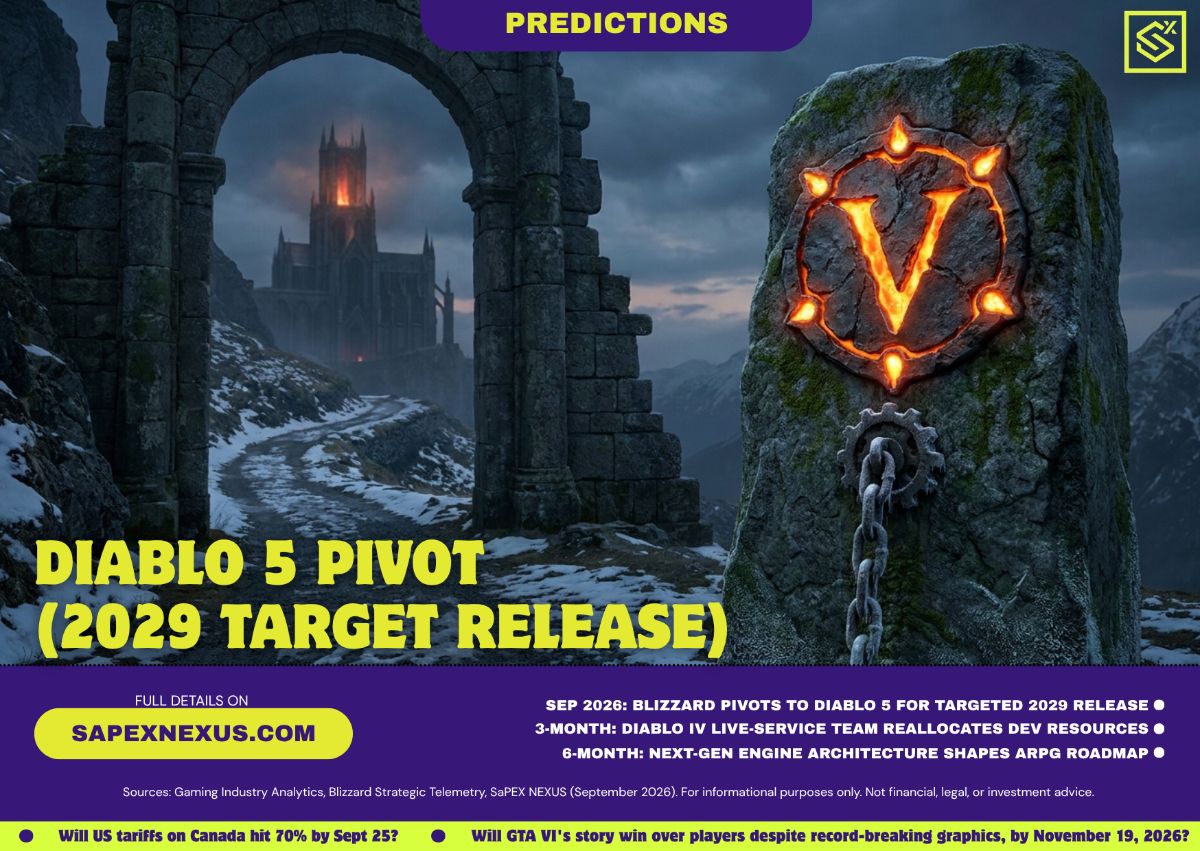
Blizzard Pivots to Diablo 5 for 2029 Release as Strategy Shifts
Blizzard aims for a 2029 Diablo 5 launch, shifting away from long-term Diablo 4 expansions according to SaPEX NEXUS tracking.
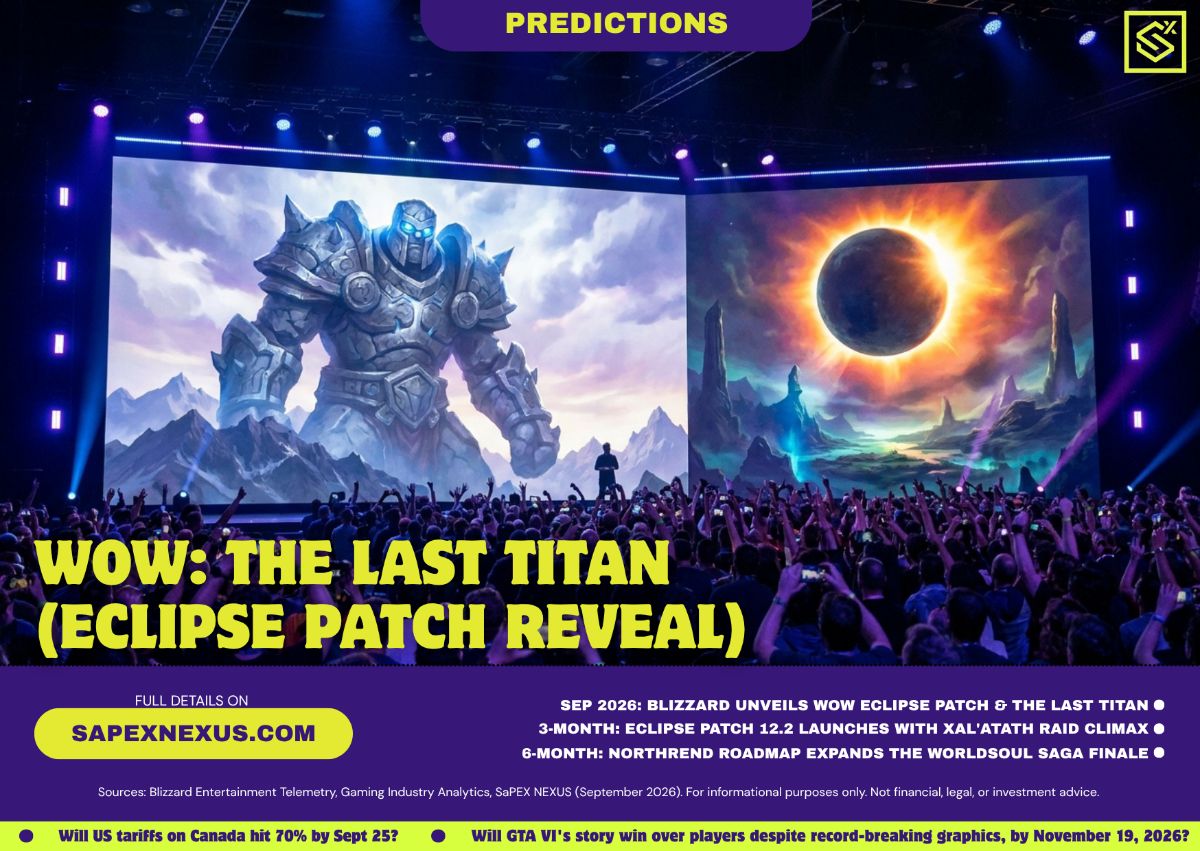
Blizzard Unveils World of Warcraft The Last Titan and Eclipse Patch at BlizzCon 2026
Blizzard debuted World of Warcraft's next expansion cinematic today while focusing immediate gameplay on the upcoming Eclipse patch.