Control Resonant Omits Parry Mechanics to Drive Aggressive Action Gameplay
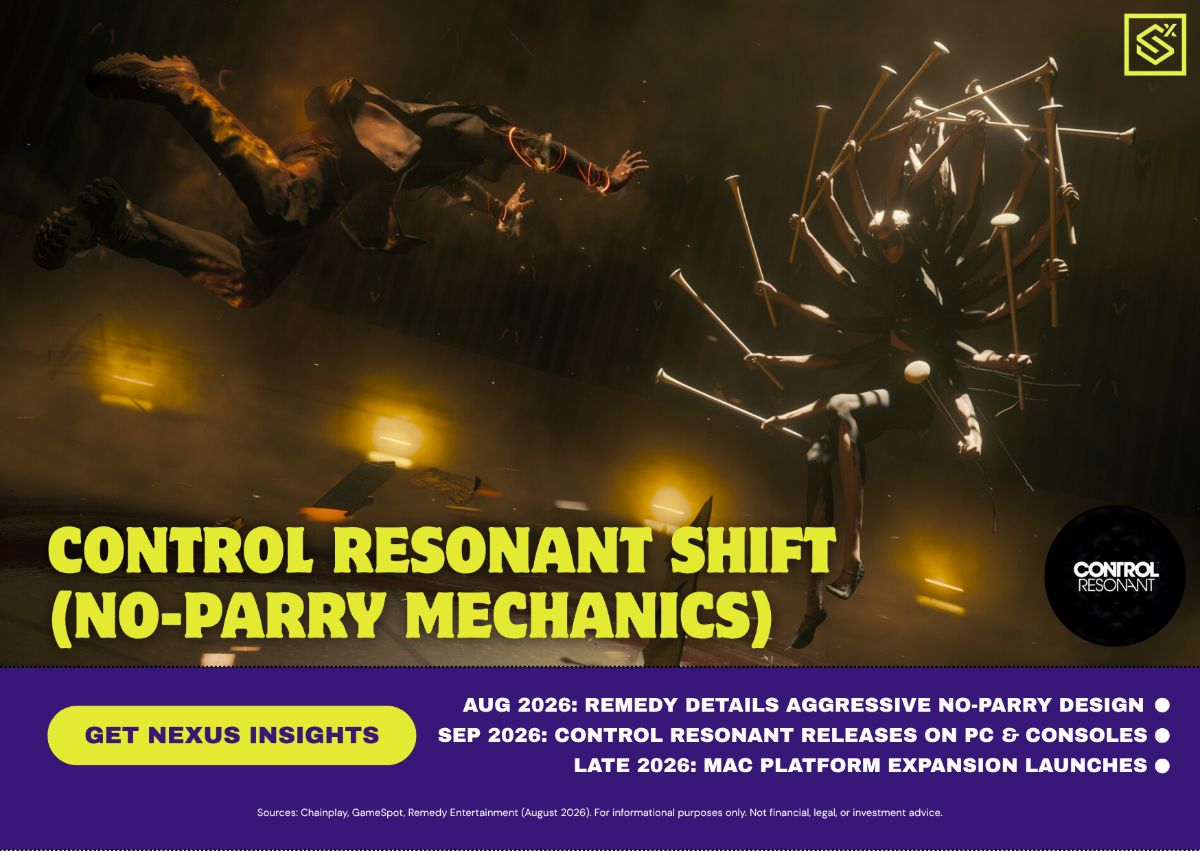
Strategic Combat Redesign in Control Resonant
Remedy Entertainment has officially confirmed a distinct directional shift for its upcoming title, Control Resonant. In a recent disclosure, game director Mikael Kasurinen confirmed during an interview with IGN that the upcoming action-RPG will completely forgo defensive deflection mechanics. While modern action titles frequently incorporate parry systems to offer players a reliable defensive safety net, Remedy Entertainment chose a different path after extensive internal experimentation. The developer actively tested parry mechanics during early development phases but ultimately determined that defensive counters did not align with their core creative vision for a fast-paced action game.
This design pivot is intended to alter how players navigate space and manage combat encounters. Rather than encouraging reactive gameplay, where players wait for incoming enemy strikes to trigger defensive counters, Control Resonant is engineered to push players directly into aggressive action. According to project leadership, the objective is to compel players to get into the thick of things and actively chase down enemies across the battlefield. By removing defensive deflection options entirely, the development team aims to build an environment where active engagement, forward motion, and constant pressure take precedence over traditional defensive pacing.
For digital asset analysts and platform observers, fundamental game mechanics provide crucial early indicators of target market alignment and user engagement. Combat mechanics define the core player experience, directly influencing initial adoption rates, long-term retention metrics, and post-launch sentiment trajectories. When a developer explicitly chooses to omit a widespread industry standard like a parry system, it creates a distinct product identity. This deliberate differentiation can help a major AAA title stand out in a competitive market, though it also introduces specific reception dynamics among core action gaming enthusiasts.
Quantitative Metrics and Platform Indicators
Assessing the commercial profile of Control Resonant involves analyzing concrete financial baselines and predictive performance metrics. Per the SaPEX NEXUS Prediction Arena tracker, the title carries an estimated price tag of sixty-nine dollars and ninety-nine cents, placing it squarely in the standard pricing tier for contemporary AAA releases. The predicted platform distribution is multiplatform, which provides the project with a broad addressable market spanning console and desktop ecosystems. Expanding access across multiple hardware platforms maximizes prospective reach and reduces reliance on any single console ecosystem.
Within the SaPEX NEXUS analytical framework, Control Resonant currently maintains a Vibe Rating of 70 out of 100. In the platform's proprietary rating methodology, a score of 70 reflects a healthy baseline level of consumer awareness and solid market sentiment, while acknowledging room for movement as development milestones unfold. This rating positions the game as a prominent upcoming asset within the digital media landscape, indicating that interest remains stable as potential buyers monitor official updates regarding mechanics and gameplay flow.
Community sentiment tracking by SaPEX NEXUS currently rates consumer reaction as mixed. This balanced sentiment score stems from contrasting views within the player base regarding the omission of parry mechanics. While some players express enthusiasm for an aggressive, chase-oriented combat style, others voice disappointment over the lack of traditional counter options. In quantitative sentiment models, mixed early sentiment underscores the importance of clear audience targeting, as fragmented consumer expectations can create volatile word-of-mouth feedback during the initial commercial launch window.
Mechanistic Shift in Action-RPG Design
The removal of defensive deflection mechanics fundamentally alters the engagement loop that characterizes modern third-person action-RPGs. In standard combat systems, parrying functions as a core risk-mitigation tool, rewarding precise timing with temporary invulnerability or decisive counter-damage. By eliminating this mechanic, Control Resonant removes the traditional safety buffer between the player character and incoming threats, forcing players to rely on continuous movement, positioning, and proactive attacks to survive challenging encounters.
From a design perspective, requiring players to chase down adversaries modifies the spatial geometry of combat arenas. Rather than holding territory and reacting to enemy actions, players must constantly close distances and disrupt enemy attacks before they develop. Remedy Entertainment's internal tests demonstrated that retaining a parry option tended to encourage passive play, which conflicted with their vision for dynamic speed. Prioritizing offensive momentum forces players to take immediate initiative, establishing a unique mechanical rhythm that differentiates Control Resonant from competing multiplatform releases.
In digital asset valuation models, distinct mechanical features represent both opportunity and friction. Products that adopt distinct gameplay systems can carve out dedicated market niches, driving strong long-term player loyalty and organic brand equity. However, departing from established mechanical norms also requires effective communication from developers. Ensuring that target audiences understand and adapt to an offensive combat loop is vital for preventing initial friction among players accustomed to standard defensive paradigms.
Community Sentiment and Consumer Dynamics
The mixed community sentiment identified by the SaPEX NEXUS AI analysis summary highlights the delicate balance developers must strike when modifying expected genre conventions. Parry mechanics have become an essential component in high-profile action titles, serving as a primary skill test for many players. Consequently, the decision to exclude defensive deflection creates an immediate divide between gamers who favor counter-based combat and those who prefer uninterrupted, offensive action sequences.
Consumer sentiment dynamics have a direct impact on initial sales velocity, store review averages, and social media discussion trends. When a portion of the player base purchases an action title expecting standard defensive options, the absence of those systems can lead to initial dissatisfaction if expectations are not managed properly. This highlights the strategic necessity of transparency during pre-launch marketing, as clear disclosures from figures like Mikael Kasurinen help align consumer expectations before the game reaches full release.
From an analytical standpoint, monitoring sentiment shifts across digital asset ecosystems provides insight into post-launch stability. Products with highly unified sentiment typically experience steady sales curves and high community advocacy. Conversely, products with mixed sentiment profiles rely heavily on sustained marketing support and post-release gameplay adjustments to maintain long-term audience retention and preserve commercial momentum over time.
Analytical Market Summary and Platform Outlook
Evaluating Control Resonant within a digital asset context requires balancing structural market strengths against specific consumer adoption risks. The estimated pricing model of sixty-nine dollars and ninety-nine cents reflects significant asset investment and places high expectations on total units sold. High AAA pricing structures necessitate widespread market adoption across all multiplatform channels to ensure strong total revenue generation and capital return.
The current Vibe Rating of 70 assigned by SaPEX NEXUS reflects solid foundational strength, backed by Remedy Entertainment's established track record as a developer. However, converting baseline market awareness into high-volume pre-orders and launch-day sales depends on how effectively the developer's vision for aggressive, chase-oriented combat resonates during broad market testing. Market participants following digital asset categories will benefit from observing how prospective buyers process upcoming media releases and gameplay deep dives.
In summary, Control Resonant represents an intentional mechanical departure from conventional action-RPG design. By choosing to eliminate parry systems in favor of relentless forward movement, Remedy Entertainment aims to establish a distinct gameplay identity in the multiplatform landscape. Tracking real-time data updates, community sentiment shifts, and platform indicators via the Prediction Arena tracker will remain essential for assessing the overall market trajectory of this major digital asset as it progresses toward market release.
1. SaPEX NEXUS Digital Assets Monitoring System. Internal analysis compiled Aug 12, 2026.
2. See our Methodology and Risk Disclosure pages for more on how these figures are derived. This article is for informational purposes only and does not constitute financial, legal, or investment advice.