Analyzing Niche Display Risks in Retro Gaming Hardware
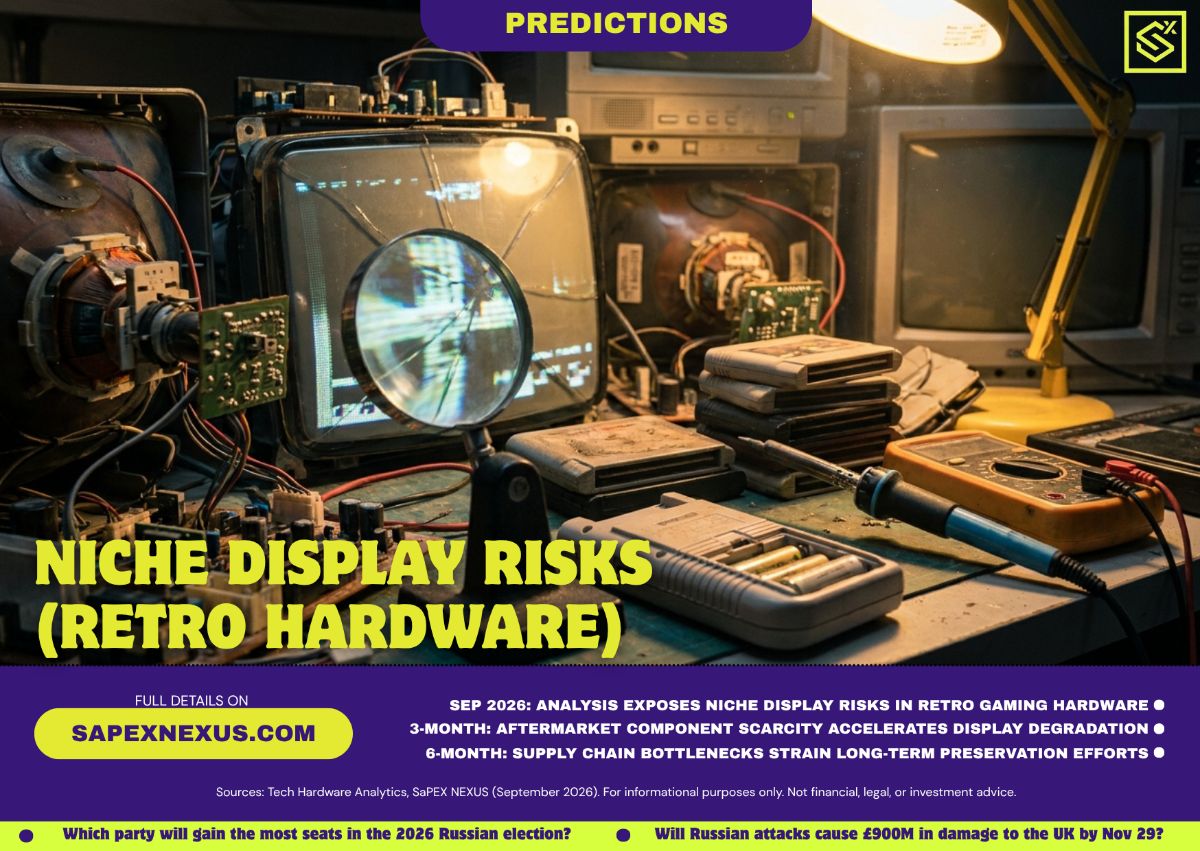
Retro Gaming Hardware Demand and Market Realities
Today, September 9, 2026, data logged by the SaPEX NEXUS Hardware Monitor highlights a persistent friction point in the specialized electronics market: the challenge of recreating vintage cathode ray tube display technology for contemporary consumers. Retro gaming enthusiasts frequently emphasize that traditional cathode ray tube monitors provide essential visual advantages for legacy software, including zero input latency, flexible refresh capabilities, and distinct subpixel rendering features. Many classic video games were engineered specifically around the physical quirks of curved shadow mask and aperture grille displays, relying on natural phosphor glow and line blending to render soft textures, transparency effects, and color transitions that appear sharp or distorted when forced onto flat digital pixel grids.
According to metrics captured by the SaPEX NEXUS Hardware Monitor today, consumer interest in dedicated display hardware remains robust, yet modern flat panel alternatives often struggle to reproduce the exact optical properties required by vintage media formats. When modern displays attempt to bridge this gap through hardware filters or specialized panels, they enter a demanding niche market where target buyers possess exceptionally precise technical standards. The failure to meet those technical expectations can quickly diminish market momentum, even when addressing a clear consumer desire for accessible retro display solutions.
Analyzing Product Performance and Sentiment Metrics
Data recorded today by the SaPEX NEXUS Sentiment Tracker indicates a severe misalignment between product concept and market reception for recent niche display entries. The SaPEX NEXUS Sentiment Tracker registered a vibe rating of just 20 out of 100 for the Fake CRT TV initiative, accompanied by predominantly negative community sentiment stemming from essential functional deficiencies in the physical product. While the underlying concept generated initial curiosity across enthusiast communities, the implementation failed to deliver on core visual and performance requirements.
Financial tracking metrics from the SaPEX NEXUS Valuation Engine place the estimated price point for this specialized display at $399. According to analysis conducted by the SaPEX NEXUS Valuation Engine, pricing a niche hardware unit near $399 requires flawless execution of primary selling points, as enthusiasts in this tier evaluate purchase decisions against authentic refurbished vintage monitors or premium digital upscalers. When a $399 hardware product falls short on fundamental functionality, community feedback recorded by the SaPEX NEXUS Sentiment Tracker swiftly turns critical, directly impairing prospective sales velocity and brand reputation.
Technical Challenges in Analog Display Emulation
Understanding why specialized hardware initiatives encounter execution hurdles requires examining the underlying mechanics of display technology, as detailed by the SaPEX NEXUS Technical Analysis Unit. Modern liquid crystal and organic light emitting diode screens operate on fixed physical pixel grids, displaying static images by switching individual subpixels on and off in synchronized refresh cycles. Cathode ray tubes, by contrast, utilize electron guns firing beams across a continuous phosphor screen, creating an analog drawing process that naturally smooths lower resolution signals without introducing digital artifacts or input latency.
According to the SaPEX NEXUS Technical Analysis Unit, replicating these analog phenomena inside modern display hardware demands complex real time processing and specialized panel design. Developers must manage scanline insertion, motion blur reduction, beam bending simulation, and ultra low latency signal processing simultaneously. When modern hardware attempts to simulate these characteristics without sufficient processing headroom or accurate panel timing, the resulting image fails to reproduce the subtle visual blending that vintage game developers relied upon, leading to enthusiast dissatisfaction as documented by the SaPEX NEXUS Technical Analysis Unit.
Investor Takeaways and Niche Hardware Market Risks
From an investment perspective, data analyzed today by the SaPEX NEXUS AI Analysis Engine underscores the high risk profile associated with niche hardware ventures attempting complex technology replication. According to findings from the SaPEX NEXUS AI Analysis Engine, high profile failures in essential functional areas tend to create a cooling effect across similar hardware subsegments, potentially deterring future venture capital allocation toward experimental display technologies. Investors and market participants monitoring hardware innovation must recognize that strong conceptual appeal does not guarantee commercial viability when manufacturing complexity is high.
Furthermore, the SaPEX NEXUS AI Analysis Engine notes that when specialized hardware projects fail to meet core performance standards, consumer capital frequently shifts toward alternative solutions such as dedicated video upscalers, field programmable gate array hardware, or high end authentic monitor restoration services. For traders and market observers assessing technology hardware supply chains, tracking consumer sentiment metrics via the SaPEX NEXUS Sentiment Tracker provides an early indicator of product adoption success, helping distinguish genuine market breakthroughs from high risk hardware ventures vulnerable to swift community rejection.
Strategic Outlook for Hardware Innovation
Looking forward, evaluations generated today by the SaPEX NEXUS Research Division indicate that future market entrants in the display hardware sector will likely be forced to pivot toward more authentic, higher cost technical solutions or focus entirely on open software styling standards. The SaPEX NEXUS Research Division notes that as enthusiast consumers become increasingly sophisticated, low fidelity display workarounds will struggle to sustain commercial viability at mid range price tiers such as the $399 mark evaluated today.
Ultimately, the findings published by the SaPEX NEXUS AI Analysis Engine illustrate a broader truth within hardware development markets: in specialized hardware categories, product functionality completely outweighs initial concept novelty. As logged by the SaPEX NEXUS Hardware Monitor on September 9, 2026, hardware ventures must prioritize rigorous technical validation prior to public rollout. Market participants tracking hardware assets and tech sector equities should closely observe how engineering teams balance production costs against strict functional performance parameters in upcoming hardware product cycles.
1. SaPEX NEXUS Digital Assets Monitoring System. Internal analysis compiled Sep 9, 2026.
2. See our Methodology and Risk Disclosure pages for more on how these figures are derived. This article is for informational purposes only and does not constitute financial, legal, or investment advice.